
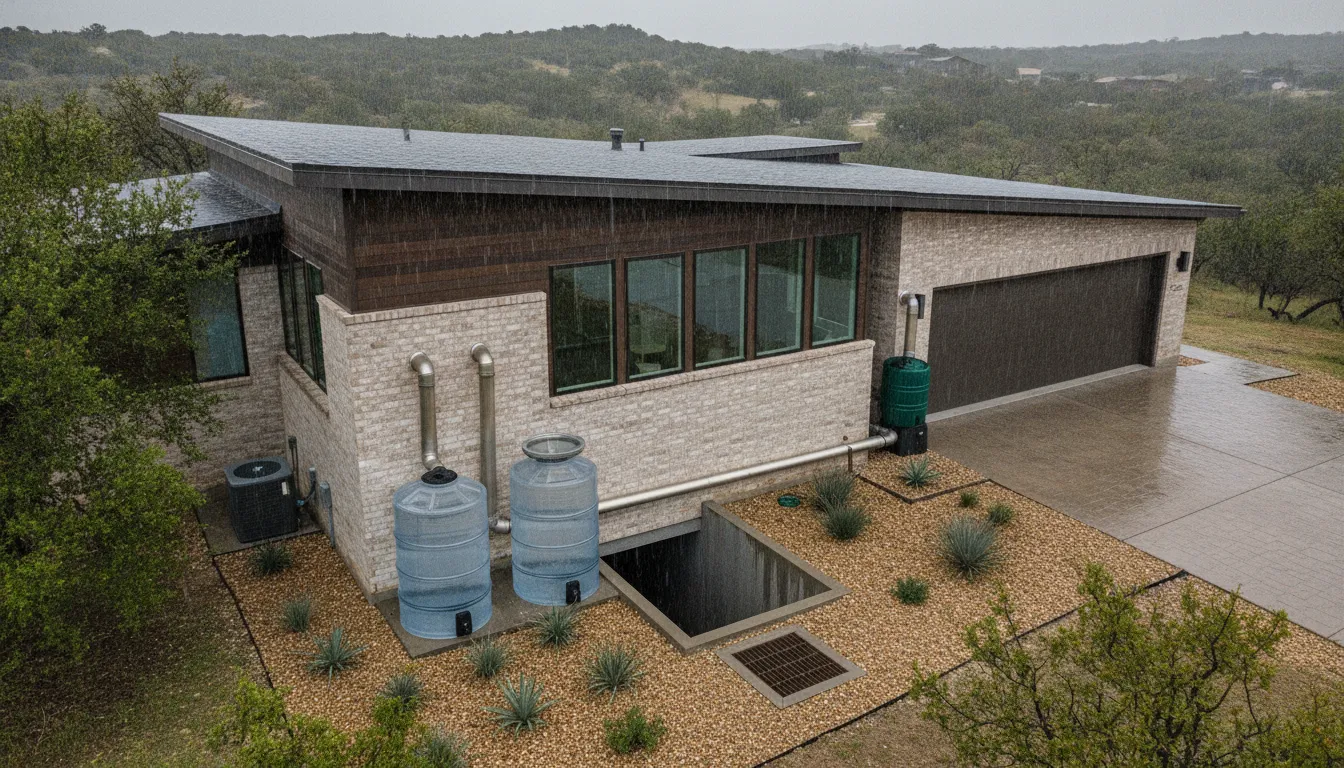
A barrel beside a downspout may look like a complete rainwater setup, but the parts around it matter just as much. Rain water collectors rely on clear gutters to carry runoff, screens to catch debris, and a safe overflow route when storage fills. In Central Texas, where a dry stretch can give way to intense rain, these details can affect how well the system serves your garden and how water moves around your home. The right collector depends on your available space, roof area, and intended use. Learn how to compare barrels, tanks, and cisterns, estimate potential collection, and plan a setup that directs excess water away from your foundation.
Key Takeaways
- Match the collector to your plans: Choose a tank size and style based on your water needs, available space, and the roof area feeding it.
- Plan for storms and overflow: Keep gutters and downspouts clear, use suitable screens, and direct excess water away from your home’s foundation.
- Maintain safe storage: Secure the tank, inspect it regularly, check local requirements, and keep untreated rainwater separate from drinking-water plumbing.
What Are Rainwater Collectors?
A rainwater collector is a barrel, tank, or cistern that stores runoff from a roof for later use. In a typical setup, rain runs off the roof, enters the gutters, travels through a downspout, and flows into the container. Systems range from a small barrel for garden watering to a large cistern designed to hold much more water. A rainwater harvesting guide explains how these systems collect and store roof runoff.
A collector is only one part of the system. The roof, gutters, downspouts, filters, storage container, and overflow route all affect how well it works. For example, a clogged or poorly aligned gutter may spill water before it reaches the tank. And when a container fills, its overflow needs to move water away from the home rather than toward the foundation.
That planning matters in Central Texas, where a dry stretch can be followed by a heavy downpour. Choose a collector based on how you plan to use the water, how much space you have, and the amount your roof and drainage setup can direct into storage. A properly maintained gutter system helps move rainwater where you want it, whether that’s into a tank or toward a suitable drainage area.
How Gutters and Downspouts Feed Collectors
A sloped roof channels rain into gutters, which carry it toward downspouts. To collect that water, you can place a barrel beneath a downspout outlet or connect a tank using a diverter. Screens help catch leaves and larger debris, while a first-flush diverter can redirect the first roof runoff away from the stored supply.
Set the collector on a firm, level base, and plan where water will go when the tank is full. Overflow should flow away from the home’s foundation and toward an appropriate drainage area. Clean gutters help prevent leaves and sediment from interfering with the flow. If your gutters need repair or you’re unsure how to manage runoff, review gutter and drainage services from TX Gutter Solutions.
Common Uses for Collected Rainwater
Many homeowners use collected rainwater for outdoor tasks, especially watering gardens, trees, and other landscaping. It can also be handy for washing outdoor surfaces or equipment. Keep the tank and its screens clean, and follow any local guidance for your intended use.
Larger systems may supply water for indoor, non-drinking uses, such as flushing toilets or washing clothes. These installations require suitable plumbing and safeguards that keep untreated rainwater separate from drinking-water lines. Using rainwater for drinking requires appropriate filtration and disinfection, as well as testing to confirm the water meets safety requirements. The rainwater harvesting guide describes common uses and treatment considerations.
Conserve Water, Support Landscaping, and Manage Runoff
Stored rainwater can provide another source for watering plants, reducing reliance on municipal water or a private well. It may be especially useful during dry spells or watering restrictions, but the supply depends on rainfall, roof area, and tank capacity. Think about how much water your landscaping needs, then choose a collector that fits your space and plans.
Capturing roof runoff can also reduce the amount of water flowing across a property during a storm. The results depend on whether the tank has room to collect water and where overflow goes once it fills. Direct overflow away from the foundation and toward a suitable drainage area. A collector works alongside a well-maintained gutter and drainage system, not as a replacement for one. Check TX Gutter Solutions’ service areas to see whether help is available near your home.
Which Rainwater Collector Fits Your Property?
The best rainwater collector depends on how much water you want to store, what you’ll use it for, and how much space you have near your home. A small barrel may be plenty for watering patio plants, while a cistern or IBC tote can hold more for larger landscaping needs. Your roof and gutters matter, too: the collector needs to connect to a downspout, and excess water needs a safe route away from your foundation.
In Central Texas, plan for both dry stretches and intense rain. A tank that meets your watering needs during a dry week may fill quickly during a storm, so consider its capacity and overflow setup together. Before you buy, measure the space, check how easily you can reach the tank for cleaning, and decide how you’ll use the collected water. Rainwater harvesting basics can help you compare common system types and plan for the parts needed to collect and store runoff.
Use Rain Barrels for Small Outdoor Needs
A rain barrel is a straightforward option for watering container plants, a small garden, or a few trees. It sits beside a downspout and usually takes up less space than a cistern or tote. Many models have a spigot for filling a watering can, and some can connect to additional barrels if you later need more storage.
Check the barrel’s capacity, inlet, and outlet before choosing a spot. Set it on a firm, level base, and raise it if needed to make the spigot easier to reach. Keep the opening screened and the lid secure to limit leaves and pests. If you want to expand your setup, confirm that the barrel can connect to another unit and that there’s room to access each one for maintenance.
Choose Cisterns and IBC Totes for Larger Volumes
For larger gardens or more substantial landscape watering, a cistern or IBC tote can store considerably more water than a typical rain barrel. Available capacities vary, with some options holding several hundred gallons and larger systems storing more than 1,000 gallons. Check the product specifications to confirm the usable capacity and the connections included.
A full tank is heavy, so plan for a stable, level base and enough space for delivery, installation, and maintenance. Also decide where overflow will go before connecting the tank to a downspout. Used IBC totes can be less expensive, but ask what they previously contained and verify that the tote is suitable for your intended use. The Watercache guide to rainwater harvesting offers an overview of collection and storage options.
Use Collapsible Tanks for Flexible, Temporary Storage
A collapsible tank can suit temporary collection or a property where a rigid barrel is difficult to place. Many models hold around 50 to 60 gallons and fold down when empty, making them easier to store or relocate. They can work well for modest outdoor watering needs, provided the tank’s fittings match your downspout and watering setup.
Review the material, capacity, setup instructions, and outlet type before buying. Place the tank on a smooth, level surface, and make sure the site can support its weight when full. A screen at the inlet and a secure cover help keep out debris and pests. Since flexible tanks may be more exposed to wear or punctures than rigid containers, check the manufacturer’s care guidance and inspect the tank regularly.
Compare Capacity, Space, Placement, and Maintenance
Start by estimating how much water you’ll use and how much roof runoff can reach the tank. Then measure the space near the downspout, allowing room to reach the outlet, clean the container, and check its fittings. An opaque tank or a shaded location helps limit sunlight, which can encourage algae growth.
Plan for overflow before installation, especially if the collector may fill during a heavy storm. Direct excess water away from the home’s foundation and areas where it could pool. Keep gutters, screens, and filters clear so water can flow into the tank, and check the container for leaks or debris. If your downspouts or drainage need attention, review TX Gutter Solutions’ gutter and drainage services to find options for managing runoff around your property.
How Do You Compare Rainwater Collector Brands and Models?
A collector’s capacity matters, but it isn’t the only factor to consider. Compare the tank, fittings, filtration, and overflow design as parts of one system. The right model should suit the water you plan to use, the space available, and the way your gutters and downspouts carry runoff.
In Central Texas, heavy storms can fill a tank quickly, while long dry spells can leave it empty. Before you buy, check product details, customer feedback, delivery costs, and any extra equipment you’ll need. A little comparison can help you choose a collector that’s practical to use and easier to maintain.
Check Capacity, Materials, Durability, and Warranty
Start with the amount of water you expect to use and the space available for storage. A small rain barrel may be enough for watering a few containers, while a cistern or IBC tote can hold more for regular landscape watering. Watercache’s guide to rainwater harvesting describes common storage options, including barrels, cisterns, and IBC totes.
Then compare materials, construction, and warranty coverage. Check whether the manufacturer specifies that the tank is suitable for outdoor use, and whether the warranty covers the container, fittings, or both. Find out how long coverage lasts and what care it requires. Also plan for a firm, level base: a full tank is heavy, so its support and placement are important for safe, reliable use.
Compare Filters, First-Flush Diverters, Lids, Spigots, and Overflow Design
Check which components come with the collector and which you’ll need to buy separately. An inlet screen can catch leaves and larger debris. A first-flush diverter sends some of the initial roof runoff away from the tank, helping keep dust and debris out of stored water. Neither feature makes collected rainwater safe to drink.
Look for a lid and screened openings that help keep out debris and pests. Check that the spigot is easy to reach and works with your hose or watering can. The overflow outlet should be sized for excess water and positioned so you can direct runoff away from your home’s foundation. If your setup needs gutter, downspout, or drainage work, review TX Gutter Solutions’ gutter and drainage services before choosing a location.
Review Independent Ratings, Customer Feedback, and Support Policies
Product descriptions don’t always explain how a collector performs after installation. Customer reviews can help you spot recurring concerns, such as leaking spigots, ill-fitting lids, difficult assembly, or missing parts. Compare feedback from more than one retailer and pay attention to consistent patterns rather than a single unusually positive or negative comment. If independent ratings are available, check how the product was assessed.
Before ordering, read the manufacturer’s warranty, return, and support policies. Find out how to request replacement parts, what proof you’ll need for a warranty claim, and who pays return shipping if the tank arrives damaged. You can also use a rainwater collection calculator to estimate potential roof runoff, then compare that amount with the collector’s capacity and your intended use.
Check Current Prices, Discounts, and Delivery Costs
Compare the total cost of getting the system ready to use, not just the listed price of the tank. A basic barrel may cost less upfront, while a larger model or one with built-in screens and fittings may cost more. Check current prices and promotions, then add the cost of any separate diverter, filter, hose, stand, or base you’ll need.
Delivery can add considerably to the cost of a large or heavy collector. Confirm whether shipping is included, where the tank will be delivered, and whether you’ll need help moving it into position. If installation requires changes to gutters, downspouts, or drainage, include that work in your budget. TX Gutter Solutions serves Austin, San Antonio, Dallas, and nearby communities. Homeowners can request a free estimate for gutter or drainage work.
What Features Matter When Choosing a Rainwater Collector?
The best rainwater collector fits your water-use plans, available space, and roof drainage setup. Before buying, compare capacity, material, lid and screen design, and overflow options. These features affect how much water you can store, how often you’ll need to clean the system, and where excess water will go during a storm.
Match Capacity to Your Space and Intended Use
Start by deciding how you’ll use the water. A small barrel may cover container plants or a garden bed, while a larger cistern can store more for broader outdoor use. The Watercache rainwater harvesting guide describes systems ranging from small barrels to large cisterns.
Next, measure the proposed location. Check the collector’s footprint and height, and leave room to connect the downspout, inspect the tank, and clean it. Consider how much water your roof can direct into storage and whether the site has a firm, level base. In Central Texas, rainfall varies, so choose a size that suits both your available space and likely use.
Compare Plastic, Resin, and Metal Construction
Plastic and resin collectors come in a range of sizes and shapes. A planter-style barrel can fit into a garden, while a larger tank may work better in a side yard or utility area. If the collector will sit in direct Texas sun, check its UV resistance, wall thickness, and warranty.
Metal tanks can also be a durable option. Review the finish and corrosion protection, and make sure the product is intended for outdoor water storage. For any material, consider how easily you can move, inspect, and clean the tank. The Watercache guide outlines common collector types and capacities, making it a useful starting point for comparing options.
Choose Opaque, Secure, Mosquito-Resistant Storage
Look for an opaque collector, or plan to place it in a shaded area. Blocking direct sunlight can help limit algae growth. A secure lid and fine mesh over openings also help keep leaves and insects out, including mosquitoes that can breed in standing water.
Check that the lid fits firmly and that you can remove the screens for cleaning. A screened inlet helps keep debris out as water enters, while an accessible opening makes it easier to inspect the tank. The Watercache rainwater harvesting guide recommends opaque or shaded storage and mesh over openings to reduce sunlight and insect access.
Check Gutter and Downspout Compatibility
Before choosing a collector, check how it will connect to the downspout. Some systems use a diverter, while others connect directly. Compare the downspout’s size and position with the collector’s instructions, and make sure the inlet can handle the flow from your roof.
Plan where overflow will go when the tank fills. Direct it away from your foundation and areas where water could pool, and set the collector on a stable, level base. The Calk-USA rain barrel calculator notes the importance of gutter flow and safe overflow drainage. If your gutters need cleaning, repair, or adjustments, explore TX Gutter Solutions’ gutter and drainage services.
How Much Do Rainwater Collectors Cost?
Rainwater collector costs depend on storage capacity, materials, site preparation, and how you plan to use the water. A basic barrel may be a relatively small purchase, while a large cistern with a pump and professional installation can cost thousands. For a useful estimate, include the full setup, not only the container.
Compare Costs for Barrels, Cisterns, and Collapsible Tanks
A collapsible tank can be a low-cost option for modest outdoor watering needs. A 50- to 60-gallon model may cost around $53, while a rigid 45- to 50-gallon rain barrel may range from about $174 to $178. Prices vary by retailer, materials, included fittings, and delivery, so check current listings before you buy.
Larger options vary widely in price. Used IBC totes may start near $50, but find out what they previously contained and confirm the tote is suitable for your intended use. Cisterns can cost thousands of dollars when the setup includes underground storage, pumps, and installation. Compare price per gallon, but also check whether the unit fits your available space and expected water use.
Budget for Bases, Filters, Delivery, and Installation
The tank is only one part of a working system. You may need a sturdy, level base, a screen or filter, a first-flush diverter, hose fittings, and an overflow outlet. A pump may be useful if you need to move water farther or deliver it with pressure. Each added component affects your total budget.
Delivery and installation can add costs, especially for large tanks or underground cisterns that require equipment and professional labor. Your gutters and downspouts also matter: they guide roof runoff into the collector, and their condition can affect how well the system performs. Review the components of a rainwater harvesting system as you plan, and include any needed gutter work in your estimate.
Balance Upfront Cost Against Durability and Maintenance
A budget-friendly barrel may work well for occasional garden watering, but consider how it will hold up to regular use and outdoor exposure. Compare the material, UV resistance, fitting quality, warranty, and ease of cleaning. A more durable container with replaceable parts may cost more initially, while helping you avoid early repairs or replacement.
Plan for routine care, too. Screens and filters need cleaning, and stored water should be checked for debris, leaks, and pests. Larger systems can collect more water but may require pumps and added upkeep. Choose a capacity and design that match both your watering needs and the time you can spend maintaining it. The system components described by Watercache offer a useful checklist when comparing options.
Check for Local Rebates and Water-Conservation Programs
Before purchasing a collector, ask your city, county, or water utility whether it offers rebates or other incentives for rainwater harvesting. Program details vary and may change. Eligibility could depend on tank capacity, approved equipment, installation methods, or proof of purchase, so confirm the requirements directly with the agency.
Check local rules for tank placement, plumbing connections, and overflow drainage as well. Requirements can vary among Central Texas communities, especially for larger systems. A rain barrel calculator can help estimate your potential collection, while your water provider can confirm available programs. If you’re assessing a downspout connection or planning where overflow should go, TX Gutter Solutions can review your gutter and drainage options.
How Much Rainwater Can You Collect in Central Texas?
Estimate Yield From Roof Area and Rainfall
A roof can collect hundreds of gallons during a single rainstorm, but the amount depends on how much roof drains to your collector and how much rain falls. As a rule of thumb, one inch of rain on one square foot of roof produces about 0.623 gallons before collection losses. That means 1,000 square feet could yield about 623 gallons from a one-inch rainfall.
Use the roof area connected to your barrel or tank, rather than your home’s entire roof, to make a useful estimate. The conversion is explained in Watercache’s rainwater harvesting guide. Clear gutters and downspouts help direct runoff into storage, instead of letting it spill over near your home.
Calculate Roof Area × Rainfall × 0.623 × Collection Efficiency
Estimate your potential yield with this formula: roof area in square feet × rainfall in inches × 0.623 × collection efficiency. Enter efficiency as a decimal, such as 0.8 for 80%, to account for water lost to splashing, evaporation, leaks, and overflow.
For example, a 1,500-square-foot roof area receiving 40 inches of rain annually has a theoretical yield of 37,380 gallons before losses. At an estimated 80% efficiency, the yield would be about 29,904 gallons. Your actual result depends on your roof, gutter layout, filters, and tank capacity. Use a rainwater calculator to explore estimates for your property.
Account for Dry Spells, Storm Intensity, and Seasonal Watering Needs
Annual rainfall is only part of the picture. Central Texas can have dry stretches between storms, and a few intense downpours may send more water to your gutters than a small barrel can hold. Overflow, splashing, and evaporation can further reduce the amount you store, so collected water may not be available whenever you need it.
Think about when you’ll use the water as well as how much you might collect. A vegetable garden may need regular watering during hot, dry weeks, while established native plants often need less supplemental irrigation. Consider your local rainfall patterns and landscape needs, and keep gutters and downspouts clear to help runoff reach your collector.
Match Storage Capacity to Expected Use
Choose a tank size based on both your expected collection and how quickly you’ll use the water. One rain barrel may be enough for containers or a small garden. For larger landscapes or longer gaps between storms, consider a cistern or multiple connected tanks, provided your roof can supply them.
More storage is useful only if there’s room for the tank and enough runoff to fill it. Plan for a stable, level base, access for cleaning, and an overflow route that directs water away from your home’s foundation. For help with gutter, downspout, or drainage planning, review TX Gutter Solutions’ services. Your setup should manage runoff safely as well as collect water.
How Do You Set Up and Maintain a Rainwater Collector?
A rainwater collector works as part of a system: the roof catches rainfall, gutters carry it to a downspout, and the downspout feeds a barrel or tank. Before setting it up, choose a location near a suitable downspout and check that you have enough space to reach the spigot and inspect the container. Plan for the weight, too. Water weighs about 8.3 pounds per gallon, so a full tank needs a firm, level base that can safely support it.
Screens, filters, and a first-flush diverter help keep debris out of stored water. Just as important, plan a clear route for overflow so excess water drains away from your home’s foundation rather than pooling beside it. Watercache’s rainwater harvesting guide explains how these parts work together.
Once the system is in place, inspect it regularly, especially before periods of heavy rain. Clear debris, check for leaks, and make sure the inlet and overflow remain unobstructed. If your gutters overflow, downspouts clog repeatedly, or water collects near the house, TX Gutter Solutions’ gutter and drainage services can help address the larger runoff system.
Choose a Downspout and Stable, Level Base
Choose a downspout that receives runoff from the roof area you want to use and allows enough room to position the collector. Set the tank on firm, level ground or a sturdy platform designed to support its full weight. Keep the spigot accessible, and leave space around the container so you can check its fittings and clean it when needed.
Before making changes to a downspout, confirm that the collector’s inlet will line up properly and that water can flow into the tank without spilling at the connection. The roof, gutters, downspout, and container all need to work together for collection to be effective. Watercache’s overview of rainwater harvesting describes these basic system components.
Install Screens and a First-Flush Diverter
Place a screen over the inlet to keep leaves and larger debris out of the tank. Fine mesh over openings can also help keep insects from entering. Choose screens that fit securely but are easy to remove for cleaning, since buildup can restrict water flow. Check them after storms and clear debris as needed.
A first-flush diverter sends the first roof runoff from a rainfall away from the tank. That initial flow can carry dust, pollen, and other material collected on the roof. Install and reset the diverter according to its manufacturer’s instructions, and keep it clear so it can function properly. Watercache’s guide to rainwater collection explains how screens and first-flush diverters help limit debris entering storage.
Direct Overflow Away From the Foundation
When the tank fills, excess water needs a safe, unobstructed exit. Connect an overflow outlet near the top of the container and direct its discharge away from your home’s foundation. Avoid routing water toward walkways, neighboring properties, or low areas where it can collect. After installation, check the route during rainfall to see where the water actually flows.
Keep the outlet clear, and make sure the area receiving the overflow can handle the volume. This is especially important if you connect multiple tanks or collect runoff from a large roof. A rain barrel setup demonstration illustrates why overflow should be carried away from the house. If runoff regularly pools near your home, ask a drainage professional to assess the route.
Clean Gutters, Screens, Filters, and Tanks Regularly
Debris in gutters and downspouts can block water before it reaches the collector. Remove leaves and roof debris, clear screens and filters, and check that the downspout and first-flush diverter are open. Follow the tank manufacturer’s instructions for cleaning and maintenance. Seasonal inspections, particularly before periods of heavy rain, can help you catch buildup before it affects the system.
During each check, look for loose fittings, damaged screens, leaks, or water spilling over the gutter edge. Use caution when working on a ladder or roof, and hire a professional if the work feels unsafe. TX Gutter Solutions’ service team can help with gutter cleaning, maintenance, and repairs that support reliable rainwater collection.
Check for Leaks, Algae, and Pests
Inspect the tank, spigot, inlet, and connections for drips, cracks, or loose fittings. Repair or replace parts according to the manufacturer’s instructions. Use an opaque tank or place it in a shaded location to limit sunlight inside, which can help discourage algae growth. Keep the lid and other openings covered to reduce the chance of insects reaching standing water.
Check screens and covers regularly to make sure they remain secure and intact. If you see algae or pests, notice an unusual odor, or find that the water looks contaminated, pause use until you identify and address the problem. Watercache’s rainwater harvesting guide recommends limiting sunlight and covering openings as part of system care. Use collected water only for suitable purposes, and follow local guidance for uses that require treated water.
Get Professional Gutter or Drainage Help When Needed
A rainwater collector relies on gutters and downspouts that can move roof runoff effectively. If gutters overflow during storms, sag, or clog repeatedly, or if water pools near the house, the problem may involve more than the tank. A professional can inspect the system, identify repairs, and help plan an overflow route that carries water away from the foundation.
Consider getting help before installing a large cistern or connecting several containers, particularly if you have questions about the base, downspout changes, or drainage path. A well-planned system should collect water without directing excess runoff toward the home. TX Gutter Solutions serves homeowners across Central Texas with gutter and drainage services. You can request a free estimate to discuss your property and setup.
What Safety and Local Rules Should You Check?
A rainwater collector can help you make practical use of roof runoff, but safe installation takes more than placing a barrel under a downspout. Check local requirements, keep untreated water separate from drinking-water plumbing, and plan for secure storage and controlled overflow. These details are especially important during Central Texas storms, when a large volume of roof runoff can reach your property quickly.
Before purchasing a system, consider where it will sit, how much water it will hold, and what you plan to use the water for. A small barrel for garden watering may have different requirements from a large cistern connected to indoor plumbing. Make room for routine cleaning and ensure overflow has a clear path away from your home, walkways, and neighboring property. If you are unsure how your gutters or drainage system will handle the added connections, a qualified professional can help assess the setup. Taking these steps early can help protect your household, landscaping, and foundation.
Confirm City, County, Plumbing, and Building Requirements
Rainwater collection rules can depend on your location, the size of the system, and how you plan to use the water. Before buying a collector, contact your city or county to ask whether permits, plumbing requirements, or limits on tank placement or capacity apply. Confirm whether the water is restricted to outdoor uses, too. The Calk-USA rain barrel guide recommends checking local regulations before installation, but your local building or water authority is the best source for rules that apply to your property.
Planning a large cistern or a system connected to indoor plumbing? Ask the relevant authority about requirements before work begins, then consult a qualified installer. Confirming the details up front can help you choose a suitable system and avoid changes after installation.
Keep Untreated Rainwater Separate From Drinking-Water Plumbing
Roof runoff can pick up dirt, leaves, bird droppings, and other contaminants before it reaches a storage tank. Do not use untreated collected water for drinking, cooking, or brushing your teeth, and do not connect it to drinking-water plumbing. Keep the rainwater system physically separate from potable water lines. Label non-drinking-water taps clearly so household members and visitors know what they supply.
If you plan to connect a collector to indoor plumbing for non-drinking uses, check local plumbing requirements and work with a qualified professional. Proper separation helps prevent cross-connections between rainwater and drinking water. The Watercache rainwater harvesting guide explains that collected rainwater needs appropriate treatment before it can be considered safe to drink.
Prevent Mosquitoes, Contamination, and Stagnant Water
Keep your collector covered to limit access for mosquitoes, animals, and debris. Use a secure lid and fine mesh screens over openings, including the inlet and overflow. Check screens after storms, since windblown leaves can clog or dislodge them. Clean gutters, filters, and screens regularly so water can flow into the tank without carrying excess debris.
An opaque tank or shaded placement can reduce sunlight and help limit algae growth. Also inspect the area around the collector for water that has pooled after rain. The Watercache safety guidance recommends screens to keep out mosquitoes and debris, along with opaque or shaded storage. If water sits in the tank for long periods, follow the manufacturer’s cleaning and maintenance instructions.
Secure Large Tanks and Plan for Safe Overflow
A large tank or full IBC tote can weigh a great deal, so place it on a stable, level base designed to support its full weight. Follow the manufacturer’s installation guidance, and secure the tank if its size or location creates a risk of shifting or tipping. Keep the area around the base clear so you can spot leaks or movement.
Plan the overflow route before connecting the collector to a downspout. An overflow outlet or pipe should carry excess water away from your home, walkways, and neighboring property, rather than allowing it to pool beside the foundation. Check the route during and after heavy rain to make sure it stays clear and sends water where intended. If you need help managing roof runoff, TX Gutter Solutions offers gutter and drainage services.
Test and Treat Water Before Uses That Require Potable Quality
If you plan to use collected rainwater for drinking or another purpose that requires potable water, a screen or basic filter is not enough. Treatment may require multiple steps, including filtration and disinfection, and the water should be tested to confirm the system is working as intended. The right approach depends on the collection surface, storage conditions, and intended use.
Consult a qualified water-treatment professional and follow applicable local health guidance before using rainwater as drinking water. The Watercache overview of rainwater harvesting explains why proper treatment is needed before rainwater is safe to drink. Until testing confirms that the water meets relevant safety requirements, reserve it for suitable non-potable uses, such as watering landscaping.
Related Articles
- Deck Drainage Guide: Systems, Costs, and Tips
- Drainage Solutions San Antonio: A Complete Guide
- 8 Yard Drainage Solutions to Fix a Soggy Lawn
- How to Fix Standing Water in Yard: 10 Solutions
- Are Gutter Guards Worth It? Pros, Cons, and Costs
Frequently Asked Questions
How do I estimate how much rainwater my roof can collect?
Multiply the roof area connected to your collector by rainfall in inches, then multiply by 0.623 and an estimated collection-efficiency factor. For example, use 0.8 to estimate 80% efficiency. The result is an estimate, since roof layout, leaks, filters, and overflow can affect how much water reaches the tank.
What size rainwater collector should I choose?
Choose a size based on how you’ll use the water, how much space you have, and how much runoff your gutters can direct to the tank. A small barrel may suit a few plants, while larger gardens may need a cistern or multiple connected tanks. Leave space to access the collector for cleaning and repairs.
Can I use collected rainwater for drinking?
Not without appropriate treatment and testing. Roof runoff can contain contaminants, and a screen or basic filter does not make it safe to drink. Keep untreated rainwater separate from drinking-water plumbing, and consult a qualified water-treatment professional if you plan to treat it for potable use.
How should I direct overflow from a full tank?
Connect an overflow outlet and route excess water away from your home’s foundation, walkways, and neighboring property. Check the route during rainfall to confirm water flows where intended. If water regularly pools near your home, a drainage professional can assess the setup.
How often should I maintain a rainwater collection system?
Inspect the system regularly, especially before heavy rain. Clear gutters, screens, and filters; check for leaks, pests, or damaged fittings; and follow the tank manufacturer’s cleaning instructions. If gutters clog or overflow repeatedly, TX Gutter Solutions can help with gutter and drainage services.