
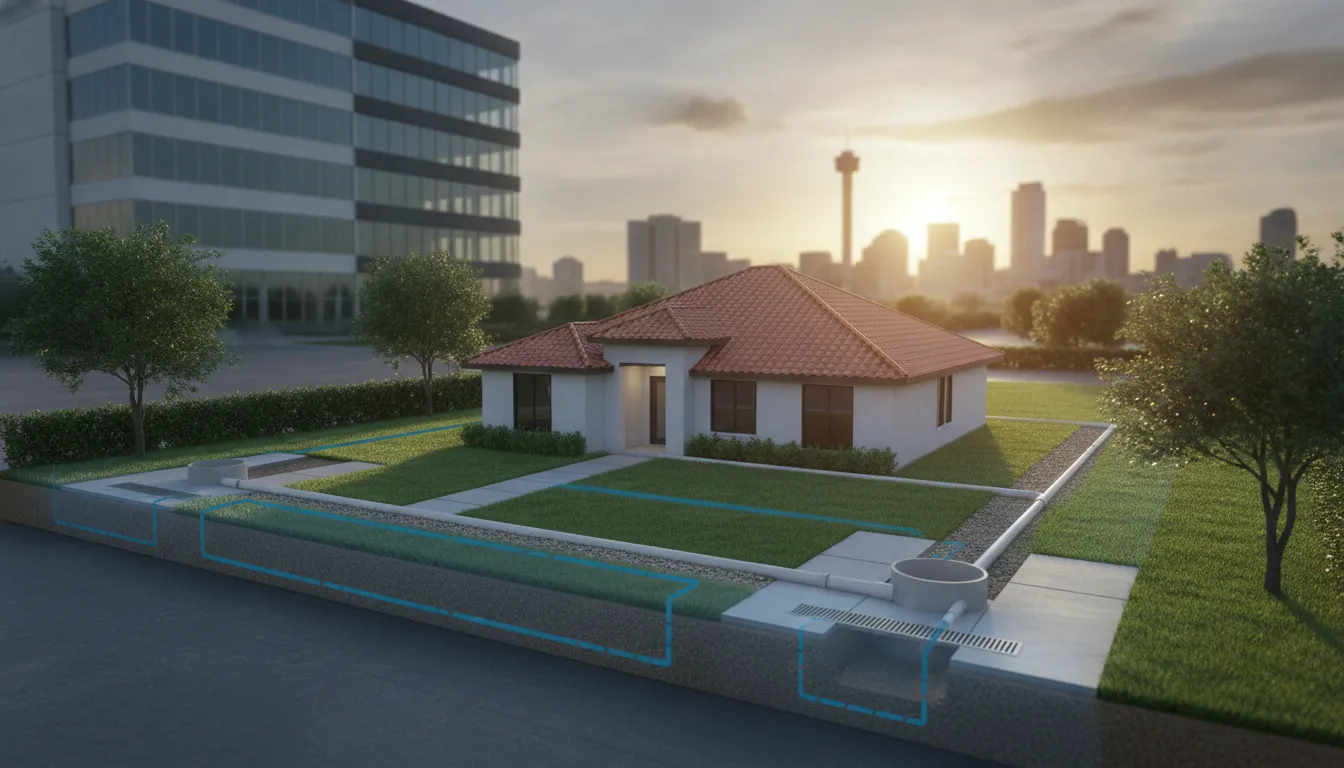
A puddle that disappears after a storm may seem harmless, but recurring standing water often points to a larger drainage problem. In San Antonio, clay soil, shallow rock, uneven grading, and intense rainfall can make it difficult for water to soak into the ground or move away from your home. Runoff may also erode flower beds, damage walkways, weaken hardscaping, or remain close to the foundation. Finding the right drainage solutions San Antonio homeowners need starts with tracing water from its source to its final destination. Learn which systems can help, how much they may cost, and when professional planning makes sense.
Key Takeaways
- Start with the water source: Determine whether runoff comes from the roof, yard, soil, driveway, or a neighboring property before selecting a drainage system.
- Match the solution to the property: Gutters, downspout extensions, grading, French drains, catch basins, and controlled outlets may work alone or together, depending on soil, slope, hardscape, and available space.
- Hire a contractor who plans for long-term performance: Request an on-site assessment, detailed estimate, safe discharge plan, warranty information, and maintenance guidance to help protect your foundation and landscaping.
What Drainage Problems Affect San Antonio Properties?
San Antonio properties face a wide range of drainage challenges. Some yards drain slowly because of dense soil or shallow rock, while others develop sudden flooding during intense storms. The right solution depends on where water starts, how it moves across the property, and where it collects. A gutter problem may require a different fix than groundwater, poor grading, or runoff from a parking area.
These issues can affect more than lawn appearance. Uncontrolled water may wash away soil, damage landscaping, stain exterior walls, weaken hardscaping, and leave moisture near the foundation. Professional drainage planning starts by identifying the source and flow of water before recommending a system.
Homeowners and property managers should watch how the site performs during and after rain. Note where water first appears, how long it remains, and whether it follows the same path each time. This information can help a drainage professional distinguish between roof runoff, surface water, and moisture moving through the soil.
Ignoring recurring drainage problems can make repairs more complicated. A small gutter issue may contribute to soil erosion, while an uncorrected low area can affect plants, walkways, and foundation-adjacent soil. Identifying the pattern early makes it easier to select a practical system for the property.
Manage Pooling Water, Flash Flooding, and Slow-Draining Yards
San Antonio yards can change from dry to flooded quickly when short, intense storms overwhelm available drainage paths. Heavy clay in one neighborhood and shallow limestone in another can make it difficult for rainwater to soak into the ground. Compacted areas around patios, driveways, and walkways may drain even more slowly.
Look for standing water that remains hours after a storm, muddy patches near the home, or recurring puddles at the bottom of a slope. These conditions can damage grass and plants, attract insects, and send water toward the foundation. A drainage assessment can determine whether the property needs regrading, a surface drain, a French drain, improved downspouts, or a combination of systems. Local drainage specialists identify pooling water and slow-draining yards as common concerns for San Antonio properties.
Address Expansive Clay, Shallow Limestone, and Compacted Soil
Soil conditions influence how quickly water moves and where it collects. Expansive clay can absorb water, swell, and later shrink as it dries. That repeated change can affect soil stability around patios, retaining walls, sidewalks, and foundations. In areas with shallow limestone, water may have limited space to move underground, which can increase surface runoff.
Compacted soil creates another obstacle. Construction activity, heavy foot traffic, and vehicles can press soil together until rainwater runs across the surface instead of soaking in. Drainage work should account for these local conditions rather than rely on a standard design. Proper grading and drainage can help water move away from vulnerable areas while reducing stress on landscaping and hardscapes.
Repair Negative Grading, Erosion, Settling, and Washed-Out Landscaping
Negative grading occurs when the ground slopes toward a building instead of away from it. Even a gradual slope can direct stormwater toward the foundation, especially when gutters discharge beside the home. Low areas may also develop as soil settles, creating new places for water to collect.
Erosion is another visible warning sign. Look for exposed roots, channels in the soil, displaced mulch, bare areas, or gravel that has moved after heavy rain. Water can also wash out garden beds and undermine pavers, retaining walls, and walkways. Drainage repairs may involve adding soil, reshaping the grade, installing edging, or creating a controlled route for runoff. Addressing these problems early helps protect the landscape and reduces the chance that water will remain against the home.
Control Overflowing Gutters and Concentrated Downspout Runoff
A gutter system can collect roof runoff, but it must also move that water to a suitable discharge point. Overflowing gutters may result from leaves, sagging sections, leaks, poor pitch, or undersized components. Downspouts can create a separate problem when they release a large volume of water beside the foundation or at the end of a walkway.
Check for soil erosion below downspouts, water stains on siding, pooling near corners, and splash marks on the foundation. Downspout extensions, underground outlets, splash blocks, or a larger drainage system may help distribute water more safely. TX Gutter Solutions provides gutter and drainage services in San Antonio to help property owners address roof runoff before it contributes to larger water-management problems.
Spot Foundation Warning Signs and Know When to Call a Specialist
Drainage problems do not always appear as obvious flooding. Foundation-related warning signs may include new cracks in brick or drywall, doors that stick, uneven floors, gaps around windows, or separation between walls and trim. These symptoms can have several causes, so they should not be treated as proof of foundation failure.
Water management still deserves attention when these signs appear. Soil that stays wet beside the home, recurring puddles, or runoff flowing toward the foundation can contribute to changing ground conditions. A qualified drainage or foundation professional can inspect the property, identify the water source, and explain which issue should be addressed first. If foundation repair is already planned, ask how drainage will be corrected so the same moisture problem does not continue affecting the area.
Reduce Commercial Risks Around Roofs, Parking Areas, and Entrances
Commercial properties often collect runoff from larger roofs, parking lots, loading zones, and paved walkways. Without a clear drainage plan, water may cross entrances, pool near storefronts, or carry sediment onto drive lanes. These conditions can create slip hazards, damage landscaping, and disrupt access for employees, customers, and deliveries.
Inspect low points around buildings, curb lines, downspout outlets, ramps, and parking spaces. Pay attention to standing water after storms, cracked pavement, eroded planting beds, and staining near exterior walls. Commercial drainage work may include larger downspout systems, catch basins, channel drains, grading corrections, or controlled discharge routes. A site-specific assessment helps property managers address water flow without directing runoff toward neighboring properties or public areas.
Correct Drainage Misconceptions About French Drains, Slopes, and Contractors
A French drain is not the right answer for every drainage problem. It is designed to collect and redirect subsurface water, while surface drains handle water flowing across paved or landscaped areas. Likewise, adding soil to create a slope will not solve a problem if the new grade directs water toward another structure or lacks a safe outlet.
Another common misconception is that drainage work only means digging a trench. The system must match the water source, soil, slope, property layout, and maintenance needs. Before hiring a contractor, ask how the proposed solution will collect water, where it will discharge, and how installation will affect landscaping. Drainage contractors with specialized experience can explain why a particular system fits the property instead of recommending the same design for every yard.
Which Drainage Solutions Work Best in San Antonio?
The best drainage solution depends on where water comes from, how quickly it moves, and where it collects. Roof runoff, surface water, groundwater, and water flowing across a driveway can create different problems, so one system rarely works for every property. A home with overflowing gutters may need downspout extensions, while a yard that stays saturated may require grading, a French drain, or a controlled discharge area.
San Antonio properties also vary by age, soil conditions, slope, landscaping, and hardscape design. Compacted soil can slow absorption, while shallow limestone may affect excavation and underground drainage. Older properties may have settled soil or drainage systems that no longer carry water effectively. Commercial sites often need larger collection points around parking areas, entrances, and loading zones.
A properly planned system should move water away from foundations, walkways, landscaping, and other vulnerable areas without causing erosion or sending runoff toward a neighboring property. A professional assessment can identify whether the property needs grading, underground drainage, gutter improvements, or a combination of systems. TX Gutter Solutions provides drainage and gutter services for residential and commercial properties throughout San Antonio and Bexar County.
Use Grading and Swales to Direct Surface Runoff
Grading shapes the ground so water flows away from the foundation instead of collecting beside the home. If the soil slopes toward the structure, even an effective gutter system may not prevent pooling. Regrading can correct low spots, while a shallow swale can guide water across the property toward a suitable discharge area.
This approach works well for yards with broad areas of pooling, erosion, or runoff moving from a higher part of the lot. It may also protect flower beds, turf, patios, and other landscaping from repeated flooding. The goal is to create a stable flow path that carries water safely during heavy rain, rather than sending it toward the foundation or allowing it to spread across the yard.
Install French Drains to Manage Subsurface Water
A French drain can help manage water moving through saturated soil. It typically uses a perforated pipe inside a gravel-filled trench. The pipe collects groundwater and carries it toward a suitable outlet, helping relieve wet areas that surface grading alone cannot correct. French drain guidance explains how the trench and pipe work together to redirect subsurface water.
French drains may be useful beside foundations, retaining walls, sloped yards, and areas that remain wet after the surface dries. Proper slope, filter material, pipe placement, and discharge planning all affect performance. Without a reliable outlet, a French drain may collect water without resolving the problem, so the complete flow path should be planned before excavation begins.
Add Surface, Catch-Basin, and Channel Drains Around Hardscapes
Surface drains collect water through a grate before it can soak into the soil or flow across a hardscape. Catch basins provide larger collection points for runoff, leaves, and sediment, while channel drains use long, narrow grates to collect water across driveways, patios, pool decks, and walkways.
These systems are useful where concrete and paving limit absorption. A channel drain near a garage entrance can intercept runoff before it enters the structure. Catch basins placed at low points can collect water from larger areas and connect to buried discharge lines. Each drain needs the appropriate size, location, slope, and outlet for the amount of water it receives. Routine cleaning also helps prevent sediment and debris from restricting flow.
Use Sump Pumps to Remove Water from Low Points and Below-Grade Areas
A sump pump removes collected water from a basin installed at the lowest point of an area. When water reaches a set level, the pump sends it through a discharge pipe to a designated location. This can help protect basements, crawl spaces, utility areas, and other below-grade spaces that receive groundwater or stormwater.
A pump may also support a drainage system where gravity cannot carry water to a suitable outlet. It requires regular testing and accessible components for service. Homeowners should check the pump, float switch, power supply, backup equipment, and discharge line before periods of heavy rain. A contractor can explain how sump pumps work and determine whether pumping suits the property’s layout and water conditions.
Build Rain Gardens and Controlled Discharge Areas
A rain garden is a planted, shallow depression designed to collect and slowly absorb runoff. It can provide a useful outlet for water from a downspout, driveway, or gently sloped yard when the soil and site conditions are suitable. Native or well-adapted plants can help stabilize the area, reduce bare soil, and make the drainage feature part of the landscape.
Controlled discharge areas may include a stabilized gravel bed, dry creek bed, or another landscaped feature that slows water before it leaves the property. Placement matters. A rain garden should not direct water toward a foundation, septic system, neighboring property, or unstable slope. Properties below a hill or higher lot may need a broader plan that addresses runoff entering the site, not just water falling on it.
Install Gutters, Downspouts, Extensions, and Leaf Protection
Gutters collect roof runoff and move it into downspouts, reducing the amount of water that lands beside the foundation. Downspout extensions can carry water farther from the home, while splash blocks or connected drainage lines can help prevent erosion near discharge points. Properly sized seamless gutters can also reduce leak-prone joints along long rooflines.
Leaf protection helps limit clogs that cause overflowing gutters and concentrated runoff. Guards do not remove the need for inspections and cleaning, however. Gutters should have the right pitch, secure hangers, clear outlets, and downspouts positioned according to the property’s drainage plan. If the yard has poor grading or saturated soil, gutter work may need to be paired with another drainage solution.
Combine Systems for Complex Residential and Commercial Properties
Some properties need more than one drainage method. A home may require seamless gutters and downspout extensions to control roof runoff, grading to direct surface water, and a French drain to address a consistently wet side yard. A commercial property may need catch basins, channel drains, underground pipe, and stabilized discharge areas around entrances, parking lots, and loading zones.
The right combination depends on the site layout, soil, hardscape, roof area, slope, and volume of water involved. A qualified contractor should trace water from its source to its intended outlet before recommending installation. TX Gutter Solutions provides custom exterior water-management services for San Antonio homes, businesses, and property managers, with solutions designed around the property rather than a standard package.
How Do You Choose the Right Drainage Solution in San Antonio?
The right drainage solution starts with the source of the water, not the name of a particular system. A French drain may help collect groundwater, while a properly graded swale may be better for surface runoff. In other cases, the most effective plan combines gutters, downspout extensions, catch basins, and a controlled discharge point.
San Antonio properties can face several drainage challenges at once. Dense clay may shed water instead of absorbing it, shallow limestone can limit excavation, and compacted soil around driveways or newer construction may drain slowly. A property assessment helps match the system to the problem and reduces the risk of directing water toward your foundation, landscaping, or a neighboring lot. The City of San Antonio’s stormwater resources offer helpful information about local runoff concerns before work begins.
Trace the Water Source, Flow Path, and Low Point
Begin by identifying where the water comes from. It may flow from the roof, a sloped driveway, a neighboring property, or a higher section of the yard. If possible, inspect the property during or shortly after rainfall. Look for visible channels, muddy paths, standing water, soil erosion, and areas where mulch has washed away.
Then follow the water across the property until it reaches a low point. This may be beside the foundation, near a patio, at the bottom of a slope, or along a fence. Note whether water collects in one location or spreads across a larger area. These details can indicate whether you need improved grading, surface drainage, subsurface collection, or better roof runoff control.
Do not focus only on the puddle. A leaking or overflowing gutter several feet above the wet area may be the real cause.
Assess Slope, Soil, Vegetation, Hardscape, and Home Layout
A drainage plan should account for the full property, including features that change how water moves. Check the slope around the foundation, the grade of nearby lawns, and the transitions between turf, garden beds, patios, sidewalks, and driveways. Hard surfaces shed water quickly, while planted areas may absorb some runoff until the soil becomes saturated.
Soil conditions matter as well. Dense clay can hold water or send it across the surface, while shallow limestone may make deep excavation more difficult. Compacted soil around construction areas can create slow-draining patches even when the rest of the lawn looks healthy. Bare soil is also more vulnerable to erosion, while established vegetation can help hold soil in place.
Consider the home’s layout, including retaining walls, additions, detached garages, pool decks, walkout areas, and basement entrances. These features can create low points or block the natural flow of water. A solution suited to an open backyard may not work beside a narrow side yard or paved walkway.
Match the System to the Problem’s Location and Severity
Drainage systems address different problems, so the system should match the location and severity of the issue. A shallow swale may guide light surface runoff away from a patio. A catch basin and underground pipe may work better for concentrated water near a driveway. A French drain can collect subsurface water, but it may not solve roof runoff spilling directly beside the foundation.
Consider how often the problem occurs and the damage it causes. Occasional ponding in a low section of lawn may require a different approach than water entering a garage after every major storm. Soil erosion, saturated ground beside the foundation, and water against exterior walls deserve prompt attention because they can worsen over time.
The system must also fit the available space. A wide swale requires room, while a channel drain needs a suitable outlet. An experienced contractor can compare options and explain why one approach fits your property better than another. TX Gutter Solutions provides drainage and water-management services tailored to the conditions around each home or business.
Separate Roof Runoff from Yard and Groundwater Drainage
Roof runoff should be one of the first water sources you evaluate. A large roof can send substantial water toward the ground during a storm. If gutters are clogged, undersized, poorly pitched, or missing from certain rooflines, water may spill over and collect beside the foundation. Downspouts that discharge too close to the home can create similar problems.
Roof water should be managed separately from water that moves through the yard or collects in saturated soil. Sending every water source through one undersized line can overwhelm the system and cause backups. Instead, inspect the gutter layout, downspout locations, extensions, and available discharge areas before planning additional yard drainage.
A custom seamless gutter system may resolve the problem when roof runoff is the main cause. If water continues to collect after the gutter system is corrected, the property may also need grading, a catch basin, or subsurface drainage.
Plan a Safe Outlet That Protects Neighboring Properties
Every drainage system needs a safe destination for collected water. Moving water away from the foundation is not enough if it discharges onto a sidewalk, erodes a slope, flows toward a neighboring yard, or collects beside a public street. The outlet should handle the expected volume and release water in a controlled manner.
Check property lines, easements, fences, nearby structures, and existing drainage paths before choosing an outlet. A discharge point may need a pop-up emitter, stabilized swale, erosion-control material, or another feature that slows the flow. Underground pipes should also have an accessible outlet so they can be inspected and cleared.
Runoff planning is important for commercial properties, too. Water near entrances, parking areas, and pedestrian routes can create slip hazards and damage pavement or landscaping. The City of San Antonio’s drainage guidance is a useful starting point, but requirements can vary by project and location. Ask a qualified contractor how the proposed outlet will affect your property and the surrounding area.
Consider Permits, Access, Maintenance, and Long-Term Performance
Before installation, ask whether the work may involve permits, utility locations, easements, or restrictions on where water can discharge. Requirements may depend on the property, project size, excavation, and connection to existing drainage infrastructure. Your contractor should explain which responsibilities belong to you and which they will manage.
Access is another practical concern. Equipment may need to cross a side yard, pass through a gate, or work around existing landscaping and hardscape. Discuss how the crew will protect trees, irrigation lines, paving, and planting beds. A clear access plan can help prevent surprises during installation.
Maintenance should be part of the original design. Ask how often gutters, catch basins, grates, pipes, outlets, and sump pumps require attention. Find out which components you can inspect yourself and which may need professional service. A system that works well but cannot be easily accessed may lose effectiveness sooner.
Long-term performance can also be affected by soil settlement, root growth, erosion, new landscaping, patios, fences, or additions. Plan for periodic inspections, particularly after severe storms or major exterior projects.
Get a Professional Assessment Before You Dig or Install
A professional assessment can identify problems that are easy to miss from the surface. A qualified contractor can inspect gutter discharge, grading, soil conditions, low points, hardscape, erosion, and the relationship between the drainage issue and your foundation. This makes it easier to choose a system based on site conditions rather than guesswork.
Before digging, have underground utilities located. Confirm that the proposed route will not interfere with irrigation, electrical lines, plumbing, or structural features. Avoid installing a French drain, buried pipe, or discharge line based only on a product description or quick visual inspection. If the water source is misidentified, the new system may collect water without providing a reliable path away from the property.
When requesting an assessment, ask for a written explanation of the problem, recommended solution, proposed outlet, installation steps, maintenance needs, and estimated cost. TX Gutter Solutions offers free estimates for properties in San Antonio and surrounding Bexar County communities. A clear evaluation gives you a practical starting point before excavation or installation begins.
Can Gutters and Downspouts Prevent Foundation Damage?
Yes, a properly designed gutter and downspout system can help protect your foundation by moving roof runoff away from the base of your home. Without that control, rainwater can collect beside the foundation, saturate the surrounding soil, wash away landscaping, and contribute to soil movement as conditions change.
Gutters are only one part of a complete drainage plan. They collect water from the roof, while downspouts, extensions, grading, and drainage outlets determine where that water goes next. A system may look clean from the street and still perform poorly if it is undersized, clogged, poorly pitched, or discharging too close to the house.
San Antonio properties face additional drainage challenges, including intense storms, compacted soil, shallow limestone, and expansive clay. These conditions make it important to consider the entire water path, from the roof to the final discharge point. Homeowners in San Antonio and Bexar County can review TX Gutter Solutions’ gutter and drainage services to see how roof runoff, foundation protection, and landscaping needs can be addressed together.
Capture Roof Runoff with Properly Sized Seamless Gutters
Gutters need to handle the amount of water flowing from your roof during heavy rain. If the channels are too small or the system has too few downspouts, water may spill over the edges and collect near the foundation. A professional assessment should account for roof size, pitch, drainage areas, and the direction of runoff before recommending a system.
Seamless gutters are custom-fabricated to fit the property, which reduces the number of joints where leaks can develop. They also create a clean appearance along the roofline. The right material, profile, and size depend on the home and site conditions, so installation should be based on the structure rather than a standard package. Custom seamless gutter installation can create a more dependable path for roof water.
Direct Downspouts Away from Foundations and Walkways
Downspouts carry water from the gutter to ground level, but their placement determines whether they protect the property or create another drainage problem. A short outlet that releases water beside the house can saturate soil, cause standing water, and wash away mulch or planting beds. It may also leave walkways slick or create erosion near steps and entrances.
Downspouts should discharge far enough from the foundation and away from doors, patios, driveways, and other areas where water can create a hazard. The best location depends on the lot’s slope and the available drainage path. If water repeatedly collects at the same corner, moving the downspout alone may not solve the issue. The outlet may need to connect to an extension, swale, drain, or another suitable system.
Connect Extensions to Suitable Drainage Outlets
A downspout extension can carry roof runoff farther from the home, but it still needs a safe place to release that water. An extension that ends in a low spot may simply move the puddle a few feet. In some yards, the outlet can discharge onto a stable, sloped area. In others, it may need to connect to a drain, swale, or buried line.
The outlet should not direct water toward a neighboring property, foundation, retaining wall, or frequently used walkway. It should also remain accessible for inspection and cleaning. When an extension crosses a driveway or sidewalk, a buried drainage line or surface drain may provide a safer solution. A contractor can assess the flow path before installation and help reduce recurring erosion, pooling, and landscape damage.
Reduce Clogs and Overflow with Leaf Protection
Leaves, twigs, seed pods, and roof debris can block gutters and downspouts. When water cannot move through the system, it may overflow at the roofline or collect in heavy, sagging sections. Trapped moisture can also contribute to corrosion, leaks, and damage to fascia boards.
Gutter guards can reduce the amount of debris entering the channels, but they do not eliminate maintenance. Different guard styles work better with different roof designs, tree coverage, and types of debris. Proper installation is also important so water enters the gutter instead of flowing over the top. Gutter cleaning and leaf protection can help keep the system working between major storms, especially on properties surrounded by mature trees.
Inspect Gutters for Sagging, Leaks, and Poor Pitch
A gutter should maintain a slight slope toward its downspout. If sections sag, pull away from the fascia, or hold standing water, the system may not drain correctly. Loose fasteners, damaged seams, cracked outlets, and rusted areas can also create leaks that soak the soil directly below the roofline.
Inspect the gutters during and after heavy rain when possible. Look for water spilling over the front edge, pooling in the channel, or running behind the gutter. Check that downspouts remain firmly attached and that their outlets are clear. Small repairs may correct isolated problems, while widespread sagging or repeated leaks may indicate that replacement is more practical. Regular gutter maintenance can identify these issues before they affect nearby soil and landscaping.
Know Why Gutters Alone May Not Fix Yard Drainage
Gutters manage water from the roof, but they do not address every source of moisture in a yard. Rain may also flow across a sloped lawn, collect beside a retaining wall, enter through a low patio, or rise from saturated soil. If the ground slopes toward the house, even well-maintained gutters may not prevent pooling near the foundation.
Signs of a broader drainage problem include standing water that remains after the roof has dried, muddy areas in the middle of the yard, erosion channels, musty crawl spaces, and repeated moisture near the foundation. These conditions may call for grading, swales, French drains, catch basins, or another system designed for surface or subsurface water. The right solution starts by identifying where the water originates and how it travels across the property.
Combine Gutter Work with Grading or Drainage When Needed
Some properties need more than new gutters or longer downspout extensions. If the yard has negative grading, compacted soil, shallow limestone, or limited space for discharge, roof runoff may need to work alongside a broader drainage plan. Regrading can help direct surface water, while a drain system can collect water that moves through the soil or gathers in a low area.
Combining systems can also protect landscaping. Gutters can capture roof runoff, downspouts can move it away from the structure, and swales or drains can guide it toward a suitable outlet. TX Gutter Solutions can assess the property and recommend tailored water-management solutions based on the home, site conditions, and maintenance needs. A coordinated plan is often more dependable than installing separate fixes that do not work together.
San Antonio Drainage Solutions Cost Guide
Drainage costs in San Antonio depend on the type of water problem, the size of the property, and the difficulty of the installation. A simple downspout extension may cost a few hundred dollars, while grading, excavation, underground piping, or a complete yard drainage system can cost several thousand dollars. An on-site assessment provides a more useful estimate than a generic price per foot.
Local conditions also influence pricing. San Antonio properties may have expansive clay, shallow limestone, compacted soil, steep grades, or limited discharge areas. Short, intense rain events can move a large volume of water across a property quickly, so a contractor should evaluate the entire flow path instead of treating only the visible puddle. Local drainage contractors assess grading, soil moisture, runoff, and foundation exposure before recommending a system.
A written estimate should explain what the contractor will install, where the water will go, and how the work may affect landscaping. It should also identify excavation, materials, labor, permits, restoration, maintenance, and warranty coverage. Comparing these details helps you choose a drainage plan that offers lasting protection, rather than simply selecting the lowest starting price.
Compare Typical Costs for Grading, French Drains, and Surface Drains
Grading is often one of the more affordable improvements when the property has enough usable space and the soil can be reshaped without major excavation. A small grading project may cost about $1,000 to $4,000. Larger properties, retaining features, rock removal, or substantial soil replacement can raise the total.
French drains generally cost more because installation involves trenching, perforated pipe, gravel, filter fabric, and a suitable discharge point. Many residential projects fall between $1,500 and $5,000, although long runs, rocky ground, and deeper trenches may increase the price. Drainage guidance from G.L. Hunt explains why the right system depends on grading, property layout, soil, and the location of the water problem.
Surface drains and catch basins may cost approximately $500 to $3,000 per area. The final estimate depends on the number of drains, pipe length, grate type, and outlet. A contractor may combine surface drains with grading or underground piping when water collects near patios, driveways, or foundations.
Estimate Installation Costs for Sump Pumps, Gutters, Downspouts, and Extensions
Sump pump installation may range from about $1,000 to $4,000 for a typical residential application. The price depends on whether a pit already exists, how much excavation is needed, the pump capacity, backup equipment, and the length of the discharge line. Properties with crawl spaces, basements, or persistently wet low points may need additional components.
Gutter installation commonly costs around $6 to $20 per linear foot, depending on the material, profile, roof height, corners, and site access. Seamless gutters are formed on site to fit the roofline, which reduces the number of joints where leaks can develop. Downspouts and extensions may add roughly $100 to $500 or more per location, especially when underground connections or longer discharge routes are needed.
These figures are planning ranges, not firm quotes. A contractor should measure the roof, assess how much water each section receives, and determine whether the existing outlet can handle the flow. TX Gutter Solutions’ drainage services bring gutter, downspout, and drainage options together in one assessment.
Plan for Repair, Cleaning, Leaf Protection, and Maintenance Costs
Routine maintenance usually costs less than repairing erosion, damaged landscaping, or foundation-related problems after repeated water exposure. Gutter cleaning may cost approximately $150 to $400 for many homes, although steep roofs, multiple stories, heavy debris, and difficult access can increase the estimate. Downspout clearing and minor resealing may be included or billed separately.
Gutter repairs may range from a few hundred dollars for small leaks, loose fasteners, or minor pitch corrections to more for extensive sagging, damaged sections, or replacement. Leaf protection adds an upfront cost, often priced by the linear foot, but can reduce debris entering the system and limit how often cleaning is needed. It does not eliminate inspections, especially after severe storms.
Underground drain repairs vary widely. A damaged section near the surface may be straightforward to correct, while crushed pipe, root intrusion, collapsed lines, or blocked outlets may require excavation. Drainage professionals recommend addressing water issues early, since runoff problems often spread beyond the first visible area. Ask whether testing, debris removal, replacement parts, and cleanup are included.
See How Property Size, Soil, Access, and Water Flow Affect Pricing
Property size affects more than the amount of pipe or gutter material. A large yard may require longer trenches, additional catch basins, multiple outlets, or several discharge routes. A smaller lot can also be challenging if buildings, fences, pools, patios, and neighboring properties leave little room for installation.
Soil conditions are especially important in San Antonio. Heavy clay can hold water and expand or contract as moisture changes, while shallow limestone can make trenching and grading more labor-intensive. Compacted soil may prevent water from soaking in, while loose or disturbed soil can wash away around new drainage. These conditions may change both the recommended system and the excavation requirements.
Access also affects labor. Narrow side yards, steep slopes, locked gates, mature trees, and limited equipment access may require hand digging or additional restoration. Water volume matters as well. A large roof can send more runoff to each downspout, while a steep yard can move stormwater toward a foundation quickly. Local drainage information from VHS Outdoor Living describes how clay, limestone, and intense rainfall affect San Antonio properties.
Account for Excavation, Outlets, Landscaping, and Permits
Excavation can make up a significant portion of a drainage estimate. Costs may include trenching, rock removal, soil disposal, pipe bedding, gravel, backfilling, and compaction. If the system passes beneath a walkway, driveway, or patio, the contractor may need to cut and restore the hardscape. Ask whether restoration is included or listed separately.
The outlet also deserves careful attention. Water may discharge through a pop-up emitter, daylight outlet, dry well, approved storm connection, or another method suited to the property. The lowest-cost installation will not solve the problem if it sends concentrated water toward a neighbor, public walkway, retaining wall, or another part of the foundation. A proper plan should show where the water ends up and how that area will handle the flow.
Landscaping can add to the total when crews must remove and replace sod, mulch, shrubs, edging, irrigation lines, or decorative rock. Permit requirements vary by project and location. Your contractor should explain whether permits, utility marking, inspections, or approvals apply and who will handle them. G.L. Hunt’s drainage guidance notes that system selection depends on the home’s layout, grading, drainage issue, and local conditions.
Compare Written Scopes, Warranties, Timelines, and Long-Term Value
Compare drainage proposals by reviewing the scope, not just the total price. A complete proposal should list the system type, dimensions, materials, pipe locations, catch basins, discharge points, excavation, landscaping restoration, cleanup, and exclusions. It should also explain whether the contractor is correcting the source of the water or only redirecting it.
Ask how long installation will take and what could delay the work. A straightforward gutter or downspout project may take less time than a French drain, grading project, or multi-area system. Weather, rock, buried utilities, and difficult access can affect the schedule. HomeGuide’s San Antonio drainage information notes that simple installations may take one to two days, while complex projects can take considerably longer.
Warranties should identify what is covered, how long coverage lasts, and whether labor, materials, leaks, settling, or blockages are included. A lower estimate may not offer the best value if it uses undersized pipe, excludes restoration, or provides limited support after installation. TX Gutter Solutions offers free estimates, giving property owners an opportunity to discuss scope, pricing, and maintenance before work begins.
Budget for Drainage Work That Protects Foundations and Landscaping
Drainage work should be viewed as property protection, not only as a response to standing water. Uncontrolled runoff can erode soil, wash away mulch, damage plants, saturate areas near the foundation, and create recurring maintenance problems. Over time, changing moisture levels around expansive soil may contribute to movement and settlement concerns. Big Sky Drainage explains how poor yard drainage can affect foundations, lawns, and pest conditions.
When setting a budget, separate urgent repairs from planned improvements. A blocked downspout or overflowing gutter may need prompt attention, while a complete grading or underground drainage project may require more preparation. Request pricing for the recommended solution, an appropriate alternative, and optional additions such as leaf protection, backup pumping, or landscape restoration.
The most useful estimate connects the system to a specific problem. It should show how roof water, yard runoff, and groundwater will be managed without shifting the issue elsewhere. For San Antonio homeowners and property managers, properly designed water management can help preserve foundations, hardscapes, plantings, and usable outdoor space. A professional assessment from a company experienced in San Antonio gutter and drainage services can clarify which work is needed now and which improvements can be scheduled later.
How Do You Choose a Qualified San Antonio Drainage Contractor?
The right drainage contractor does more than install a trench, pipe, or drain. They should identify where water originates, how it moves across your property, and where it can discharge without causing another issue. A qualified professional will also explain why a specific system fits your home or business instead of recommending the same solution for every site.
Before you hire a contractor, compare their local experience, inspection process, written proposal, insurance, warranties, and customer feedback. Ask direct questions about excavation, landscaping, permits, maintenance, and follow-up service. These details can help you avoid unexpected costs and determine whether the contractor has a practical plan for your property.
TX Gutter Solutions provides drainage and water-management services for properties in San Antonio and surrounding Bexar County communities. Its services include gutter, downspout, and runoff solutions designed to help protect foundations and landscaping.
Find Local Residential and Commercial Drainage Experience
Look for a contractor who has completed drainage work on properties similar to yours. Residential projects may involve foundation protection, landscape erosion, water pooling near patios, or moisture around crawl spaces. Commercial properties can present different challenges, including large roof areas, parking lots, loading zones, entrances, and drainage routes used by customers and employees.
Ask how long the contractor has worked in San Antonio and whether they have experience with clay soil, shallow limestone, compacted ground, and heavy storm runoff. Local knowledge matters because a system that works on a flat, open lot may not suit a sloped yard or a property surrounded by concrete.
Request examples of completed projects and ask what problems those systems addressed. A contractor’s service area information can also help confirm whether the company regularly works in your neighborhood.
Request an On-Site Assessment and Detailed Written Scope
A contractor should inspect your property before recommending a drainage system. During the visit, they should trace the water source, identify low points, review existing gutters and downspouts, and examine how grading directs runoff. They should also look for erosion, standing water, soil movement, and signs that water is collecting near the foundation.
The written proposal should describe the recommended work in plain language. It should list the system components, installation areas, excavation requirements, discharge point, materials, estimated timeline, total price, and excluded work. A detailed scope makes it easier to compare contractors and reduces confusion once installation begins.
Be cautious if a contractor offers a firm recommendation without seeing the property. Drainage depends on site conditions, so an on-site assessment is more useful than a standard package or quick quote. You can request a free estimate from TX Gutter Solutions to discuss your property and its water-management concerns.
Ask How the Contractor Will Manage Runoff, Discharge, Excavation, and Landscaping
A drainage system is only effective if it has a safe, practical outlet. Ask where collected water will go, how quickly it should leave the property, and whether the discharge could affect a neighboring lot, sidewalk, driveway, or public area. The contractor should explain how the system will handle heavy rainfall, not just normal conditions.
Ask what excavation will involve, including whether the crew must remove soil, concrete, plants, mulch, or irrigation lines. Find out how the team will protect existing landscaping and what restoration is included after installation. A careful contractor should discuss access, soil removal, trench safety, cleanup, and property restoration before work starts.
Drainage planning should account for the entire water-management system, including gutters, downspouts, grading, and landscaping. TX Gutter Solutions can also coordinate gutter and downspout services when roof runoff contributes to pooling or erosion.
Verify Insurance, Credentials, Warranties, and Permit Responsibilities
Before signing a contract, ask for proof of current general liability insurance and workers’ compensation coverage, when applicable. These documents help clarify responsibility if a worker is injured or your property is damaged during excavation or installation. Confirm the company’s business information and ask whether subcontractors will perform any part of the work.
Ask what warranty covers the materials, workmanship, and system performance. The warranty should state its length, exclusions, and process for requesting service. Remember that drainage results can also depend on maintenance, landscaping changes, severe weather, and conditions outside the installed area.
Permit requirements vary by project and location. Ask whether the contractor will determine which permits or approvals are needed, obtain them, and include related costs in the proposal. Get the answer in writing so you understand exactly what the contractor will handle and what remains your responsibility.
Review San Antonio Customer Feedback for Communication and Follow-Through
Customer reviews can show how a contractor handles the full project, from the first call through cleanup and follow-up. Look for comments about punctuality, communication, estimate accuracy, job-site care, and whether the completed work addressed the original water problem.
Focus on feedback from customers with properties similar to yours. A homeowner with a small yard may describe a different experience than a commercial property manager dealing with large roof areas and extensive hardscape. Reviews that mention drainage installation, gutter work, grading, or post-project support are especially useful.
Check several review sources when possible, and look for recurring patterns rather than one isolated comment. You can also ask for references from comparable San Antonio projects. TX Gutter Solutions explains its background as a family-owned, veteran-led company and can answer practical questions about its process.
Compare Review Patterns Instead of Isolated Testimonials
One glowing testimonial does not show whether a contractor delivers consistent service. Read multiple reviews and look for repeated themes. Do customers mention clear communication, accurate pricing, clean work areas, and reliable follow-through? Do they explain how the company responded when a concern appeared?
Negative reviews can provide useful context, too. A complaint about a weather delay is not necessarily a warning if the contractor communicated clearly and rescheduled promptly. Repeated complaints about missed appointments, unexplained charges, unfinished restoration, or difficulty reaching the company deserve more attention.
Compare customer feedback with the contractor’s proposal and your conversations. If the company promises detailed scopes and responsive service, reviews should support those claims. Ask how the contractor handles service requests after installation if a drain clogs, an outlet settles, or runoff changes after future landscaping work.
Avoid Contractors Who Recommend the Same System for Every Property
Drainage problems rarely have one universal fix. A French drain may help manage subsurface water, while a surface drain may better handle runoff across a driveway or patio. In another situation, the main issue may be overflowing gutters, poor grading, or a downspout releasing water beside the foundation.
Be cautious if a contractor recommends the same system before inspecting your property. Ask why the proposed solution fits your soil, slope, hardscape, roof drainage, and water-flow pattern. The contractor should explain what the system will address, what it will not address, and how you should maintain it.
A thoughtful proposal may combine several measures, such as seamless gutters, leaf protection, downspout extensions, grading, and a controlled drainage outlet. The right plan should reflect your property’s access, maintenance needs, water-flow patterns, and long-term goals rather than simply matching a standard package.
San Antonio Drainage Maintenance Checklist
A drainage system works best when every component is clear, connected, and pointed toward a suitable outlet. In San Antonio, intense rainfall can expose clogged gutters, settled soil, blocked drains, and poorly positioned downspouts in a short time. Regular maintenance helps reduce the risk of water collecting near your foundation, washing out landscaping, or creating slippery walkways and entrances.
Use this checklist several times a year, especially before periods of heavy rain. Properties with mature trees, expansive clay soil, steep slopes, large roofs, or extensive hardscaping may need more frequent inspections. After a storm, look for new erosion, standing water, loose drainage components, and signs that runoff has changed direction.
If water repeatedly collects near your home or the source of a drainage issue is unclear, schedule a professional drainage assessment. An inspection can help identify whether the problem starts with roof runoff, surface water, groundwater, grading, or a combination of systems.
Inspect Gutters, Downspouts, Drains, and Discharge Outlets
Walk around your property and inspect each part of your drainage system. Look for gutters that pull away from the fascia, sagging sections, visible leaks, loose fasteners, and areas where water overflows during rainfall. Check that downspouts remain securely connected and direct water away from the foundation.
Inspect ground-level drains, channel drains, catch basins, and discharge outlets as well. Remove visible obstructions and check that outlet pipes have not become buried, crushed, or blocked by soil, mulch, or landscaping. Water should leave the property without collecting beside the home or eroding the surrounding soil.
Pay attention to staining beneath gutters and damp areas near downspout outlets. These signs may indicate a leak, poor pitch, or an outlet that cannot handle the volume of water reaching it. A properly designed seamless gutter system can help manage roof runoff when existing gutters are damaged, undersized, or poorly positioned.
Remove Leaves, Sediment, and Catch-Basin Buildup
Leaves, twigs, and roof debris can block gutters and downspouts. Sediment, mulch, and small stones may collect inside catch basins and surface drains. Even a partial blockage can slow the flow of water and cause overflow during a heavy storm.
Clear debris by hand or with suitable tools, then flush the system with water to confirm that it drains freely. When cleaning a catch basin, lift the grate carefully and remove buildup from the basket or basin. Avoid pushing debris deeper into the connected drainage line. If water remains after cleaning, the pipe may have a deeper blockage or an outlet problem.
Leaf protection can reduce the amount of debris entering your gutters, but guards still require periodic inspection. Fine leaves, pollen, roof granules, and dirt can collect on top of or beneath the system. Ask a professional to inspect the guards if gutters continue to overflow after cleaning.
Test Sump Pumps, Backup Systems, and Discharge Lines
If your property has a sump pump, test it before the next period of heavy rain. Slowly add water to the basin and confirm that the float activates the pump. Listen for grinding, rattling, or repeated cycling. The pump should move water through the discharge line without overflowing or shutting off unusually quickly.
Inspect the outdoor end of the discharge pipe as well. Make sure the outlet remains open, stable, and positioned so water does not flow back toward the home. Check backup pumps, battery systems, and alarms according to the manufacturer’s instructions. Replace worn batteries and keep the equipment accessible for emergency use.
A sump pump addresses water that reaches the basin, but it may not solve the cause of ongoing moisture. If groundwater continues entering a crawl space or low area, the property may also need grading, a French drain, improved discharge, or another coordinated drainage solution.
Watch for Settlement, Erosion, Roots, and Recurring Ponding
Drainage issues often leave visible clues in the yard. Look for soil that has settled near the foundation, channels carved through mulch, exposed roots, washed-out landscaping, and bare areas where runoff repeatedly travels. Puddles that remain after surrounding areas have dried may point to a low spot, compacted soil, or a blocked underground line.
Also inspect cracks, shifting pavers, and gaps where soil has pulled away from hardscaping. Tree roots can interfere with drainage pipes or alter the way water moves through the property. Adding soil may appear to solve a low spot, but it can redirect water toward your home or a neighboring property.
Take photos of recurring problem areas after rainfall. Pictures can help show the direction and volume of runoff, making it easier for a contractor to identify the source. A proper assessment should address the cause of the water problem rather than only covering the visible symptom.
Recheck Drainage After Major Storms and Landscaping Changes
Heavy rain can shift soil, move mulch, damage downspouts, and expose weak points in a drainage system. Once conditions are safe, walk around the property and look for new erosion, standing water, loose grates, clogged outlets, and water stains on exterior walls. Check whether discharge areas remain stable and whether runoff reached the foundation.
Landscaping projects can change drainage too. New patios, retaining walls, garden beds, irrigation lines, and compacted paths may block an established flow route. Recheck the property after any grading or hardscape work, especially when the project changes the slope near the house.
Gutters and yard drainage often need to work together. If a new landscape feature changes where downspout water travels, the system may need an extension, buried line, surface drain, or revised outlet. TX Gutter Solutions can help coordinate gutter and drainage services for San Antonio properties.
Schedule Cleaning, Repairs, and Inspections Before Problems Grow
Routine maintenance is generally less disruptive than repairing foundation-adjacent erosion, damaged landscaping, or water intrusion. Schedule gutter cleaning when debris begins to collect, and arrange repairs when you notice leaks, sagging sections, loose fasteners, or disconnected downspouts. Waiting for a major storm can turn a manageable repair into a more extensive project.
Consider an inspection when standing water keeps returning or the source is difficult to identify. A qualified contractor can review roof runoff, soil slope, drainage lines, discharge points, and existing systems before recommending work. Request a written scope that explains the cause of the issue, the proposed repair, expected maintenance, and any limitations.
For San Antonio and Bexar County properties, contact TX Gutter Solutions to request a free estimate for gutter, downspout, drainage, cleaning, repair, or maintenance services.
Why Choose TX Gutter Solutions for San Antonio Drainage?
San Antonio drainage problems rarely come from one source. A heavy storm can expose undersized gutters, blocked downspouts, poor grading, compacted soil, or a discharge point that releases too much water beside the foundation. Solving only one part of the problem may provide short-term relief while water continues to collect elsewhere.
TX Gutter Solutions takes a property-focused approach to water management. The team can review your gutters, downspouts, drainage paths, landscaping, and areas where water pools or erodes soil. Based on the property’s layout, the recommended work may include seamless gutter installation, downspout adjustments, repairs, cleaning, leaf protection, or ongoing maintenance. See the company’s full range of gutter and exterior protection services to learn how these options work together.
The goal is to create a system that suits your roofline, yard, soil, and drainage needs rather than install the same setup at every property. A carefully planned system can help direct roof runoff away from vulnerable areas, reduce erosion, protect landscaping, and limit moisture near the foundation.
Install Custom Seamless Gutters and Downspout Systems
Seamless gutters are formed to match the measurements of your home or commercial property. With fewer joints than sectional gutters, they can reduce common leak points and provide a cleaner appearance along the roofline. Proper sizing and installation also help manage runoff during San Antonio’s heavy rain events.
TX Gutter Solutions can install custom seamless gutters with downspouts placed to move water away from foundations, walkways, retaining walls, and landscaped areas. Downspout location matters because concentrated discharge beside a structure can contribute to soil erosion and excess moisture.
A well-designed system considers roof size, pitch, gutter capacity, and suitable discharge points. Extensions or other drainage connections may help carry water farther from the building. Review the company’s gutter installation services to explore options for your property.
Handle Drainage Repairs, Cleaning, Leaf Protection, and Maintenance
Gutters cannot manage runoff effectively when leaves, sediment, or nests block the flow. Leaks, sagging sections, loose fasteners, and damaged downspouts can also cause water to spill against siding, landscaping, or the foundation. Routine service helps identify these issues before they lead to more extensive exterior damage.
TX Gutter Solutions provides gutter repairs, cleaning, leaf protection, and maintenance for properties in the San Antonio area. Cleaning removes debris that restricts water flow, while repairs address damaged or poorly secured components. Leaf protection can reduce the amount of debris entering the system, although protected gutters still need periodic inspection.
Maintenance should include checking downspouts and discharge outlets after major storms. If water continues to pool in the same location, the cause may involve grading or subsurface drainage rather than the gutter system alone. The team can help identify the appropriate next step through its drainage and gutter services.
Tailor Water Management to Protect Foundations and Landscaping
Effective drainage should protect both the structure and the surrounding property. Roof runoff that reaches planting beds can wash away mulch and soil, expose roots, and damage established landscaping. Water moving across a slope may also erode soil around patios, driveways, walkways, or retaining walls.
TX Gutter Solutions evaluates how roof runoff and surface water interact across the property. Depending on the conditions, the plan may include changing downspout locations, adding extensions, improving discharge points, or coordinating gutter work with broader drainage improvements.
This tailored approach is useful for properties with expansive clay soil, uneven grades, extensive hardscaping, or limited discharge areas. The right solution should move water away from structures without sending concentrated flow toward a neighbor’s property or another vulnerable part of the yard. Learn more about the company’s approach to exterior protection before scheduling an assessment.
Serve Homeowners, Businesses, and Property Managers
Drainage needs vary by property type. A homeowner may need to correct one overflowing downspout or protect a foundation after a landscaping project. A business may need reliable water control near entrances, parking areas, loading zones, or multiple roof sections. Property managers may need recurring inspections and service for several buildings.
TX Gutter Solutions works with homeowners, businesses, and property managers throughout San Antonio and Bexar County. The team can consider the property’s layout, access requirements, occupancy, and maintenance schedule when developing a plan.
Commercial properties may require special attention to pedestrian safety, customer access, visible staining, and water near entrances. Residential properties may need a closer look at foundation-adjacent soil, planting beds, patios, and low areas in the yard. Visit the company’s San Antonio service area to confirm local coverage.
Work with a Family-Owned, Veteran-Led Team
Choosing a drainage contractor involves more than comparing services. You also want clear communication, dependable scheduling, and careful work around your home or business. TX Gutter Solutions is family-owned and veteran-led, with a focus on providing a straightforward customer experience.
The team explains the proposed work, identifies areas that need attention, and helps you understand why a particular system may fit your property. A transparent process makes it easier to compare options and avoid paying for work that does not address the source of the problem.
Installation should also account for landscaping, siding, fascia, driveways, and other exterior features. Before work begins, ask what the project includes, where water will discharge, and how the finished system should be maintained. Learn more about the company’s background on its About Us page.
Get a Free Estimate for San Antonio and Bexar County Properties
Drainage pricing depends on the property, system design, access, materials, and amount of work involved. A free estimate gives you a chance to discuss overflowing gutters, recurring ponding, erosion, foundation concerns, or plans for a new water-management system.
Tell the contractor when the problem occurs and how long it has been present. Water that pools during light rain may indicate a different issue than overflow that appears only during severe storms. Photos, previous repair records, and details about recent landscaping or construction can provide helpful context.
TX Gutter Solutions can review your property and discuss options for gutter installation, repairs, cleaning, leaf protection, downspouts, and related drainage needs. Request a free estimate for your San Antonio or Bexar County property, and ask for a written scope that clearly describes the recommended work.
Receive Local Support from Assessment Through Installation and Maintenance
Drainage service should continue after installation. Gutters and downspouts need inspections, discharge areas can settle or erode, and landscaping changes may alter how water moves across the property. Ongoing support makes it easier to identify clogs, damaged components, and recurring ponding early.
TX Gutter Solutions supports customers through assessment, installation, repairs, cleaning, leaf protection, and maintenance. Working with one local team gives you a consistent point of contact when you need to review an existing system or address a new concern. Service records can also help track recurring issues and plan future maintenance.
After installation, ask how often the gutters and downspouts should be checked, where discharge outlets should be inspected, and which warning signs require service. If water continues to collect near the structure, schedule a follow-up assessment instead of assuming the system is working properly. Contact the San Antonio drainage team to discuss your property’s needs.
Related Articles
- Common Misconceptions About Yard Drainage Contractors
- San Antonio Drainage Solutions
- Drainage Services
- Drainage
- San Antonio Drainage
Frequently Asked Questions
What is the first sign of a drainage problem on a San Antonio property?
Standing water that remains after rain is one of the clearest signs. You may also notice eroded soil, washed-out mulch, overflowing gutters, damp foundation-adjacent areas, or water stains on exterior walls. Track where water appears and how long it remains, then have the property assessed if the issue keeps returning.
Are gutters enough to prevent foundation damage?
Gutters help control roof runoff, but they cannot correct every drainage issue. If the yard slopes toward the home, downspouts release water too close to the foundation, or groundwater collects in the soil, the property may need grading, extensions, surface drains, or subsurface drainage in addition to gutter improvements.
Is a French drain the best solution for every wet yard?
No. French drains are designed to collect and redirect water moving through saturated soil. Surface drains, catch basins, swales, or grading may be more appropriate for water flowing across patios, driveways, lawns, or other hardscaped areas. A site inspection can identify the source before you choose a system.
How much does drainage work cost in San Antonio?
Pricing depends on the type of drainage problem, property size, soil, access, excavation, materials, and discharge requirements. A downspout adjustment may cost much less than a complete drainage system involving grading or underground piping. Request a written estimate that explains the recommended work and restoration details.
How can I choose a reliable drainage contractor?
Choose a contractor who inspects the property, explains where water comes from and where it will go, and provides a detailed written scope. Ask about insurance, warranties, permits, maintenance, landscaping protection, and customer reviews. TX Gutter Solutions offers free estimates for gutter, downspout, drainage, cleaning, repair, and leaf-protection services in San Antonio and Bexar County.