
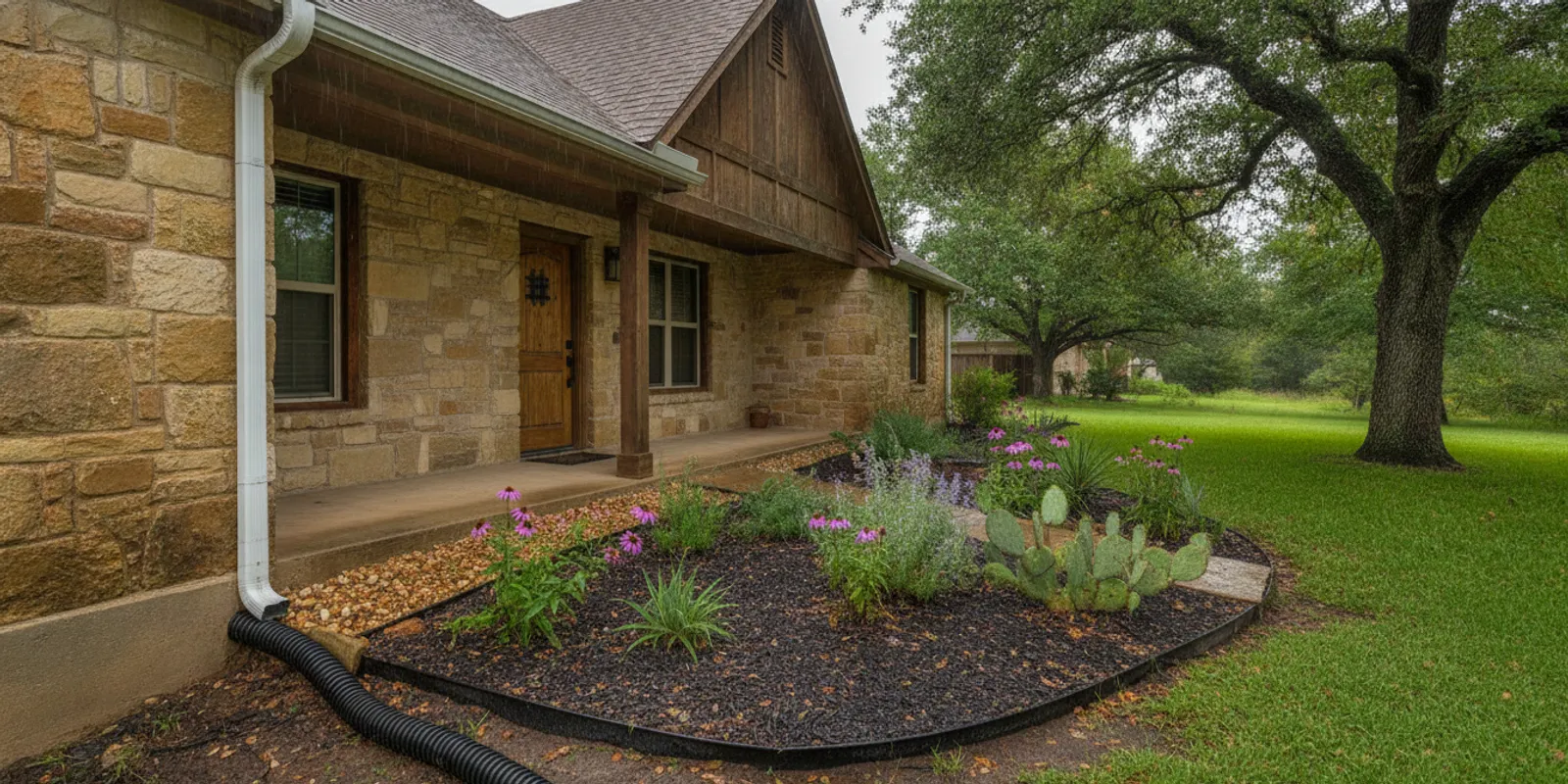
A rain gutter downspout extension can help move roof runoff away from the base of a home, but the outlet matters as much as the extension itself. Before choosing an approach, trace the water from the roof edge to the place where it will end up. That simple planning step can help you notice whether runoff is reaching a foundation, collecting in a low spot, crossing a walkway, or draining toward a more suitable area.
Request a free, no-obligation estimate
What does a downspout extension do?
A gutter collects water along the roof edge and channels it toward a downspout. The downspout carries the collected water down to ground level. An extension continues that route beyond the outlet, so the water is not released immediately beside the wall. Depending on the property, the water may be directed toward a stable landscaped area, a drainage feature, or another appropriate destination.
The purpose is not to make rain disappear. It is to manage where roof runoff goes after it leaves the gutter. If the outlet sends water onto a narrow strip of soil beside the home, repeated wetting may leave a muddy patch or contribute to erosion. If it sends water toward a walkway, it can make that route wet or slippery. And if water simply shifts from one problem spot to another, the extension has not solved the underlying drainage concern.
Think of the gutter and extension as parts of a connected water path. The roof determines where water is collected. The gutter and downspout carry it. The extension or other drainage feature directs its discharge. A blockage, leak, poor connection, or unsuitable destination anywhere along that path can affect the result. For broader context on the company's downspout drainage solutions, consider how each part works together rather than treating an extension as an isolated accessory.
Why plan the discharge point before choosing an extension?
It is easy to focus on the visible piece attached to the downspout. But its job is to carry water to a destination, and that destination should be considered first. A longer-looking route is not automatically a better one. The final outlet could still empty onto a surface that slopes back toward the home, into a spot where water stands, or across an area people use every day.
Walk the route in ordinary conditions, then observe what happens during rain if it is safe to do so. Note where the water starts, which way the ground appears to lead, and what receives the flow at the end. Look for signs such as soil washed into a channel, exposed roots, mulch displaced from a bed, a recurring damp patch, or water moving toward a doorway. These observations are clues to discuss, not a complete diagnosis of the property's drainage.
Consider the area around the endpoint as well as the point where the extension begins. Is the discharge close to a path, steps, a driveway, a neighbor's property, or another part of the yard that should remain usable? Does the intended route cross a place where someone could trip over a temporary attachment? Is there a planting bed or feature that could be affected by concentrated flow? The route should be practical through routine yard use, not only on a sketch.
There is no one extension length or outlet location that fits every home. Roof layout, ground shape, surrounding surfaces, and the way water behaves on the property all matter. TX Gutter Solutions' available information does not set a universal measurement or a one-size-fits-all installation method. If you are unsure how to assess the slope or final destination, describe what you observe and ask for a site-specific review rather than relying on a generic measurement.
How can you trace roof runoff across the property?
Start at the roof edge and follow one downspout at a time. Mark the locations mentally or on a simple property sketch. Include the direction the outlet currently faces, the surfaces water crosses, and the place it collects or disperses. This basic map can make a conversation with a drainage professional more specific. It also helps avoid focusing on one downspout while overlooking another outlet that sends water into the same problem area.
- Identify the source. Record which roof edge drains to the downspout and whether the gutter appears to carry water consistently along that section.
- Follow the route. Note the outlet direction, any connected extension, and the ground or hard surface beneath the path.
- Observe the destination. Look for a stable area where flow can disperse without creating a new nuisance or affecting a neighboring property.
- Record what changes in rain. From a safe location, note overflow, pooling, splashing, or a route that differs from what the dry ground suggested.
- Capture the context. Photos of the outlet, route, and affected area can help explain the concern when arranging an assessment.
Do not climb onto a roof or enter an area that is flooded, slippery, or otherwise unsafe just to observe runoff. A view from the ground is enough to record many useful details. If the concern involves water inside the home, active damage, electrical equipment, or an unsafe path, prioritize appropriate professional help rather than experimenting with a temporary route.
For a broader check of what to observe around a gutter system, the company's gutter inspection checklist can help you organize visible concerns. If debris or blockage may be restricting flow, review the information on gutter cleaning and maintenance services as part of the whole-system review.
What are the common planning approaches?
Homeowners may encounter several ways to continue or manage water leaving a downspout. The right option depends on the site and the goal. The table below compares approaches at a planning level. It is not a sizing guide or installation specification, and it does not establish that every approach is suitable for every property.
| Approach | What it does | Planning questions | What to watch for |
|---|---|---|---|
| Downspout extension | Continues the outlet path away from the downspout. | Where will the end discharge, and can the route stay clear of everyday paths? | The water may still pool or erode soil if the destination is unsuitable. |
| Splash block | Receives water at the outlet and spreads or guides it over a small area. | Does the surrounding ground carry the flow onward rather than back toward the wall? | A block alone may not address a low spot or a route with persistent standing water. |
| Flexible or movable outlet | Allows the discharge direction to be adjusted when the layout calls for it. | Will it remain in the intended position, and can people use the area safely? | A shifted or obstructed outlet may send water somewhere unintended. |
| Broader drainage plan | Considers the downspout and the surrounding path or drainage feature together. | What is the source of the problem, and where can runoff be managed appropriately? | It may require an on-site assessment instead of a simple attachment change. |
These are categories, not endorsements of a particular product or a claim that one method is universally better. For example, a movable outlet can be useful to consider where access changes, but it still needs a sensible discharge destination. Likewise, a splash block can receive water at ground level, yet the nearby grade and surface determine what happens next. If the available space is limited or the outlet repeatedly creates a wet area, assess the complete route before choosing an option.
Rainwater collection is another consideration for some properties, but it changes where the water is stored or used rather than eliminating the need to plan overflow and drainage. The company's guide to rainwater collectors discusses that topic separately. Keep the present question focused: how will the water leaving this particular downspout reach a suitable destination?
How do you tell whether an extension is addressing the concern?
Assess the outcome, not just whether a new component is attached. After the change, watch the area from a safe place during rain. Does water still collect at the wall or in the same low spot? Is it redirected toward a walkway, planting bed, or neighboring area? Does the extension stay connected and in position? Has the concern moved rather than improved? These observations help determine whether the route needs another look.
Compare what you see with the initial notes or photos. A change in the shape or location of a wet area can be useful information even if the issue remains. Keep track of whether the concern happens during light rain, heavier rain, or both, without assuming that a single observation represents every condition. If the ground is already saturated, visible flow may differ from what you see after a dry period.
A functioning outlet should not be judged by a single dry-weather glance. Conversely, do not wait for repeated problems if you see water entering the home, persistent erosion, or an obvious route toward an area where it may cause damage. The purpose of monitoring is to give you a clearer picture, not to delay attention when there is an immediate concern.
Keep expectations realistic. A downspout extension manages runoff from a particular outlet; it does not repair a leaking gutter, clear a blocked downspout, correct every grading issue, or solve all sources of yard water. A home may have several contributing factors. A careful assessment distinguishes water from roof runoff from other drainage concerns before proposing a remedy.
What can runoff clues tell you?
Visible clues help you describe the problem, but they do not identify its cause on their own. A damp patch beside a wall may coincide with a downspout outlet, yet water could also be reaching that area from another surface or route. A muddy strip can show where water travels, but it does not tell you whether the gutter, the outlet, or the ground is the main factor. Treat observations as evidence to share, not as a diagnosis.
Look for patterns rather than one isolated mark. If the same place becomes wet whenever the downspout discharges, note that relationship. If water appears in a different location or continues to collect after the outlet route changes, record that too. Notice whether the route follows a hard surface, cuts through a bed, or changes direction around a low spot. The details can help an assessment distinguish a roof-runoff concern from a broader yard drainage issue.
It is useful to separate three questions:
- Is water leaving the gutter where intended? Overflow, a visible leak, or a separated connection may mean the collection or conveyance part of the system needs attention.
- Where does the downspout release it? The outlet may be too close to an area you want to keep dry, or its direction may lead across a route that people use.
- What happens after release? Water may disperse, collect, or move toward another feature. That result is important when deciding whether an extension alone is likely to address the concern.
These questions describe different stages, so changing only one stage may leave another issue in place. For example, directing an outlet farther across the yard does not correct water escaping through a damaged connection before it reaches the extension. Similarly, repairing a connection does not by itself establish where the water should go once it reaches the ground. A good plan identifies the stage that needs attention and how it connects to the rest of the route.
When possible, take one photo that shows the downspout and another that shows the affected ground. Include a wider view that helps explain the route between them. Avoid editing the images in a way that obscures the direction of flow; short notes about when they were taken are more useful than trying to prove a conclusion. If conditions change from one rain event to another, keep the observations separate instead of assuming they show the same pattern.
When might a simple extension not be enough?
An extension may be only one part of the answer when there is no clear place for water to go, the available route crosses a frequently used area, or runoff continues to collect after leaving the outlet. Repeated soil movement, persistent wet ground, or water returning toward the building are reasons to look beyond the attachment alone. Those signs do not prove a particular cause, but they are worth documenting and discussing.
It is also sensible to look at the upstream system. If a gutter is clogged, leaking, sagging, or disconnected, changing the outlet route may not restore consistent water management. Debris and blockages can interfere with flow, while damage may direct water outside the intended path. A regular maintenance routine helps keep the system in view; TX Gutter Solutions recommends gutter cleaning at least twice a year, ideally in spring and fall. The appropriate schedule can also depend on the property's conditions and observed debris.
Review the roof edge and downspout connections from a safe position. Visible overflow during rain, a downspout that has separated, or water escaping at a gutter joint may point to a repair or maintenance need in addition to the drainage question. The company's guide to gutter parts and accessories can help you become familiar with system components, while the service overview explains its gutter and drainage offerings.
If water repeatedly reaches a foundation or undermines landscaping, do not assume that a longer extension by itself will address the cause. A site-specific drainage plan may be more appropriate. TX Gutter Solutions describes its drainage work as directing runoff away from foundations and landscaping. The intended goal is improved water management; no drainage component can guarantee that a home will never experience water or foundation concerns.
What should you document before requesting an assessment?
A few clear observations make it easier to explain the issue and discuss the next step. You do not need a technical drawing. A simple description of where water starts, where it goes now, and what you would like to change provides a useful starting point. If you have several downspouts, identify which ones are involved rather than treating the whole roof as one outlet.
- Location: Note the side of the home and the downspout or roof section involved.
- Current route: Describe the direction of discharge and the surfaces water crosses.
- Observed result: Record pooling, erosion, splashing, a wet path, or another visible concern.
- Timing: Say when you have noticed the issue and whether it changes with rainfall.
- Nearby features: Mention paths, doors, planting areas, property boundaries, or other constraints along the route.
- Existing components: Note any attached extension, splash block, or visible gutter or downspout damage.
- Images: Share photos taken from a safe location, if available, and explain what each one shows.
Then ask questions that focus on the property rather than a generic product: Where will this outlet discharge? What happens to water after it reaches that point? Is the current concern caused only by the outlet, or should the gutter and downspout also be checked? What does the proposed work include, and how will the result be reviewed? Clear answers help you understand the plan before work begins.
TX Gutter Solutions describes its process as a free estimate, project planning, professional installation, and final inspection. Planning includes evaluating the property and setting expectations. A useful discussion should identify the concern, explain the proposed scope in plain language, and make clear which parts of the water path are included.
How do Texas weather and yard use affect the plan?
In Central Texas and other parts of the state, a drainage route should be considered in the context of the actual property, not just a typical house diagram. Roof shape, hardscape, beds, slopes, and space between buildings differ from one home to another. Rainfall can also make an overlooked low point easier to see. The useful question is not whether an extension is fashionable or common, but whether this outlet's path makes sense on this site.
Include everyday use in the plan. A route that crosses the main walkway may create a maintenance or access problem. A component that can be moved should not be left in a position that blocks a regular route or is likely to be displaced. Consider landscaping and how the water could affect plants or exposed soil. Where the discharge approaches a property boundary, avoid assuming that directing water off-site is acceptable; confirm a suitable solution for the property and applicable local requirements.
Do not guess at code, permit, or discharge rules based on a guide written for another city. Requirements can differ by location and project. When a plan involves a connection to an existing drainage feature, a change that crosses property boundaries, or a more extensive system, ask what local requirements need to be considered. The right professional can clarify the project scope and any necessary next steps.
For homeowners comparing service coverage, TX Gutter Solutions lists its work across Austin, San Antonio, Dallas-Fort Worth, and surrounding Central Texas markets. Its service area information provides a starting point for checking coverage. More local pages are available for Austin, San Antonio, and Dallas-Fort Worth.
How can you keep the runoff route clear over time?
A route that works today can be affected by ordinary changes around the home. Leaves, trimmed branches, landscape work, moved planters, or a shifted outlet can alter the way water travels. Include the extension and its destination when you look over the gutter system, especially after yard work or when you notice a new wet area. A brief ground-level check can catch a connection that has come loose or an outlet that is no longer pointed where you expect.
Keep the path usable. Do not allow stored items, soil, or landscaping materials to block the discharge point. If the outlet is designed to be moved, return it to the planned position after the area is used. If the route is difficult to keep clear or is frequently displaced, that is useful information for deciding whether a different approach should be discussed.
Gutter cleaning and downspout checks are related but distinct. Clearing debris helps maintain water flow through the collection system; checking the extension confirms where water goes once it reaches the ground. One task does not replace the other. TX Gutter Solutions recommends cleaning at least twice a year, ideally in spring and fall, and offers inspections and tune-ups. When arranging maintenance, mention any outlet or runoff concern so it can be considered alongside visible gutter issues.
Keep a simple record of notable changes: what was adjusted, where the outlet was directed, and whether the observed pooling or erosion changed afterward. This can prevent repeating an approach that did not help and give a professional a clearer history if the issue persists. Do not perform roof work or reach into a downspout from an unsafe position; arrange qualified help for work that cannot be inspected safely from the ground.
What questions help you compare possible plans?
When an assessment suggests more than one approach, compare the plan's reasoning and practical effect. The goal is to understand the specific route and scope, not simply to compare parts by appearance. Ask the provider to explain how the proposed approach handles the water from the outlet through its destination and what conditions could affect the result.
- Which downspout or roof area is being addressed?
- Where will the water discharge after the proposed change?
- What visible condition led to this recommendation?
- Does the plan include checking the gutter, downspout, and existing connections?
- What limitations should I understand about the route or destination?
- How will the work be inspected when complete?
- Are there site or local requirements that should be confirmed before the work?
For instance, a plan that changes the outlet direction should explain what the new route accomplishes and where the water ends up. If a broader drainage approach is proposed, ask which part of the observed problem it addresses and how it relates to the downspout. A clear explanation makes it easier to distinguish a focused improvement from a solution that does not match the issue you described.
It can also help to review the company's background and approach and its gutter, drainage, and maintenance services. These pages provide context about the company; the property assessment should still explain the specific work being considered for your home.
How should you prepare for an estimate?
Gather your notes, photos, and questions before requesting an estimate. Identify the downspout or area you are concerned about and explain what you have observed. If there are several possible discharge locations, point them out and explain how each area is used. This does not commit you to a particular approach. It gives the estimator information to evaluate the property and discuss reasonable options.
Ask for the scope to distinguish the work being proposed from anything that is not included. Confirm whether the review considers the gutter, downspout, outlet path, and destination as relevant to the concern. If a repair or maintenance issue is visible, mention it instead of assuming that an extension change will cover it. Before work proceeds, make sure you understand the project expectations and the final inspection process.
TX Gutter Solutions offers free, no-obligation estimates and describes the estimate as pressure-free. You can use the contact page to request an estimate and explain that you are planning a downspout runoff route. A clear request might say: “Water from the downspout on the back corner is collecting beside the path. I would like the outlet and destination reviewed.” That tells the team what to assess without assuming which product or design is needed.
Schedule a no-obligation drainage estimate
Frequently asked questions
How long should a downspout extension be?
There is no single length that fits every property. The appropriate route depends on the outlet location, site conditions, and where the water can be directed. Plan around a suitable destination and the full path, rather than selecting a length from a general rule that may not fit your home.
Can an extension stop water from collecting beside a home?
It may help if the concern is that roof runoff is released too close to the building and the new route leads to a suitable destination. It may not resolve pooling caused by a low area, a blocked or damaged gutter system, or another drainage condition. Observe where the water goes after the change and seek an assessment if the issue continues.
Should every downspout have an extension?
Not necessarily. Each outlet has a different route and destination, and the property's layout determines what makes sense. Review where each downspout releases water and whether that route creates a concern. Avoid applying the same solution everywhere without checking the conditions at each outlet.
Can I decide the route by looking at the ground when it is dry?
A dry-weather walk can help you note slopes, surfaces, and obstacles, but it cannot show every way water behaves during rain. Use those observations as a starting point, then safely note runoff during wet weather if practical. Do not enter standing water or climb to inspect the roof.
What if moving the outlet does not fix the drainage issue?
Document where the water goes and what remains unchanged. The concern may involve the gutter, downspout, ground conditions, or a broader drainage route. A property assessment can help identify which part of the system needs attention and whether a wider plan should be considered.
Keep the runoff plan focused on the whole route
A rain gutter downspout extension is most useful when it is planned as part of a complete path from roof to destination. Trace the outlet, record what happens during rain, consider yard access and surrounding surfaces, and verify that the new discharge point does not simply relocate the problem. If the route is unclear or runoff continues to affect the property, request a site-specific assessment so the next step is based on what is happening at your home.