
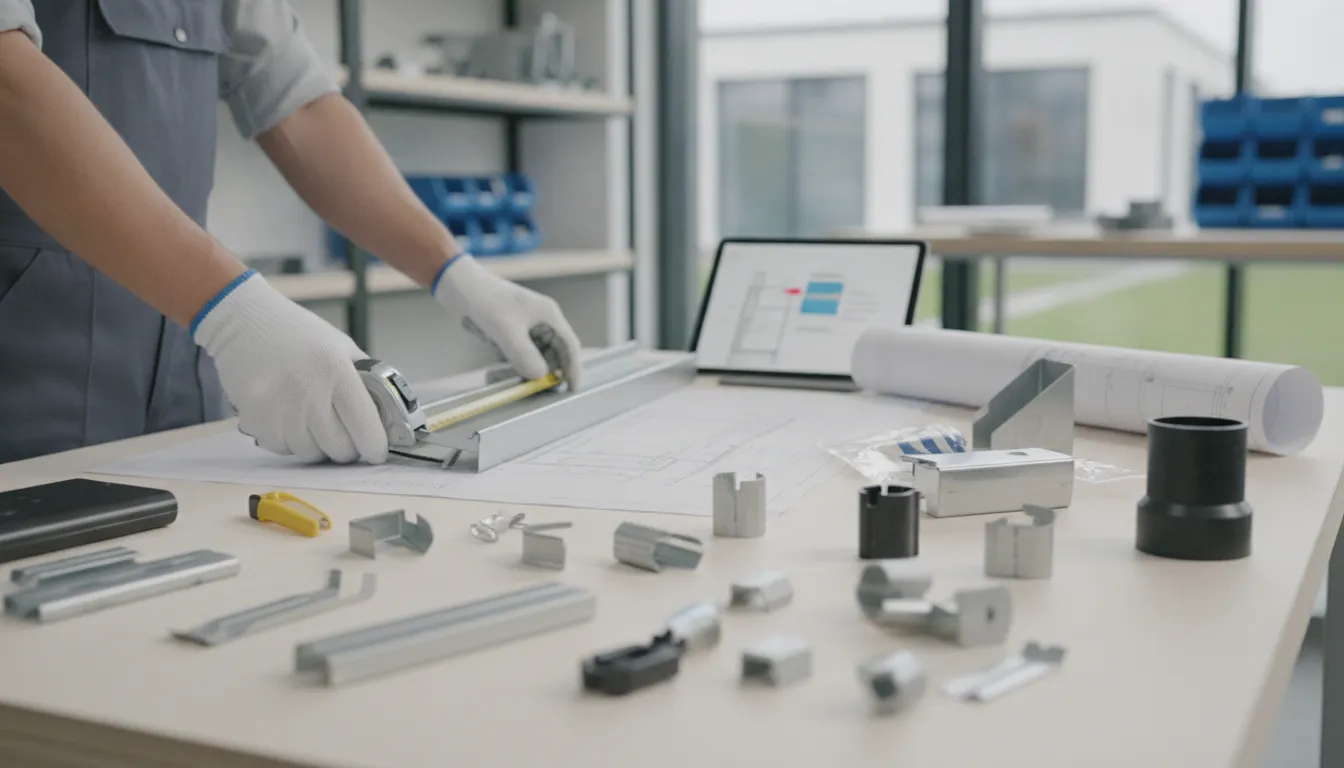
Not sure whether you need a new downspout elbow, a gutter guard, or a complete replacement? Start by tracing how water moves from your roof to the ground. Each connection matters, and choosing gutter parts and accessories by appearance alone can lead to poor fit, leaks, or water draining too close to the foundation. This guide helps you identify the components in a complete gutter system, compare materials, take useful measurements, and check compatibility before ordering. You’ll also learn how roof shape, fascia condition, nearby trees, and yard drainage can affect your choices, so you can make a more informed plan for protecting your property.
Key Takeaways
- Check compatibility before buying: Match each part to your gutter’s profile, dimensions, material, and mounting surface.
- Plan how water will drain: Choose components that handle roof runoff and direct it away from your foundation and landscaping.
- Inspect the whole system: Check for debris, loose supports, damaged fascia, and leaks; ask a gutter professional to assess complex repairs or persistent drainage issues.
What Parts Make Up a Complete Gutter System?
A complete gutter system is a series of connected parts that collect rainwater at the roof edge and carry it away from the building. Gutters form the main channel, but end caps, corners, hangers, outlets, downspouts, and drainage accessories all affect how well the system works. If even one piece is the wrong size or profile, water may leak, overflow, or drain too close to the foundation.
The parts you need depend on your roofline, gutter style, building materials, and the route water should take after it leaves the roof. A simple roof may need fewer fittings than one with several corners or changes in elevation. TX Gutter Solutions offers custom gutter and drainage services tailored to the property, which can help if you are unsure how the components should fit together. Use the sections below to identify the main parts and what to check before you buy.
Gutters, end caps, corners, miters, and outlets
Gutters are the channels installed along the roof edge. They collect runoff and carry it toward downspouts. Their profile and size should fit the roofline and the amount of water the system needs to manage.
End caps close the ends of gutter runs. Corners, also called miters, connect sections where the roofline turns. Outlets create openings that transfer water from a gutter into a downspout. Each piece needs to match the gutter’s shape and dimensions. A mismatch can leave gaps, create leaks, or disrupt water flow.
Gutter systems come in different profiles, including K-style and half-round. Before ordering, identify the shape and measure the existing parts. Gutter parts and accessories vary by system, so check compatibility rather than relying on appearance alone.
Hangers, brackets, straps, and fasteners
Hangers and brackets support the gutter along the fascia or roof edge. Some are hidden inside the gutter, while others remain visible. Straps can provide additional support in certain installations. Fasteners secure these components to the building, so they need to suit the gutter system and mounting surface.
The right hardware depends on the gutter profile, material, and installation method. Poorly placed or loose hangers can allow a gutter to sag or pull away from the building. Sagging may also leave low spots where water collects instead of flowing toward an outlet.
Inspect the fascia before replacing supports. If the mounting surface is damaged, new hangers may not hold securely until it is repaired. Compare the existing setup with the manufacturer’s recommendations, and check that hanger styles and mounting accessories are designed for your gutter type.
Downspouts, elbows, extensions, and drainage connections
Downspouts carry water from the gutter toward the ground. Elbows connect sections and change the direction of the pipe, helping it clear eaves, walls, and other features. Extensions move the discharge point farther from the building, while drainage connections can direct runoff into a suitable drainage system.
Make sure each fitting matches the downspout’s shape and size. Outlets, elbows, and extensions come in different profiles, and similar-looking parts may not connect securely. Gaps can let water leak beside the home instead of following the intended route.
Plan where water will go before buying parts. The discharge point should direct runoff away from the foundation without causing pooling or washing out landscaping. You can review examples of downspout fittings and adapters, then check the dimensions against your system.
Leaf guards, strainers, splash blocks, and diverters
Leaf guards cover some or all of the gutter opening to limit leaves and other debris from entering. Strainers sit over outlets to catch debris before it reaches the downspout. Both can help reduce blockages, but neither removes the need to inspect the system and clear buildup from the gutter or guard surface.
At ground level, splash blocks spread water discharged from a downspout. Diverters redirect runoff around areas such as walkways or entryways. These accessories should guide water to a suitable location away from the foundation, rather than simply shifting a drainage problem elsewhere.
Consider nearby trees, roof debris, and how easily you can inspect and maintain each accessory. Some gutter guards and strainers can reduce debris entering the system, but routine checks remain important. Choose a solution that fits your gutter and is practical to maintain.
Connectors and sealants for joints and seams
Connectors join gutter sections to form a continuous channel. Sealants help protect seams, joints, and end caps from leaks. These parts are especially important in sectional systems, where separate pieces meet along a run. A gap can allow water to escape onto the fascia, siding, or ground beside the building.
Choose connectors and sealants that are compatible with the gutter material and intended for outdoor use. Follow the product instructions for surface preparation and application, including any required curing time. A sealant that is not suited to the material or joint may fail, leading to repeat leaks and repairs.
Before buying, check whether the system requires separate connectors, screws, or other hardware. Inspect existing seams for cracks or separation, and confirm that replacement parts match the gutter profile. A gutter parts and accessories guide can help you identify common components, but verify the fit before ordering.
How Do You Match Parts to Your Gutter System?
Gutter parts must match the profile, size, material, and layout of the system on your property. A corner or end cap that looks close may still leave a gap, while an incompatible hanger can fail to support the gutter securely. Before buying, identify your gutter type and take measurements rather than relying on a product label or a visual guess.
Start at the roofline and follow the route water takes through the system. Record each gutter run, corner, outlet, and downspout, along with the dimensions and material of the existing components. A quick roofline sketch can help you count parts and keep track of where each one belongs. If you’re replacing a single fitting, take photos and measure the old part, too.
Check the fascia where the hangers attach, since its condition can affect which supports are suitable. If your roofline is complex or you’re replacing several components, ask a gutter professional to verify the measurements before you order. A careful check helps prevent mismatched parts and gives you a clearer plan for repairs or a new installation.
Identify the profile: K-style or half-round
First, check the shape of your gutter. K-style gutters have a relatively flat back and a shaped front edge, while half-round gutters have a curved, semicircular profile. Each style uses fittings designed for its shape. A K-style corner or end cap will not necessarily fit a half-round gutter, even when both are sold under the same nominal size.
Look at an open end, or compare the gutter with the manufacturer’s product details. Pay attention to the lip or bead, since small differences can affect how a fitting attaches. If the profile is unusual or you’re unsure what you have, photograph the gutter end and compare it with the range of gutter parts and accessories. Confirm the profile before choosing corners, hangers, end caps, or guards.
Measure width, downspouts, runs, corners, and outlets
Measure the gutter across its top opening, then record the shape and dimensions of each downspout. Map the roofline and note the length of every gutter run, the location of inside and outside corners, and where outlets connect to downspouts. A simple sketch makes it easier to count parts and keep measurements tied to the right section of the home.
Use the same units throughout and write down whether each measurement is approximate or exact. Product sizes may be listed as nominal dimensions, so compare the specifications with the actual measurements before ordering. Review the aluminum gutter product details to see why checking dimensions matters. For irregular rooflines or a full replacement, have a professional confirm the layout before you purchase materials.
Check that hangers, end caps, corners, outlets, and guards fit
Match each accessory to the gutter’s profile, size, and material. Hangers and brackets also need to suit the gutter’s lip or bead and the way they attach to the fascia or roof edge. End caps, corners, and outlets should align with the gutter without forcing or leaving gaps. Guards need to fit the gutter opening and work with the roofline.
Check product specifications instead of assuming parts from different systems will connect. If you’re replacing one component, compare its shape and dimensions with the replacement before installation. It’s also worth inspecting the fascia where the hangers will attach. If the wood is loose, soft, or damaged, it may need repair before new supports are installed. For help selecting parts or assessing the full system, review TX Gutter Solutions’ gutter services.
Confirm parts work with seamless or sectional gutters
Seamless gutters are formed in long lengths for a particular installation, so their accessory requirements may differ from those of sectional systems. Sectional gutters connect shorter pieces with joints, which means connectors and sealants must be suitable for that system. For either type, check that corners, outlets, end caps, and hangers match the gutter’s profile and dimensions.
Before ordering, confirm how the gutter is sold and whether it can be made to the lengths your roofline needs. Longer sections can reduce the number of joints, but they require planning for delivery, access, lifting, and storage. If you’re unsure whether a part will work with your setup, ask a professional to check the system and recommend compatible components. TX Gutter Solutions provides custom gutter installation and repair for Central Texas properties.
Which Gutter Material Fits Your Property?
Gutter material affects more than curb appeal. It can influence the system’s cost, upkeep, durability, and compatibility with the parts already on your home. Before choosing, consider your roofline, local weather, budget, and whether you’re replacing a few components or installing a complete system.
Central Texas properties can face intense sun, sudden heavy rain, and long dry spells. Choose materials and components suited to those conditions, and make sure gutters, hangers, fasteners, outlets, and downspouts work together. A mismatch can cause installation problems or premature wear, even if each part seems suitable on its own.
Aluminum, copper, and vinyl each have trade-offs. Aluminum is widely used for its versatility, copper offers a distinctive finish at a higher cost, and vinyl can suit projects with tighter budgets. Compare the full system, including compatible fittings and future maintenance, rather than focusing only on the price per gutter section.
If you’re choosing materials for a new system or replacing aging gutters, a professional assessment can help account for your roof and drainage needs. TX Gutter Solutions provides gutter installation, repair, and maintenance services for Central Texas homes and businesses. With the right material and proper fit, your gutters can direct roof runoff away from the areas you want to protect.
Aluminum: lightweight, versatile, and corrosion-resistant
Aluminum is a common choice for homeowners looking for a practical balance of price, durability, and appearance. It’s lightweight and does not develop the red rust associated with steel. Aluminum gutters are available in profiles such as K-style and half-round, as well as a range of sizes and finishes. You can compare aluminum gutter products to get a sense of the options.
For your property, consider the gutter’s size and layout alongside its finish. The system needs to handle runoff from your roof, and replacement parts need to match its profile and dimensions. If you’re repairing an existing run, check that the new section, hangers, and fittings are compatible with the gutters already in place.
Copper: durable, distinctive, and typically more expensive
Copper can bring a distinctive look to a home, especially when gutters are a visible part of the exterior design. It is generally priced higher than standard gutter materials, so compare the cost of the complete system, including outlets, downspouts, fasteners, and other fittings. This helps you understand the overall investment rather than just the price of the gutter runs.
Check product descriptions before ordering. Names such as “Copper Penny” and “Designer Copper” may refer to copper-look aluminum finishes, not natural copper. The materials have different properties and may require different compatible parts. Ask the supplier or installer to confirm what a product is made from, particularly when matching existing gutters. Reviewing downspout accessory options can also help clarify material and finish details.
Vinyl: budget-friendly, but limited in heat and severe weather
Vinyl can be a cost-effective option for some projects. Its lightweight construction may suit simple installations, but vinyl may not hold up to extreme temperatures or severe weather as well as metal. That’s worth considering in Central Texas, where gutters are exposed to strong sun as well as storms and heavy rain.
Vinyl systems also require compatible components, including hangers made for the material. Before buying, confirm that each part matches your gutter’s profile, size, and construction. A lower initial cost may not make sense if the system is poorly suited to your property or requires more frequent repairs. Check the manufacturer’s specifications and installation guidance, and review gutter parts and accessory details when comparing options.
Match materials and fasteners to reduce corrosion
Gutters, fasteners, hangers, and fittings can all be exposed to moisture. When incompatible metals, such as copper and aluminum, come into contact while moisture is present, corrosion can occur. Check the material of each component instead of assuming parts will work together because they have similar dimensions or finishes.
This is especially important when adding new parts to an existing system. Confirm compatibility for the gutter, fasteners, outlets, and downspouts before installation. A supplier or qualified installer can help verify that the materials are suitable for one another. Reviewing gutter component specifications before purchasing can help you identify material requirements and avoid mismatched parts.
How Do Central Texas Conditions Affect Part Selection?
Central Texas weather can swing between long dry spells and sudden, heavy rain. Heat, wind, and storms can also put stress on gutter materials, fasteners, and connections. When choosing parts, consider how the full system will collect roof runoff, carry it through the downspouts, and release it at a safe distance from the building.
The right components depend on your roof’s size and shape, the amount of debris nearby, and the condition of the fascia. Gutters, outlets, hangers, guards, and downspouts need to fit together as a system. A mismatch can lead to leaks, overflow, sagging, or water collecting near the foundation. Gutter parts and accessories serve different roles, so check dimensions and compatibility before you buy.
Before selecting individual pieces, look at where water currently flows during a storm. Note areas where it spills over, pools beside the house, or washes soil from planting beds. These clues can help you identify whether you need different outlets, added downspout capacity, stronger supports, or a better discharge route. For a system tailored to your property, TX Gutter Solutions provides gutter and drainage services across its service areas.
Plan for heavy rain, sudden storms, heat, and dry spells
Choose gutters, outlets, and downspouts that work together to carry runoff from your roof. During heavy rain, undersized or poorly placed components may not move water away quickly enough. Secure hangers and compatible connectors also help keep the system in place when gutters fill with water and debris. Check product specifications and installation guidance rather than assuming parts of a similar appearance will fit.
Heat and dry spells matter, too. Materials can expand and contract as temperatures change, which makes a compatible fit and secure installation important. Consider the roofline, gutter material, and local exposure when comparing options. If you see overflow during storms or water pooling near the house, an assessment can help pinpoint where the system may need attention.
Consider leaves, roof debris, and guard maintenance
Leaves, twigs, seed pods, and roof grit can collect in gutters and block outlets. Look at the trees around your home and note which roof sections gather the most debris. The right guard may reduce how much material enters the gutter, but guards do not remove the need for inspections and occasional cleaning. Select a style that suits your roof and the debris on your property.
Keep outlets and downspouts accessible so you can check for blockages and confirm water flows freely. A guard that is difficult to inspect or maintain may not suit your needs. Review the guard’s care requirements before buying, and plan regular checks, especially after storms or during periods when trees shed heavily. TX Gutter Solutions offers leaf protection and gutter maintenance for local properties.
Check the fascia, roofline, and mounting surfaces before choosing hangers
Hangers and brackets must fit the gutter profile and attach securely to sound mounting surfaces. Before choosing them, inspect the fascia for soft or rotting wood, loose boards, peeling paint, or signs of past water damage. Measure the gutter and note the roof edge, fascia depth, and available fastening area. The right hanger depends on these details, as well as the gutter’s dimensions and shape.
Address damaged fascia before installing new supports. Attaching hangers to a weak surface can leave gutters loose or uneven, especially when they hold water and debris. If you are replacing parts, check that the new hangers match the existing system rather than relying on appearance alone. An installer can assess a complex roofline or recommend suitable supports when the mounting surface is difficult to evaluate.
Direct downspouts and extensions away from foundations and landscaping
Downspouts should carry roof runoff away from the house, not release it beside the foundation. Add elbows or extensions where needed, and consider the slope of the ground, nearby walkways, garden beds, and existing drainage features when deciding where water should go. A discharge point that is too close to the building can contribute to pooling, soil erosion, or damage to landscaping.
Check the route during rainfall if it is safe to do so. Watch for water collecting near the foundation or flowing toward a low spot, and adjust the drainage plan to send it to a suitable area. Avoid directing runoff onto a neighbor’s property or across a walkway where it could create a hazard. TX Gutter Solutions offers downspout and drainage solutions designed around each property’s layout.
What Should You Check Before Buying Gutter Parts?
Verify measurements, dimensions, material, finish, and fit
Start by identifying your gutter profile and measuring the gutter width, downspout dimensions, runs, corners, and outlet openings. K-style and half-round gutters use different fittings, and parts with the same listed size may not be interchangeable. Check that each component, including end caps, corners, outlets, hangers, and guards, matches the system you have.
Confirm the material and finish for every part, too. A color available for one gutter profile may not be offered for its accessories. If matching the existing system matters, ask the supplier whether you can review a physical color sample. The product details in this gutter parts and accessories guide can help you compare profiles, sizes, and components before ordering.
Confirm you have the required hardware, sealants, and tools
A parts order can seem complete but still leave out what you need to install or repair the system. Depending on the job, you may need hangers, brackets, screws, straps, clips, bolts, wedges, sealant, or flashing. Check each product’s package contents, then confirm that fasteners are long enough and suitable for both the gutter part and the mounting surface.
Plan for the whole project, including tools, roof access, and connections to the drainage system. If you’re replacing a section, check that new hardware will work with the existing mounting points. A guide to aluminum gutter products can help you spot common accessory needs. If the roofline or mounting surface is difficult to assess, ask a professional to check the setup before you order.
Review specifications, warranties, returns, and maintenance needs
Read the specifications before comparing prices. Confirm the part’s dimensions, material, finish, gutter profile, and installation requirements. Review warranty coverage and return terms, especially when ordering multiple components or choosing a custom finish. Check whether shipping charges or restocking fees apply if a part is the wrong size or does not fit your system.
Consider maintenance as part of your decision. Guards and strainers can limit the debris that enters a gutter, but they don’t eliminate the need for inspections and cleaning. Ask how to maintain each component, and check periodically for corrosion, loose attachments, or damage. If you’re unsure which parts suit your property, TX Gutter Solutions can assess your needs and recommend options through its gutter services.
Use a checklist or compatibility chart before ordering
Make a checklist with your gutter profile and size, downspout shape and dimensions, material, finish, mounting surface, and the number of corners, outlets, and end caps required. Compare each item with the supplier’s compatibility information. A fitting made for one downspout shape or size may not connect properly to another, even if the product description seems similar.
Add hardware, sealants, and tools to the list, and confirm what each package includes. If the supplier provides a compatibility chart, use it to check how the parts work together across the full system. For a close color match, ask about a physical sample before placing the order. A complete checklist helps you catch mismatched parts and missing supplies early, reducing the chance of delays or extra trips to the store.
Which Gutter Parts Buying Mistakes Should You Avoid?
Buying gutter parts is easier when you know what you already have and what the system needs to do. Start by identifying the gutter profile and material, then measure the parts you plan to replace. Check the roofline, fascia, hangers, and downspouts too: a replacement component can fit the gutter but still fail if the mounting surface is damaged or the drainage connection doesn’t match.
Think about how water flows around your property, not just which item is missing. Central Texas storms can send a lot of rain through a gutter system in a short time, so loose supports, clogged outlets, or poorly directed downspouts can lead to overflow and water collecting near the foundation. Before ordering, review product specifications, package contents, maintenance needs, and return terms. For help assessing the whole system, TX Gutter Solutions provides gutter repair, cleaning, leaf protection, and drainage services for homes and businesses across its service areas.
Assuming parts fit every profile or size
Gutter parts aren’t universal. K-style and half-round gutters require different supports, and two gutters with the same listed width may still have different profiles. Identify your gutter style, measure its dimensions, and compare them with the manufacturer’s specifications before ordering. Check compatibility for each component, including hangers, end caps, corners, outlets, and guards. A guard may fit the gutter but not the support system, while an outlet may not match the downspout. Gutter Supply’s hanger guide explains why profile and fit matter. If measurements are unclear, confirm compatibility with the supplier before buying.
Expecting guards to eliminate cleaning and inspections
Leaf guards can reduce the debris that gets into gutters, but they don’t make a system maintenance-free. Leaves and roof grit can collect on top of guards, while debris may still build up around corners and outlets. Check gutters and downspouts periodically, especially after storms or when nearby trees shed heavily. Look for loose hardware, sagging sections, standing water, and signs of overflow. These checks can help you spot a blockage or damaged part before water spills over the gutter edge. Gutter Supply’s product information notes that guards and strainers still require inspection and cleaning.
Mixing materials without checking corrosion risks
Different metals can corrode when they touch in the presence of moisture. For instance, pairing copper components with aluminum gutters or hangers may create a corrosion risk. Before buying replacement parts, check the material of the gutter, brackets, fasteners, and accessories, then follow the manufacturer’s guidance on compatible combinations. Pay particular attention to joints and mounting points, where moisture may linger. Gutter Supply’s guidance on gutter hangers offers details on matching hardware and materials. If you’re replacing only one component, check that it works with the rest of your system rather than choosing a part based on appearance alone.
Overlooking fascia condition or missing hardware
A new hanger won’t hold securely if the fascia behind it is damaged. Before installation, check for rot, cracks, loose boards, or signs of water damage. Fasteners need to reach sound structural material, not just thin trim or fascia wrap. Angled fascia may also call for a compatible wedge or specialized hanger. Review the package contents to confirm you have the right fasteners and enough supports for ends, corners, outlets, and joints. If the fascia feels soft or the roofline is difficult to access, ask a professional to assess it. Attaching parts to an unstable surface can leave a gutter sagging or pulling away from the house.
Choosing the lowest price without checking fit and durability
A low price isn’t always the best value. Compare each part’s material, finish, dimensions, and intended use, then check the package quantity and whether fasteners or sealants are included. You may need additional pieces for corners, outlets, or joints, and shipping can affect the final cost. Review the warranty, return terms, and maintenance needs as well. A part that doesn’t fit or needs frequent replacement may cost more over time than a compatible, durable option. Match the product specifications to your measurements before ordering. If you’re unsure whether to repair or replace part of your system, request a free estimate from TX Gutter Solutions.
How Do You Compare Gutter Brands, Suppliers, and Prices?
Compare specifications, construction, finish, and materials
Look beyond the brand name and advertised price. Compare each part’s dimensions, material, finish, and compatibility with your gutter profile and size. Hangers, outlets, and end caps can look similar but still have different measurements or attachment methods. Check how each component is constructed, and make sure its finish suits your home’s exterior and exposure to the elements.
Ask the supplier to confirm that all the parts will work together. A gutter parts and accessories guide can help you compare the options available, but your measurements and gutter type should guide the final choice. If you’re replacing only one component, confirm it matches the existing system before ordering.
Read reviews about durability, fit, installation, and support
Customer reviews can reveal details that a product description may leave out. Look for specific feedback about fit, durability, installation, and the supplier’s customer support. Repeated comments about parts arriving damaged or compatibility being unclear may be worth following up on before you buy.
Reviews are a starting point, not a guarantee that a part will suit your property. Ask the supplier whether the product fits your gutter profile and what fasteners it requires. If you’re replacing hangers, check feedback about their fit and performance, and ask about using them with your existing materials. Mixing incompatible metals can contribute to corrosion, so confirm that the parts and fasteners are suitable for your system. Product details for gutter hangers can help you identify questions to ask.
Check stock, warranties, return terms, and availability
Before you place an order, confirm that all the parts you need are available. A missing outlet or corner piece can delay a repair, particularly when several components need to match. Ask about delivery timing and what the supplier will do if a part arrives damaged or has a defect.
Read the warranty to understand what it covers, how long coverage lasts, and whether any conditions apply. Check the return policy too, especially for custom-cut or special-order items, which may have different terms. If you’re unsure whether a part is right for your system, ask before ordering rather than relying on a return as a backup. Reviewing the supplier’s product and purchase information can help you prepare those questions.
Ask about bulk pricing, contractor rates, and system packages
For a large project, multiple properties, or a business, ask suppliers whether they offer bulk pricing, contractor rates, or packages with compatible system components. A package may make ordering easier, but check exactly what it includes. Hangers, fasteners, sealant, outlets, and downspout connections may be sold separately.
When comparing quotes in Austin, San Antonio, or the Dallas–Fort Worth area, make sure each one covers the same materials, quantities, and work. A lower package price may not include all the parts or services you need. Ask for an itemized quote so you can see what’s included and identify any extra costs before you commit.
Compare total costs, including shipping, hardware, sealants, and installation
The listed price doesn’t always reflect the full project cost. Add shipping, hardware, sealants, tools, and installation charges to your comparison. Check package quantities too: you may need more than one pack of fasteners or additional fittings for corners, outlets, and downspouts.
If you’re hiring a professional, ask what the installation quote includes. It may cover removal and disposal of old gutters, but drainage changes or other repairs could be separate. Compare quotes with the same scope of work so you can judge the value more clearly. If you’d like a property-specific estimate, contact TX Gutter Solutions to discuss your gutter needs and the work involved.
When Should You Choose Professional Gutter Installation or Repair?
Get help with roof access, complex rooflines, or unsafe conditions
Call a professional if gutters are difficult to reach, your roofline has multiple levels or angles, or you cannot position a ladder safely. Gutters and hangers are not designed to support ladders or people, so leaning equipment against them can damage the system and put you at risk of falling.
Before installation or repair, a professional can inspect the roof edge, fascia, and existing supports. Look for sagging gutters, corrosion, loose fasteners, or damaged fascia, all of which can affect how securely a system is mounted. The right hanger depends on the gutter and mounting surface, so choosing one by appearance alone may lead to a poor fit. If the work requires reaching a steep or elevated area, leave it to an experienced installer with appropriate equipment.
Request an assessment if parts do not fit or drainage problems persist
If a replacement outlet, elbow, hanger, or end cap does not fit, stop before cutting or forcing it into place. Gutter systems vary in profile, size, and connection style. A part that looks close may still leave gaps or restrict water flow. A professional can identify your system and confirm which components are compatible.
An assessment can also help if gutters overflow, leak, or leave puddles near your home after a repair. The problem may involve several connected parts, including the outlet, downspout, elbows, extensions, or drainage connection. Checking the full drainage path can help identify the cause instead of replacing parts at random. In Central Texas, it’s especially important to direct runoff away from the foundation and landscaping.
Consider professional help with hangers, outlets, downspouts, and guards
Gutter parts need to fit and work together. Hangers must match the gutter’s profile, size, and material, as well as the fascia or roof-edge surface. Outlets and downspouts need to carry water away without leaking or sending runoff toward the foundation. A professional can inspect these connections and recommend parts suited to your roofline.
Leaf guards also need to match the gutter system and surrounding conditions. The best option can depend on the type of debris around your property and how often you’re able to maintain the gutters. TX Gutter Solutions provides gutter installation, repair, cleaning, guards, and drainage services for Central Texas homes and businesses. If you’re unsure what your system needs, request a free estimate before purchasing parts.
How Can TX Gutter Solutions Protect Your Property?
A well-designed gutter system helps move rainwater from your roof and away from your foundation, walkways, and landscaping. Clogged gutters, loose components, or poorly placed downspouts can leave water pooling where it may cause erosion or contribute to damage. The right solution depends on your roofline, drainage needs, and the condition of your existing system.
TX Gutter Solutions works with homeowners and businesses on gutter installation, repair, cleaning, leaf protection, and drainage. A professional assessment can help pinpoint issues and identify practical next steps. Explore the company’s gutter and exterior services to learn what may suit your property.
Explore custom seamless gutters, repairs, cleaning, and leaf protection
Custom seamless gutters are made to fit your roofline, with fewer joints along each run than many sectional systems. Fewer joints can mean fewer potential leak points, but sizing, slope, and secure installation are still essential. TX Gutter Solutions can assess your current gutters and recommend repair or replacement based on their condition and how water moves around your property.
Leaves and roof debris can restrict water flow, so regular cleaning and inspections are important. Leaf protection can help limit debris entering the gutters, though it does not remove the need for maintenance. Ask about the company’s gutter services to discuss options for your roof and upkeep needs.
Get downspout and drainage solutions tailored to your property
Downspouts carry water from the gutters to the ground, but their placement affects where runoff collects. If water pools near your home, washes away soil, or spills onto a walkway, an extension or adjusted drainage connection may help direct it elsewhere. The right setup depends on factors such as your roof, yard slope, soil, and landscaping.
TX Gutter Solutions can assess how water flows off your roof and recommend downspout and drainage options for your property. Looking at the full system matters: even properly installed gutters may not address pooling if water is released too close to the foundation. A tailored plan can help manage runoff while protecting your home and surrounding landscaping.
Request a free estimate for your Central Texas home or business
If your gutters are worn, clog often, or leave water collecting around your property, an assessment can help clarify what work is needed. A professional can review the roofline, fascia, gutter dimensions, downspout locations, and existing drainage before recommending repairs or a new system. This gives you a clearer basis for deciding what to address.
TX Gutter Solutions offers free estimates for homeowners and businesses in Austin, San Antonio, Dallas–Fort Worth, and nearby communities. Check the company’s service areas to see whether your property is covered, then request an estimate to discuss your needs.
Related Articles
- How Are Seamless Gutters Installed? A Pro's 8 Steps
- Commercial Gutters & Downspouts: An Expert Guide
- 5 Best Gutter Leaf Guards (2026 Buyer's Guide)
- Gutter Replacement Cost: A 2026 Price Guide
- The Ultimate Guide to Hiring Gutter Contractors
Frequently Asked Questions
What parts do I need to replace a section of gutter?
The parts depend on the damage and your system. You may need a matching gutter section, hangers, an end cap or corner, an outlet, sealant, or downspout fittings. Check the gutter profile, dimensions, and material before ordering, and inspect the fascia where supports attach.
Are gutter parts interchangeable between different systems?
No. Parts can vary by gutter shape, size, material, and connection style. Measure your existing components and compare them with product specifications. If you’re unsure about compatibility, ask a gutter professional to check the system before you buy.
Do gutter guards mean I won’t need to clean my gutters?
No. Guards can reduce the amount of debris entering the gutter, but leaves and roof grit may still collect on top or near outlets. Inspect gutters and downspouts regularly, especially after storms or when nearby trees shed.
How can I tell if my downspouts are directing water far enough from my home?
Check where runoff flows during rain. If water pools beside the foundation, erodes soil, or spills across a walkway, the discharge route may need attention. An extension or adjusted drainage connection can help direct water to a more suitable area.
When should I hire a professional instead of replacing gutter parts myself?
Consider professional help if the work involves roof access, a complex roofline, damaged fascia, parts that don’t fit, or drainage problems that continue after repairs. TX Gutter Solutions offers gutter assessments and free estimates in its service areas.