
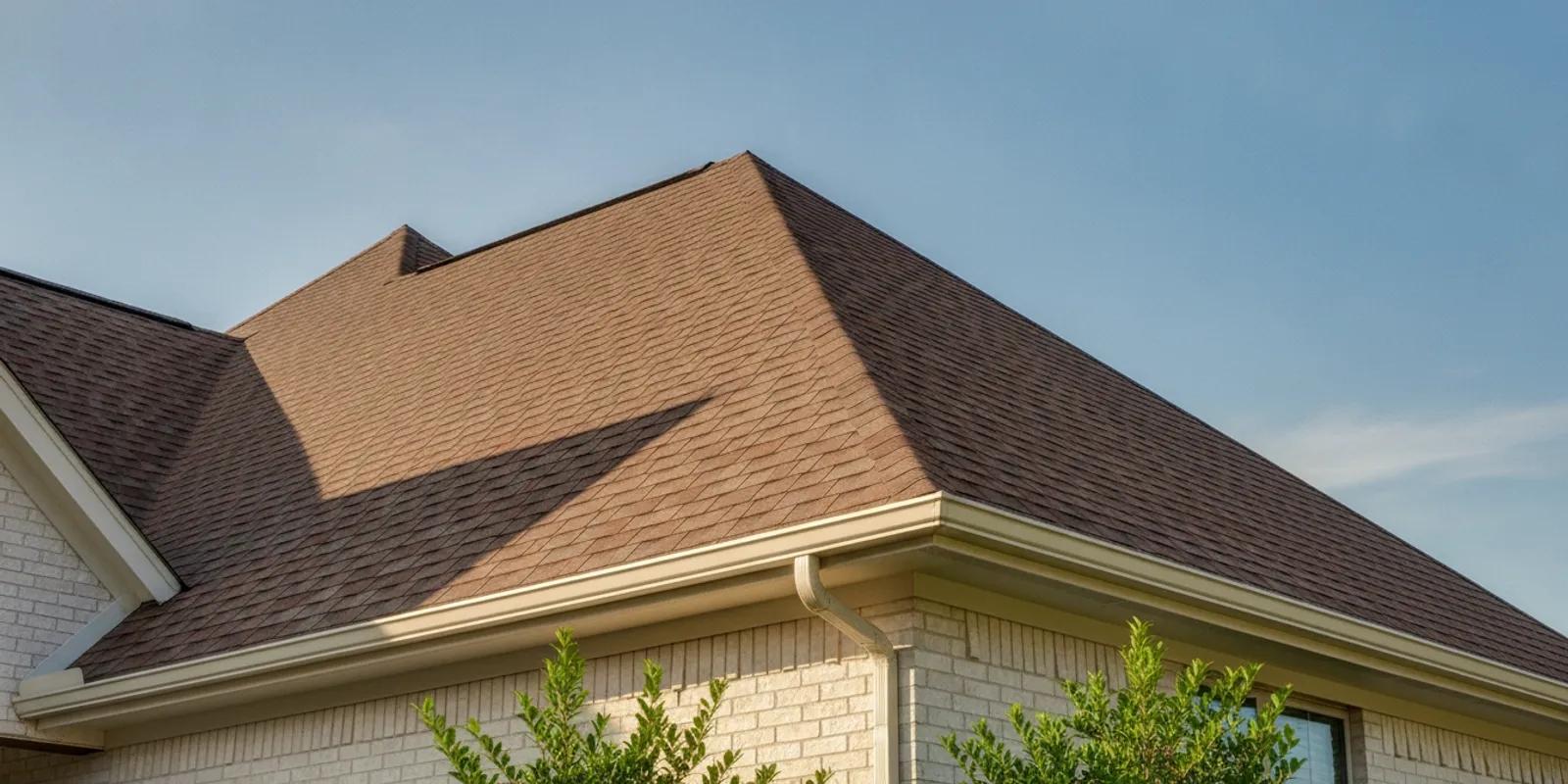
Knowing when to replace fascia before gutters helps you avoid attaching a new gutter system to wood that cannot support it. In general, replace fascia first when the board is rotten, soft, split, badly warped, detached, or otherwise unable to hold gutter fasteners securely. If it is dry, solid, and firmly attached, replacement may not be necessary. The key is to assess the roof edge before the gutter work begins, then address any underlying moisture problem rather than covering it up.
Request a free estimate or consultation
What does fascia do behind a gutter?
Fascia is the finished board that runs along the lower edge of a roof, where the ends of the roof framing meet. Gutters are commonly fastened along this edge, so the board is part of the support behind the system. It also helps finish and protect the roofline. The exact roof-edge assembly varies from house to house, and the fascia is only one part of it.
A gutter can look straight and new while still being poorly supported if the board behind it is deteriorated. Fasteners need sound material to bite into. If they are driven into soft or crumbling wood, they may loosen, pull out, or fail to keep the gutter aligned. A new gutter does not repair damaged fascia, and it cannot make a weak attachment point sound.
That does not mean every old or discolored board must be replaced. Age and appearance alone do not tell you whether the board can support the gutter. The important questions are whether it is firm, attached, reasonably straight, and free of damage that compromises the fastening area—and whether moisture is still reaching it.
When should fascia be replaced before gutters?
Plan to replace or repair fascia before gutter installation when inspection finds damage in the area where the gutter will be fastened, or when the board cannot reliably support the proposed attachment. Signs that deserve a closer assessment include wood that feels soft or breaks apart, visible decay, deep splits, severe warping, loose sections, or fasteners that no longer hold. These conditions can mean the surface is not a dependable base for new gutters.
Replacement is also worth discussing if damage extends along much of a run, if several fastening points have failed, or if the board has pulled away from the roof edge. A single small defect does not automatically call for replacing an entire side of the house. The extent of work depends on what is damaged, what is sound, and how the roof edge is built. A qualified assessment should distinguish a localized repair from a longer replacement rather than assuming one approach fits every home.
Do not install over a board just to keep a project moving if its condition is uncertain. New gutters may hide the board from view and make later access more involved. If the assessment finds a structural or moisture concern, settle the repair plan and sequence before fastening a new system in place.
What signs suggest the fascia may not hold new gutters?
Start with visible clues from the ground, but treat them as reasons to inspect—not as a final diagnosis. The following observations can point to a fascia or attachment problem:
- Sagging or uneven gutter sections: A low spot can have several causes, including a loose support, a poor slope, or a problem behind the gutter. It does not prove the fascia is rotten, but it deserves attention.
- Gaps at the roof edge: A board that appears separated, loose, or pulled away may not give fasteners consistent support.
- Visible damage: Crumbling, missing, split, or heavily deteriorated areas near the gutter line should be examined before replacement gutters are attached.
- Water marks or peeling finish: Staining, peeling paint, or recurring damp-looking areas can signal exposure to water. Find the source instead of treating the surface alone.
- Fasteners that have backed out: Repeatedly loose gutter fasteners may point to an attachment issue. They can also reflect other installation or loading conditions, so investigate the cause.
- Changes after rain: Overflow, drips behind the gutter, or water running near the roof edge may help identify where water is escaping. Observe from a safe location and do not climb up to investigate during wet or windy conditions.
Use binoculars or look from a safe position. Do not lean a ladder against a gutter to test it, pull on a loose section, or press a tool into the board from an unstable position. Damage can be difficult to judge from the ground. If you cannot tell whether the board is sound, have the roof edge examined before the gutter work is scheduled.
Does discoloration mean the fascia needs replacement?
Not by itself. Faded paint, old finish, or a stain can be cosmetic, or it can be a clue that the board has repeatedly been exposed to moisture. A visual mark does not reveal how far damage extends beneath the surface. Likewise, a freshly painted board is not necessarily sound simply because it looks clean.
Look for a combination of clues: the location and pattern of the discoloration, whether the finish is peeling or blistering, any visible separation, and whether the area remains damp after weather has passed. A qualified person can inspect the material and attachment more closely. Avoid treating a stain with paint or sealant before finding out whether moisture is still entering the assembly.
For background on choosing and understanding fascia board material, see this guide to wood fascia boards for Central Texas homes. It is useful context, but the material guide cannot determine the condition of the board on your particular house.
Can you install gutters if only part of the fascia is damaged?
Possibly, if the damaged area is properly addressed and the remaining board is sound enough for the planned attachment. The decision depends on the size and location of the damaged section, the condition of adjacent material, and how the gutter will be supported. A small isolated defect may have a different solution from decay that runs behind a longer section or reaches the roof framing.
Before work begins, ask the installer to identify the affected area and explain how the proposed repair will leave a secure, continuous attachment surface. Confirm where the repair starts and ends, whether nearby sections will be checked, and whether the planned gutter layout changes around the repaired area. The goal is not to replace good material without reason, nor to leave compromised material hidden behind a new gutter.
If damage is found after the old gutter is removed, pause and reassess. Removal can reveal sections that were not visible from below. Agree on the needed work and sequence before installing the new run. The same principle applies if fasteners expose soft or crumbling material during installation: the attachment point should be evaluated rather than covered or repeatedly fastened into the same weak area.
What if the fascia looks sound but the gutter keeps coming loose?
A loose gutter does not always mean the fascia must be replaced. The cause might involve the fastening method, the spacing or condition of supports, a poor fit, movement, water flow, or the condition of the material behind the visible finish. The right response is to identify why the gutter is moving instead of simply adding fasteners without checking the substrate.
Ask for the attachment points to be assessed along the affected run. Is the board firm where each fastener enters? Is the problem limited to one point or repeated across the span? Is the gutter pulling away, sagging, or separating at a joint? Is there evidence of water getting behind it? Clear answers help distinguish a localized fastening correction from fascia repair or replacement.
Keep in mind that a gutter can have more than one issue at once. A sound board may still need attention to the gutter's alignment or drainage plan. Conversely, correcting alignment will not solve a weak fascia. Resolving the actual cause first helps prevent the same visible symptom from returning after the work is complete.
What can cause fascia damage near gutters?
Water exposure is a common concern at a roof edge, but the source is not always obvious from the ground. Water may spill over a clogged or undersized section, escape through a loose joint, or travel behind the gutter because of the way the roof edge and gutter meet. Roof runoff may also reach the fascia through a flashing or roof-edge detail that needs attention. These are possibilities to investigate, not a diagnosis based on one mark or drip.
Other factors can include failed paint or finish, an earlier repair that did not address the source of moisture, loose gutter attachment, or deterioration that developed over time. If the fascia is damaged, ask what allowed it to happen. Replacing the board without addressing an active leak or water path could leave the new material exposed to the same problem.
Depending on what inspection reveals, the work may need to involve more than the fascia and gutter. Roof-edge flashing, nearby trim, soffit, or the roof itself may warrant attention from the appropriate professional. Do not assume a gutter contractor is responsible for every roof or carpentry issue; clarify the scope and bring in the right trade when a condition falls outside the gutter work.
Should you replace fascia or repair it?
The choice depends on how much of the board is affected and whether the underlying attachment remains sound. A limited damaged section may be a candidate for a targeted repair if the surrounding material is solid and the repair can be properly connected. More extensive decay, multiple compromised fastening areas, or a board that has lost its reliable attachment may call for replacing a longer section. Local conditions and the roof-edge construction matter.
Do not decide solely by how much of the board is visible. Damage can extend behind paint, trim, or a gutter, and a small visible spot can be associated with a larger moisture problem. On the other hand, a surface mark does not automatically mean the full run is unsalvageable. Inspection should establish where sound material ends and damaged material begins.
When discussing the scope, ask:
- Which exact sections are damaged, and what was observed?
- Does the board feel secure at the proposed gutter attachment points?
- Is there evidence of moisture continuing behind the fascia?
- Will adjacent roof-edge or trim components need separate attention?
- How will the repair or replacement leave a stable surface for the new gutter?
- What conditions might only become visible once the old gutter is removed?
These questions help you understand the reasoning without asking for a one-size-fits-all answer. If the evaluation is uncertain, seek an appropriate second opinion before covering the area with new gutters.
How can an inspection separate surface wear from a support problem?
A useful assessment looks beyond the front face of the board. The person evaluating it should consider the visible finish, the board's straightness and attachment, the condition at likely fastener locations, and whether nearby roof-edge parts show signs of water entry. The goal is to determine whether the fascia can serve as a dependable base for the planned gutter, not simply whether it looks attractive from below.
Ask the evaluator to describe the evidence in specific terms. For example, “the paint is peeling” describes a surface symptom, while “the board is loose along this section and the planned fasteners would enter soft material” explains why the installation may need to pause. If a problem appears localized, ask how the limits of the damaged area were established and whether the neighboring section is firm. If the board is concealed by existing gutter or trim, understand that a complete view may only be possible after careful removal.
Homeowners can help by sharing a brief history. Note when staining first appeared, whether it changes after rain, which gutter sections overflow, and whether prior repairs were made. Photos taken from the ground at different times can show patterns that are easy to forget. This history is useful context but does not replace hands-on inspection.
Ask what the assessment cannot confirm. A person looking only from the ground may not be able to see concealed damage or determine what lies behind the fascia. Establish a plan for additional inspection if removal exposes a concern. Clear limits keep a preliminary visual check from being mistaken for a guarantee that every hidden surface is sound.
What should you document before the existing gutter comes down?
Make a simple record of the current condition before removal. Photograph the whole roof edge from a safe position, then take closer ground-level photos of visible stains, gaps, sagging, separated joints, and any place where water appears to escape. Include a wider view so each close-up can be matched to its location. Do not climb to get a better angle or put yourself beneath an unstable gutter.
Write down what you have noticed and when. A note such as “water marks below the corner after heavy rain” is more useful than “gutter is bad.” Record whether the symptom is on one run or several, whether it is new or recurring, and whether a previous repair changed it. If you have old photos, keep them available. They can help distinguish a long-standing cosmetic mark from a change that has developed over time.
Before work starts, review the proposed project boundaries. Identify which gutter runs are being replaced, which fascia sections are expected to be inspected or repaired, and what happens if removal uncovers additional damage. Ask how the team will communicate any change in scope and whether work will pause until you understand the finding. This is especially helpful when a gutter wraps around several roof planes or when a visible stain is close to a corner, valley, or downspout.
Documentation does not determine the right repair, but it makes the conversation clearer. You can compare the initial observations with what is visible after removal and confirm that the final work addresses the agreed areas.
In what order should fascia and gutters be handled?
When fascia replacement is needed, the usual practical sequence is to assess the roof edge, address the moisture source, complete the fascia work, and then install or reinstall gutters. The details can vary by construction and by which trades are involved. A contractor should confirm the sequence for your home, particularly if the inspection uncovers damage beyond the board itself.
- Inspect before removal: Note visible gutter problems, staining, loose sections, and any roof-edge concerns from a safe location.
- Coordinate the inspection: Have the gutter and fascia condition evaluated. Clarify whether the person assessing the issue can also perform the needed fascia work or whether another professional should be involved.
- Remove the existing gutter where needed: Some of the board may not be visible until the gutter is taken down. Make a plan for reviewing concealed conditions before new work proceeds.
- Address the cause of moisture: If a leak, drainage issue, or roof-edge detail is involved, determine who will resolve it and when.
- Repair or replace damaged fascia: The work should leave sound, securely attached material where the gutter will be fastened.
- Install the gutter system: Once the attachment area is ready, plan the gutter run, supports, and downspout locations for the roof and property.
- Review the completed work: Confirm the gutter is secured to the prepared edge, runoff has a planned route, and any agreed repair scope has been completed.
The sequence may change if roofing work is already planned, or if the damage reaches components that need to be handled first. Coordination matters. Ask each professional to explain which work must happen before the next part can proceed, so the gutter is not installed and then removed again to reach an unresolved problem.
What can happen after the old gutter is removed?
Removal can reveal a clearer picture, but it can also uncover conditions that were hidden by the gutter itself. The fascia may be sound behind most of the run and damaged at one point, or deterioration may extend farther than the visible stain suggested. The surface can also look worse than it is if the finish has failed without compromising the board. Neither possibility should be assumed in advance.
Agree on a pause-and-review process before the crew begins. If concealed damage appears, ask for the affected location to be shown or photographed from a safe position, and request an explanation of what has changed from the original plan. Clarify whether the finding calls for a small repair, a longer fascia section, or an assessment by a roofer or carpenter. If the new information changes the scope, confirm the work and sequence before the new gutter is installed.
A useful review separates three questions: what is damaged, what caused or may be causing the damage, and what needs to be done so the gutter can be attached securely. Those are related but not identical. Replacing deteriorated wood may solve the immediate support concern, while a separate roof or flashing issue may still need attention. Conversely, a drainage adjustment may address recurring overflow but cannot restore wood that has already lost strength.
Do not treat a hidden condition as a reason to rush into an unreviewed repair, and do not assume the project must stop indefinitely. Ask for a practical next step and identify the person responsible for it.
How should you coordinate fascia work with other roof-edge projects?
If roof replacement, painting, soffit work, or exterior trim repairs are also planned, discuss the order before scheduling. The best sequence depends on which components overlap and which work needs access to the roof edge. Installing new gutters before related work is finished may mean they need to be moved or protected later. On the other hand, a contractor familiar with the assembly can explain when the gutter should follow another task.
Share the planned scope with each professional. Ask whether fascia replacement is included in the roofing or carpentry work, who will inspect the finished attachment surface, and whether the gutter installer needs to coordinate measurements or access. Avoid relying on assumptions such as “the roofer will take care of the board” or “the gutter crew will fix whatever is there.” Responsibility should be clear before work starts.
When different trades are involved, identify handoff points. For example, one person may remove the old gutter and expose the board, another may repair the roof edge, and the gutter crew may return after the surface is ready. Decide who will communicate that the prior task is complete and what needs to be checked before the next crew proceeds. This reduces the chance that work is duplicated or a damaged area is covered without review.
For a project limited to gutters, ask whether adjacent roof or trim issues fall outside the service scope. A clear referral or follow-up plan is more useful than assuming one contractor handles every part of the exterior.
What should you ask before scheduling gutter replacement?
A few direct questions can clarify whether fascia work is part of the project or a separate need. You do not need to diagnose the board yourself. Instead, ask how the condition was evaluated and what evidence supports the recommendation.
- Will you inspect the fascia before installing the new gutters? The contractor should be clear about what is included in the assessment and what may remain concealed until removal.
- What did you observe at the fastening locations? Ask whether the material appears firm and securely attached, and whether any concerns are isolated or widespread.
- If fascia work is needed, who will do it? Confirm which parts are included in the scope and whether another professional needs to complete related carpentry or roof work.
- How will concealed damage be handled? Agree on how work will pause, how new conditions will be communicated, and how the scope will be confirmed before proceeding.
- What could be causing the damage? Ask what will be done to address a suspected source of moisture, or which specialist should assess it.
- How will runoff be directed after installation? Fascia condition is one part of the project. The gutter and downspout plan should also account for where water will leave the roof and discharge around the property.
- What will I be able to review when the job is finished? Clarify what completion checks are appropriate, including the visible attachment, alignment, and agreed drainage plan.
Written scope details can help everyone understand which work is included and what would require separate coordination. If a contractor recommends replacing a long fascia run, ask for the reasoning and the observed extent of the damage. If no fascia work is proposed despite visible deterioration, ask how the gutter will be attached securely and what will happen to the damaged material.
How does fascia condition affect gutter planning?
Fascia condition should be considered alongside the roofline and runoff plan. The gutter needs an appropriate, stable attachment, but the right layout also depends on the roof area, slope, corners, valleys, and places where downspouts can route water away. Replacing fascia does not automatically determine gutter size, configuration, or downspout placement.
Before work begins, identify where water currently spills or collects and where it can be directed. Walk the property from ground level and note low areas, planting beds, paths, driveways, and places where runoff is already inconvenient. This information can help guide a conversation, although a contractor should assess the site and layout rather than relying on a homeowner's rough observation alone.
Where fascia damage appears in only one location, do not overlook the rest of the run. The full roof edge should be considered when planning attachment and water management, even if work is limited to one section. For more on gutter installation and related services, see the gutter services overview. A project assessment can help determine which parts of the gutter system need attention and what should be referred to another trade.
What should you avoid doing before the inspection?
Do not cover suspected rot with a new layer of paint, caulk, or trim and assume it is resolved. Those materials may change the appearance without restoring the board's ability to hold fasteners or stopping water from reaching it. Similarly, do not repeatedly tighten loose gutter fasteners into the same questionable spot without finding out whether the material is sound.
Avoid climbing onto the roof or leaning a ladder against a gutter to inspect or test the fascia. Roof edges can be difficult to access safely, and pulling or pressing on a damaged gutter can make a loose section move. Observe from the ground, take a photo from a safe location if useful, and arrange a proper inspection.
Do not assume the whole fascia must be replaced based on one stain, or that no repair is needed because the front surface looks recently painted. Avoid scheduling the gutter installation before agreeing how any visible damage will be handled. If the source of moisture is not clear, ask for the right specialist to assess it rather than treating the gutter as the only possible cause.
How can you tell the fascia and gutter work is ready?
Before new gutters are attached, the planned fastening area should be addressed and the responsible professionals should agree that it is ready for the next step. If fascia repair or replacement was part of the scope, confirm that the agreed sections have been handled and that any related moisture issue has been resolved or assigned to the appropriate trade. A homeowner should not have to guess whether a concealed problem was included.
At completion, review the work from a safe position. Look for a gutter run that appears consistently supported and aligned, without obvious gaps or sections pulling away. Confirm that downspouts are in the agreed locations and ask where they direct runoff. If the project includes a water check, ask the contractor to explain what was tested and what the result means. Do not climb onto the roof to verify the work yourself.
Keep notes about any work that was deferred, any area that could not be evaluated, and which professional is expected to follow up. If a leak, loose section, or new sign of water appears later, document when and where it occurs and contact the responsible contractor to discuss the next step.
How can you maintain the roof edge after the project?
Once the fascia and gutter work is complete, keep an eye on the roof edge during ordinary exterior checks. Look from the ground for a new gap, a section that appears to sag, peeling finish, or staining that was not present before. Pay attention to changes after rain, such as water spilling from one area or a drip line behind the gutter. A single observation may not identify the cause, but a pattern gives you something specific to report.
Keep gutters and downspouts clear enough to carry runoff as intended. A blocked outlet or debris-filled section can change where water goes and make it harder to tell whether a roof-edge problem has returned. If you arrange cleaning or maintenance, mention any prior fascia repair and ask the person working on the gutter to report visible movement or signs of water around the repaired area. Do not ask a cleaner to probe, pry, or perform carpentry work unless that is part of their actual scope.
After severe weather or exterior work nearby, make another ground-level observation when conditions are safe. Check that downspouts remain connected and that no obvious part of the gutter has shifted. If you see a concern, take a photo and note the date and weather conditions rather than making a temporary adjustment from a ladder. Promptly sharing a clear observation can help a contractor determine whether the issue involves the gutter, fascia, roof edge, or drainage beyond the downspout.
Maintenance is not a substitute for correcting a known defect. It is a way to notice changes and keep the water-handling system functioning as intended.
When should you get a professional assessment?
Arrange an assessment before gutter replacement if you can see loose fascia, extensive peeling or staining, sagging gutters, failed attachment points, or material that looks deteriorated. It is also sensible when a previous gutter has repeatedly pulled away or when you are planning roof-edge work and want to coordinate the sequence. If the area is high, difficult to reach, or shows signs of a possible roof leak, do not try to investigate it yourself.
TX Gutter Solutions provides gutter installation, repair, cleaning, leaf protection, drainage, and maintenance services. The right next step depends on the condition of the home and whether the concern falls within gutter work or needs a separate specialist. You can review the gutter installation and repair information and discuss the roof edge during a no-pressure estimate or consultation.
For homeowners weighing the work, a few common situations illustrate how the decision can differ:
- One peeling patch, with no visible movement: Treat the finish as a clue, not proof of rot. Have the area checked where the gutter attaches and look for a moisture source before deciding whether repair is needed.
- A run that repeatedly pulls away at several points: Request an assessment of the entire fastening line. Multiple failures can indicate a broader support concern, but the fastening method and gutter condition should also be reviewed.
- A short section that is visibly soft or broken: Avoid fastening a new gutter to that spot. Ask whether a localized repair can leave a dependable attachment and whether adjacent material is sound.
- A roof-edge leak with damage behind the gutter: Coordinate with the appropriate roofing or carpentry professional. The water entry point should be investigated along with the gutter and fascia rather than simply covered.
These examples are starting points for a conversation, not do-it-yourself diagnoses. The same visible symptom can have different causes depending on the roof-edge construction and the history of the home. If the assessment finds a concern beyond gutter work, clarify who should handle it and when the gutter installation can safely proceed.
Talk with the team about your gutter project
In short, replace fascia before gutters when inspection shows the board cannot provide a secure attachment or has damage that needs to be corrected first; if it is sound, replacement may not be needed. Find and address the source of moisture, clarify the work sequence, and make sure the gutter plan starts with a stable roof edge.