
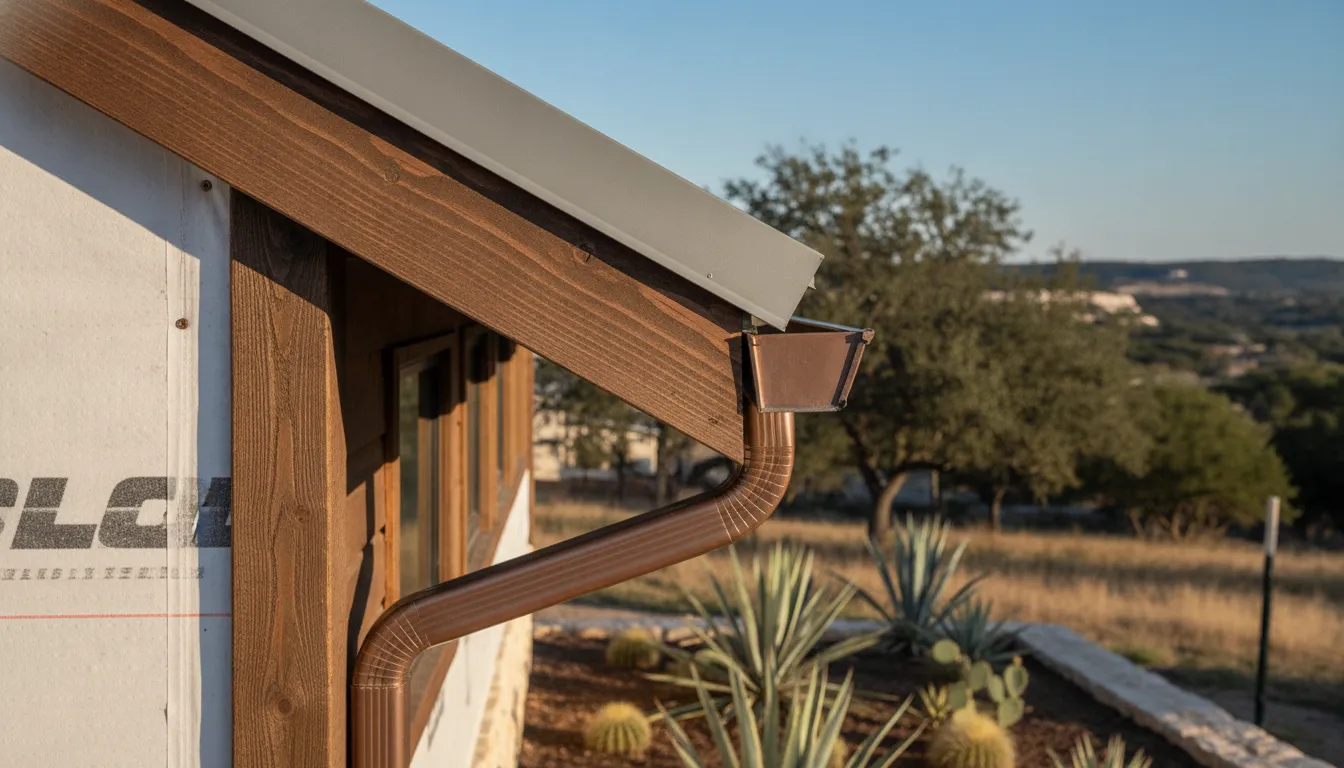
Peeling paint along the roofline or a sagging gutter can point to more than a cosmetic issue. The wood behind the gutter may be damp, split, or too damaged to hold fasteners securely. A wood fascia board covers the ends of roof rafters and helps protect them from weather, while also supporting the gutter system on many homes. In Austin, San Antonio, Dallas, and nearby communities, heat, storms, and heavy rain can expose weaknesses over time. This guide explains how to choose, inspect, and maintain fascia, and why checking drainage matters before replacing a damaged board.
Key Takeaways
- Keep fascia and gutters working together: Sound fascia gives gutters a secure mounting surface, while clear gutters and properly placed downspouts help direct water away from your home.
- Choose materials for the roof edge and local conditions: Compare wood, vinyl, and aluminum by cost, upkeep, appearance, and compatibility with your gutters.
- Find and fix moisture sources before replacing fascia: Check for leaks, clogs, soft wood, and loose gutters, then repair damaged framing and drainage before installing new boards.
What Does a Wood Fascia Board Do?
A wood fascia board runs along the edge of a roof, covering the ends of the rafters and giving the roofline a finished appearance. It also helps protect exposed roof framing from weather and pests. Because gutters are often fastened to fascia, the board needs to stay sound and securely attached.
Fascia plays an important part in a home’s water-management system, but it does not direct water on its own. Gutters collect runoff from the roof, then downspouts carry it toward a suitable discharge area. When the fascia is damaged or gutters are loose, water may spill onto siding, wear away landscaping, or collect near the foundation. Understanding how fascia, gutters, and drainage work together can help you spot issues before they cause more extensive damage. A fascia board guide explains how fascia helps protect roof framing and provides a mounting surface for gutters.
Protect roof edges and rafter tails from weather, pests, and moisture
Fascia covers the exposed ends of roof rafters, helping shield them from rain, sun, and pests. Without it, moisture can reach the roof framing, and gaps around the eaves may offer insects or wildlife a way in. A well-maintained board also gives the roof edge a neat, finished look.
Wood fascia needs a protective exterior finish. Peeling or cracked paint can expose the wood to moisture, especially during heavy rain. Check the full roofline, including corners and areas near downspouts, where runoff may splash or collect. If you spot staining or damaged paint, look for the source of moisture before repainting. Fascia maintenance guidance also notes that exposed roof edges can leave framing vulnerable to weather and wildlife.
Give gutters a secure mounting surface
Gutters are often attached to fascia, so the board must be firm enough to hold fasteners and keep the gutter aligned. If the wood is split, soft, or rotting, screws may loosen or pull out. Refastening a sagging gutter without checking the fascia can leave the underlying problem unresolved.
Clogged gutters can hold water and debris, adding strain to the gutter and its attachment points. If you notice a section pulling away from the roofline, check the gutter as well as the board behind it. The fascia may need repair or replacement before the gutter can be secured properly. TX Gutter Solutions provides gutter repair and maintenance to help address issues with gutters and their performance.
Help gutters and downspouts direct water away from siding, landscaping, and foundations
Fascia supports the gutters that collect runoff from the roof. Gutters carry that water to downspouts, which should release it away from siding, planting beds, and the foundation. If a gutter is clogged, loose, or poorly positioned, water can spill over the edge and repeatedly soak the same areas around the home.
After rain, look for overflow marks on siding, washed-out soil beneath the roofline, or standing water near the foundation. These can signal a gutter or drainage issue, even if the fascia looks intact. Keeping the entire system clear and properly connected helps move water away from vulnerable areas. TX Gutter Solutions offers gutter and drainage solutions tailored to a property’s water-management needs.
Spot warning signs: peeling paint, soft spots, cracks, warping, rot, and sagging gutters
From the ground, check fascia for peeling paint, cracks, dark stains, or warped sections. These signs may point to age, weather exposure, or persistent moisture. You can use binoculars to get a closer look at areas that are difficult to see safely. Also note any sagging or separating gutters, since the board behind them may no longer hold fasteners securely.
Soft, crumbling wood can indicate rot. Don’t cover damaged fascia with new trim or attach a gutter to wood that cannot support it. Check for clogged gutters, too, as water and debris can add weight and stress the board. If you find damage near a gutter or downspout, an inspection can help determine whether the fascia, gutter, or surrounding roof edge needs attention. Get in touch with TX Gutter Solutions to discuss concerns with your gutter system.
Which Wood Fascia Board Works Best in Central Texas?
There isn’t one best wood for every home. Your choice depends on budget, appearance, maintenance, and whether the fascia will support gutters. Central Texas heat, sun, humidity, heavy rain, and storms can all affect how long exterior wood lasts, so proper protection and sound installation matter as much as the wood species.
Before choosing a replacement, check for leaks and damage at the roof edge. If the fascia holds gutters, the board and framing behind it need to provide a secure attachment. A professional can inspect the area and help match the repair to your gutter and drainage system.
Cedar and redwood resist decay naturally and offer distinctive grain, often at a higher cost
Cedar and redwood contain natural compounds that can help slow decay, making them appealing choices for exterior trim. Their color and grain can also add character when the fascia will remain visible. They still need appropriate care: protect cut ends, keep water from collecting against the board, and apply a suitable exterior finish when recommended.
These species often cost more than common softwoods, and local availability can vary. Compare the grade, dimensions, and condition of each board, not just its species. The USDA Wood Handbook explains how wood properties and exposure affect durability. Use that information alongside the product’s specifications to decide whether the appearance and potential decay resistance are worth the added cost.
Pine costs less and is widely available, but needs proper exterior protection
Pine is widely available and often costs less than cedar or redwood. It is also relatively easy to cut and paint, which can simplify installation and future repairs. Some products come pre-primed or treated, but these features don’t remove the need for moisture protection. Confirm that the board is intended for exterior use and follow its finishing instructions.
Pay close attention to end grain and joints, where water can enter. Keep paint or other finishes in good condition, and repair gutter leaks promptly. If pine fascia will support gutters, check that both the board and the framing behind it are sound. A lower purchase price may not mean a lower long-term cost if the fascia needs frequent repairs or the source of moisture remains unresolved.
Douglas fir and SPF offer strength and availability but need careful moisture protection
Douglas fir is valued for its strength and is common in building projects. SPF, or spruce-pine-fir, is a lumber grouping that can include several species. Both may be available in sizes suitable for fascia, but grade, treatment, and suitability for exterior exposure vary. Ask the supplier to confirm the board’s intended use rather than assuming that strength alone makes it appropriate.
These woods need protection from moisture and regular attention to their finish. Inspect each piece before buying, and avoid boards with significant splits, soft spots, or excessive warping. Use an exterior coating suited to the product and seal exposed cuts as directed. Roof-edge details should also direct water away from the fascia, helping limit the conditions that can lead to deterioration.
Compare wood types by durability, cost, appearance, availability, and upkeep
Compare the full ownership picture, not just the price per board. Cedar and redwood offer distinctive grain and natural decay resistance, while pine, Douglas fir, or SPF may be more readily available or budget-friendly. Actual performance depends on the product’s grade, treatment, exposure, finish, and installation. Ask suppliers for specifications and compare boards with similar dimensions and quality.
Consider how much time you’re willing to spend inspecting, painting, or repairing the fascia. If it will support gutters, include the condition of the framing and the planned fasteners in your decision. A sound board can still fail if water gets behind it or the gutters are loose. For recurring leaks or overflow, assess the fascia and water-management system together, and review gutter and drainage options.
Consider Central Texas sun, heat, humidity, heavy rain, storms, and temperature swings
Central Texas fascia faces long stretches of sun and heat, humid periods, heavy rain, and storms. Temperature changes can also cause building materials to expand and contract. No wood species is immune to these conditions, so exposure, finishing, installation, and drainage all affect how the board performs.
Check areas beneath roof valleys, around downspouts, and near gutter joints for signs of water intrusion. Choose exterior-rated materials and coatings, then maintain them according to the manufacturer’s instructions. The National Weather Service’s Austin-San Antonio office provides local weather information that can help you understand regional conditions. If water regularly spills over the gutter edge, find and address the cause rather than relying on paint or replacement fascia alone.
Check each board’s grade, treatment, moisture, straightness, knots, splits, and warping
Inspect a board from end to end before buying. Check its grade and confirm whether it is treated, primed, or rated for exterior use. Look for excessive bowing or twisting, large knots, splits, soft spots, and signs of moisture damage. A warped or damaged board can be difficult to fit tightly, leaving gaps that expose the roof edge.
Ask the supplier about the board’s moisture condition and recommended finishing steps. Confirm that its dimensions suit the existing fascia and gutter attachment. If the old board has stains, soft areas, or rot, inspect the rafter tails and framing before covering or replacing it. Hidden damage can weaken a new installation, so find the source of moisture and make sure the structure is sound first.
Compare Wood, Vinyl, and Aluminum Fascia
Fascia material affects your home’s appearance, maintenance needs, and how well the roof edge supports gutters. In Central Texas, compare options with local sun, heat, heavy rain, and temperature swings in mind. Also check the roof-edge framing: even a durable fascia material won’t provide reliable gutter support if the wood or rafter tails behind it are damaged.
Wood cuts and finishes easily but needs regular upkeep
Wood is easy to cut and shape, making it a practical choice for rooflines with custom details. You can paint or stain it to match your home, and sound, properly installed boards provide a dependable surface for gutter fasteners. The tradeoff is regular maintenance. Sun and rain can wear down paint or stain, leaving wood exposed to moisture that may lead to swelling, warping, or rot. Inspect wood fascia for peeling finishes and soft spots, and repair leaks before they cause further damage. Fascia board guidance explains why protecting the surface is important. Be prepared to repaint or reseal as needed, particularly on roof edges with strong sun or frequent water exposure.
Vinyl needs little maintenance, but check its heat tolerance, impact resistance, and gutter compatibility
Vinyl fascia resists moisture and does not need routine painting, which can reduce upkeep. However, its performance depends on the product and its exposure. Some vinyl can soften or warp in high heat, while very cold conditions may make it more likely to crack. Before choosing it, review the manufacturer’s information on heat tolerance and impact resistance, and confirm that the product works with your gutter system. Check the boards beneath any vinyl covering, too. Vinyl can conceal existing damage without repairing it, so replace rotted wood and address moisture problems before installation. This is especially important where gutters attach, since they need a secure base to handle the weight of water and debris.
Aluminum resists moisture, but make sure any covered wood remains sound
Aluminum fascia resists moisture-related problems such as rot and warping, and it generally needs little more than occasional cleaning and inspection. It can also provide a neat, consistent finish along the roof edge. Installers often use aluminum to cover existing wood, but the condition of that wood still matters. If it is soft or decayed, covering it can hide damage while leaving gutters attached to an unreliable surface. Have the fascia and rafter tails checked first, and repair compromised areas before installation. Aluminum fascia information outlines properties to consider when comparing materials. The finished system should protect the roof edge and provide secure support for your gutters.
Compare upfront cost, upkeep, lifespan, appearance, and repair needs
Compare the full cost of each option, not just the price of the boards. Wood may cost less upfront, but painting, sealing, and replacing damaged sections add to long-term expenses. Vinyl can reduce painting needs, though heat or impact damage may require repairs. Aluminum is low-maintenance, but installation costs and the condition of any covered wood should be part of your estimate. Consider appearance, product warranty, expected maintenance, and how easily damaged sections can be repaired. Most importantly, confirm that the chosen material is compatible with your gutters and roof edge. A local professional can assess the fascia and recommend a system suited to your home. Review gutter and exterior services to see the options available.
Choose and Size a Wood Fascia Board
Measure the roof edge and confirm the needed width, thickness, and length
Measure the fascia from top to bottom to determine the width, and check its thickness where it meets the rafter tails. Common nominal sizes include 1×6 and 1×8, but lumber’s actual dimensions are smaller than its nominal size, so confirm measurements on the product label. Measure each roof section separately, including corners and changes in roof height. Record the lengths and plan for cuts and joints to land over framing where possible.
If the existing board is too damaged to measure accurately, use an intact section or have a contractor assess the roof edge. A fascia board sizing guide can help you compare common dimensions, but the roof assembly and gutter system should guide your final choice.
Check rafter tails, roof overhang, soffits, and gutter attachment points
Check how the roof edge is built before selecting a board. Fascia typically attaches across the rafter tails, while the soffit meets it along the underside of the eave. The replacement should cover the roof edge neatly without blocking soffit ventilation or interfering with the drip edge and flashing.
Note where the gutter brackets attach, too. Fasteners need to reach sound wood, not just a thin trim layer or deteriorated fascia. Look for uneven rafter tails, changes in the roof overhang, and corners where boards meet. Fascia can support soffits and provide an attachment surface for gutters and roof-edge materials, as this fascia board overview explains. If gutters are sagging or the roof edge shows water damage, assess the whole assembly before replacing the board.
Choose dimensions and grade that suit the roof edge and gutter load
Choose a board wide enough to cover the rafter tails and provide a stable, even surface for the gutter. Its thickness should match the roof-edge assembly and allow fasteners to hold securely. A wider or thicker board is not automatically the right choice; it still needs to align with the soffit, roof edge, and gutter.
Check the lumber grade and condition. Choose straight boards with sound edges and avoid splits, loose knots, or other defects near fastener locations. Consider the gutter’s condition and bracket spacing, especially where it carries water during heavy rain. If a gutter is pulling away, replacing fascia alone may not fix the issue. The rafters or other framing may also need repair. A gutter and drainage assessment can help identify what needs attention before new boards go up.
Compare products by species, grade, treatment, finish, availability, and warranty
Compare more than species and price. Cedar and redwood naturally resist decay, while pine and other widely available options generally need reliable exterior protection. For any species, check the grade, moisture condition, straightness, knots, and splits. Confirm whether the lumber is treated for exterior use and suitable for the roof-edge application.
Review the finish requirements as well. Some boards come primed; others need primer and paint or stain after cutting. Check which lengths are available so you can reduce unnecessary joints, and read the warranty for coverage details and installation conditions. Central Texas sun, heat, humidity, and storms can wear down exposed finishes, so factor upkeep into your decision. This guide to exterior fascia materials explains how climate, appearance, and maintenance can affect material choice.
Inspect the roof edge and framing for hidden moisture damage before replacing boards
A new fascia board may not hold securely if the wood behind it is wet or decayed. After removing damaged trim, inspect the rafter tails and nearby framing for soft spots, dark stains, crumbling wood, or signs of insects. Check for gaps, failed flashing, and evidence that water has run behind the fascia.
Inspect the gutter, too. Clogs, leaking seams, loose brackets, or poor drainage can expose replacement lumber to moisture again. Fix the source of the water and let damp framing dry before closing the roof edge. Fascia inspection guidance recommends checking for cracks, warping, and decay, as well as keeping gutters clear. If framing is compromised or the gutter cannot attach to sound wood, have a professional assess the roof edge before proceeding.
Consider engineered trim or fiber cement only if it’s rated for fascia use
Engineered trim and fiber cement may suit homeowners seeking a durable, lower-maintenance option, but confirm that the specific product is rated for fascia use. Materials made for siding or interior trim may not be designed for roof-edge exposure, gutter loads, or the fasteners required for this application.
Read the manufacturer’s installation instructions for approved thicknesses, support spacing, fasteners, clearances, and finish requirements. Fiber cement is durable but heavier than wood, which can affect handling and installation. Engineered products also vary in warranty, availability, and maintenance needs. This fascia material comparison outlines common options and their trade-offs. Select a product that fits the roof assembly and works with the soffit and gutter system, rather than relying on broad material claims.
What Does a Wood Fascia Board Cost, and Where Can You Buy One?
The board itself is only one part of a fascia project. Species, grade, labor, removal, and repairs to the roof edge can all affect the final cost. Use the ranges below to start planning, then compare materials and request local estimates based on your home’s condition.
Compare material prices by species, grade, dimensions, and length
Wood fascia commonly costs about $1 to $3 per linear foot, though the price depends on species, grade, thickness, width, and length. Pine is often a more affordable choice. Cedar and redwood typically cost more, but their natural resistance to decay can make them worth considering for exposed areas.
Compare the exact dimensions and usable length of each board, not just its listed price. Longer boards may reduce the number of joints, while a board with splits, knots, or warping may create extra waste. Higher grades can cost more, but often have fewer visible defects. For general pricing context, review HomeAdvisor’s fascia and soffit cost guide.
Estimate total cost per linear foot, including labor and removal
Labor can range from about $6 to $20 per linear foot, depending on access, roof height, project complexity, and local rates. Removing old fascia, disposing of debris, and working around gutters may add time. If the contractor finds damage to rafter tails or roof-edge framing, repairs can raise the total.
A standard home’s fascia replacement may cost roughly $600 to $1,500, but the actual price depends on the home and work required. Ask contractors to list labor, removal, disposal, and repairs separately so you can compare estimates accurately. HomeAdvisor’s replacement cost information can help with early budgeting, but an on-site assessment provides a more useful estimate.
Add costs for primer, paint or stain, sealant, fasteners, delivery, and possible repairs
Include primer, exterior paint or stain, sealant, corrosion-resistant fasteners, and delivery in your budget. You may also need flashing materials or extra lumber if the roof edge has hidden damage. For 64 linear feet, related materials and supplies can add about $120 to $181, according to Homewyse’s fascia installation estimate.
In Central Texas, fascia faces strong sun, heat, humidity, and heavy rain. Choose finishes labeled for exterior use and follow the manufacturer’s directions for surface preparation and upkeep. Ask whether the contractor’s estimate includes these materials or lists them separately. If leaking gutters or roof runoff have affected the fascia, have the wood and framing behind it checked before installing new boards.
Compare local lumberyards and home-improvement stores for selection, quality, and price
Home-improvement stores are convenient for standard sizes and readily available products. Local lumberyards may carry more species, grades, and board lengths, and their staff can help you compare options for an exposed roof edge. Call ahead with the dimensions and quantity you need, and ask whether the boards are sold individually or in bundles.
Compare delivery charges, storage conditions, and return policies along with the price. Ask whether you can inspect the boards before purchase, especially if you need longer lengths. Confirm that the lumber can be transported and handled safely at the job site. Getting prices from more than one supplier helps you see whether a lower price reflects a good deal or a board with more defects.
Evaluate sales by grade, dimensions, usable length, and condition, not price alone
Before buying, confirm the species, grade, actual dimensions, treatment, and length. Inspect each board for splits, rot, excessive knots, bowing, or twisting. Measure the usable length rather than assuming the entire board can be installed. Damaged ends and pronounced warping can mean more cuts, waste, and joints.
Also consider how the board will be finished and how it will support the gutter. Fascia needs to fit the roof edge and provide a secure attachment surface. A higher-quality board may cost more upfront but require less sorting or replacement. Use Angi’s fascia replacement guide for additional cost context, then judge each board by its condition and suitability for your project.
Request local quotes to estimate installed costs
Request written quotes from at least two contractors, using the same project details for each. Ask whether the price includes old-board removal, disposal, materials, painting or staining, flashing checks, and gutter removal or reinstallation. Find out how the contractor will price repairs if they uncover damage to rafter tails or other framing.
For a Central Texas property, discuss how the fascia connects to the gutters and where downspouts direct runoff. Secure fascia and well-attached gutters help carry roof water away from siding, landscaping, and the foundation. TX Gutter Solutions provides gutter and exterior water-management services across the region. You can request a local estimate to discuss your roof edge and gutter system together.
Install and Maintain Wood Fascia Boards
A reliable fascia installation starts with the roof edge, framing, and gutters in good condition. Before replacing a board, look for what caused the damage: water may be getting behind the fascia, a gutter may be leaking or overflowing, or a downspout may be releasing runoff too close to the house. Repairing the board without fixing the source can leave the replacement exposed to the same problem.
Central Texas weather makes regular checks worthwhile. Heat, strong sun, heavy rain, and storms can wear down paint, loosen gutter connections, and expose weaknesses in roof-edge drainage. Inspect fascia at least once a year and after severe weather. From the ground, look for peeling paint, cracks, sagging gutters, or staining. If damage is hard to assess or a gutter no longer feels secure, avoid climbing onto the roof. A professional can check the fascia, framing, and drainage together. TX Gutter Solutions provides gutter repair, cleaning, and maintenance for homeowners who need help addressing gutter-related problems.
Remove damaged boards and check that rafter tails and framing remain sound
Remove damaged fascia carefully so you can see the wood behind it. Check the rafter tails and nearby framing for soft spots, rot, cracks, or signs of pests. Fascia attaches along the roof edge, so the replacement needs sound framing to hold it securely. My Gutter Doctor explains how fascia protects exposed roof edges, making it important to inspect more than the visible board.
Don’t fasten new wood over rot or use it to conceal water damage. First, identify and address the cause, such as a leaking gutter or water getting behind the fascia. If damage extends into the framing, have a qualified professional assess the roof edge before installing a replacement.
Cut and align boards accurately; use corrosion-resistant exterior fasteners
Measure each section before cutting, then dry-fit the board to check that the ends meet cleanly and the face sits flush along the roof edge. Careful alignment gives the fascia a neat appearance and helps create a stable surface for gutter attachment. Choose exterior-rated, corrosion-resistant fasteners that are long enough to grip sound framing securely. Fasteners that are too short or not suited to outdoor use may loosen or deteriorate.
Follow the product’s installation guidance for fastener placement and spacing. Avoid placing fasteners too close to board edges, where they can split the wood. If the fascia supports a gutter, make sure the board is secure before reinstalling it. My Gutter Doctor notes that short fasteners can contribute to loose fascia, so check their length as well as their condition.
Seal cut ends and exposed surfaces without trapping moisture behind the board
Freshly cut wood and exposed end grain can absorb moisture. Before installation, apply an exterior primer or sealer to cut ends and other exposed areas, then finish the board with paint or stain made for outdoor use. Follow the product directions for application and drying time. When practical, coat the board before installation so the edges and back are easier to reach.
Make sure the wood is dry before sealing it. A finish should protect the surface without trapping moisture behind the fascia, so check that roof-edge details allow water to drain. Pay close attention to joints, corners, and areas near gutters, where water may collect. During routine inspections, look for peeling or damaged finish and touch up exposed wood promptly. Sealing helps protect sound fascia, but it cannot fix a leak or repair wood that has already begun to rot.
Check flashing and drip edge; attach gutters to secure fascia and sound framing
Before reinstalling gutters, check that flashing and the drip edge guide roof runoff into the gutter rather than behind the fascia. Gaps or poorly positioned edges can expose the wood to repeated wetting. The fascia should be firmly attached to sound framing, and the gutter should be fastened according to its installation requirements. Don’t rely on loose, rotted, or undersized wood to support the system.
After the work is complete, run water through the gutters and check for leaks, overflow, or runoff behind the gutter. Confirm that downspouts carry water away from the home. If you find a drainage issue, fix it before it repeatedly wets the roof edge or pools near the foundation. TX Gutter Solutions offers custom gutter and drainage solutions to address water flow concerns around the roofline and property.
Avoid unsuitable fasteners, unsealed end grain, and covering rot
Small installation shortcuts can lead to larger repairs. Fasteners that are too short may not hold the fascia securely, while hardware not rated for exterior use can corrode. Leaving cut ends unsealed also gives moisture a way into the wood. Choose materials intended for outdoor conditions, and follow the manufacturer’s instructions for installation and finishing.
Don’t cover damaged fascia with trim, metal, or a new board before finding the cause. A cover may hide rot without stopping it. If the wood feels soft, crumbles, or shows darkened areas, inspect the material behind it and address any leak or drainage problem. A fascia board installation guide also highlights common oversights such as unsealed cut ends and unsuitable fasteners. If you’re unsure how far the damage extends, arrange a professional inspection before closing the roof edge.
Clear gutters and promptly fix leaks, loose connections, and drainage problems
Leaves and other debris can block water flow, leave water sitting against the fascia, and add weight to the gutter system. Clear gutters regularly, and check that water moves freely through downspouts. Look for dripping joints, sagging sections, loose hangers, and water spilling over the edge during rain. Prompt repairs help limit repeated wetting and reduce strain on the fascia.
Check where downspouts release water, too. If runoff pools beside the home, the discharge point or drainage setup may need attention. Don’t wait for a board to soften or a gutter to pull away before addressing a leak. If the gutters are difficult to reach or problems keep returning, a gutter cleaning and maintenance service can help keep the system working as intended.
Inspect annually and after severe weather for paint failure, cracks, warping, rot, pests, and loose fasteners
Inspect the fascia at least once a year and again after severe weather. From the ground, look for peeling or blistered paint, cracks, warped or bowed boards, soft spots, pest activity, and gaps between the fascia and gutter. Check for staining below the roof edge, which may point to water getting behind the board. Binoculars can help you see higher sections without climbing a ladder.
Note changes and arrange repairs before they spread. Pay particular attention to gutters that appear to sag, shift, or pull away from the fascia. If you cannot see the roofline clearly or suspect loose fasteners, don’t climb onto the roof to investigate. Leave elevated inspections to a qualified professional. Regular checks can help you catch a small finish problem or loose connection before it affects the framing or drainage around your home.
Repaint or reseal as needed; get professional help if damage affects gutters or drainage around the home
When paint or stain begins to peel, remove loose finish, let the wood dry, and apply an exterior product according to its directions. Seal exposed areas as needed, including cut ends. Repainting or resealing can help protect fascia that is still sound, but it won’t repair rot or stop water from getting behind the board. Fix any leak or drainage problem before refinishing.
Get professional help if the fascia feels soft, is badly warped, pulls away from the framing, or can no longer hold the gutter securely. Water pooling near the foundation or signs of hidden roof-edge damage also call for a closer assessment. TX Gutter Solutions can review gutter and drainage concerns and provide a free estimate in its service areas.
Frequently Asked Questions
How can I tell if my wood fascia board needs to be replaced?
Look for soft or crumbling wood, deep cracks, warping, peeling paint, or dark stains that keep returning. A gutter pulling away from the roofline can also point to damaged fascia or framing. If you spot these signs, check for leaks or overflow before replacing the board.
Can I attach a gutter to new fascia without checking the framing?
It’s better to inspect the rafter tails and nearby framing first. If the wood behind the fascia is damaged, new boards may not hold gutter fasteners securely. Repair any rot and address the source of moisture before reinstalling the gutter.
Which fascia material is easiest to maintain?
Vinyl and aluminum generally need less upkeep than wood because they don’t require routine painting. However, each product has different installation requirements and performance limits. Confirm that the material is suitable for fascia use and compatible with your gutter system.
How often should I inspect fascia and gutters in Central Texas?
Check them at least once a year and after severe weather. From the ground, look for peeling finishes, stains, loose or sagging gutters, and water spilling over the edge. Regular gutter cleaning and prompt repairs can help prevent recurring moisture problems.
When should I call a professional about fascia or gutter damage?
Ask for an inspection if the fascia is soft, badly warped, or pulling away, or if gutters keep leaking or overflowing after cleaning. A professional can check the board, roof-edge framing, and drainage system together. TX Gutter Solutions offers gutter and drainage services, with free estimates in its service areas.