
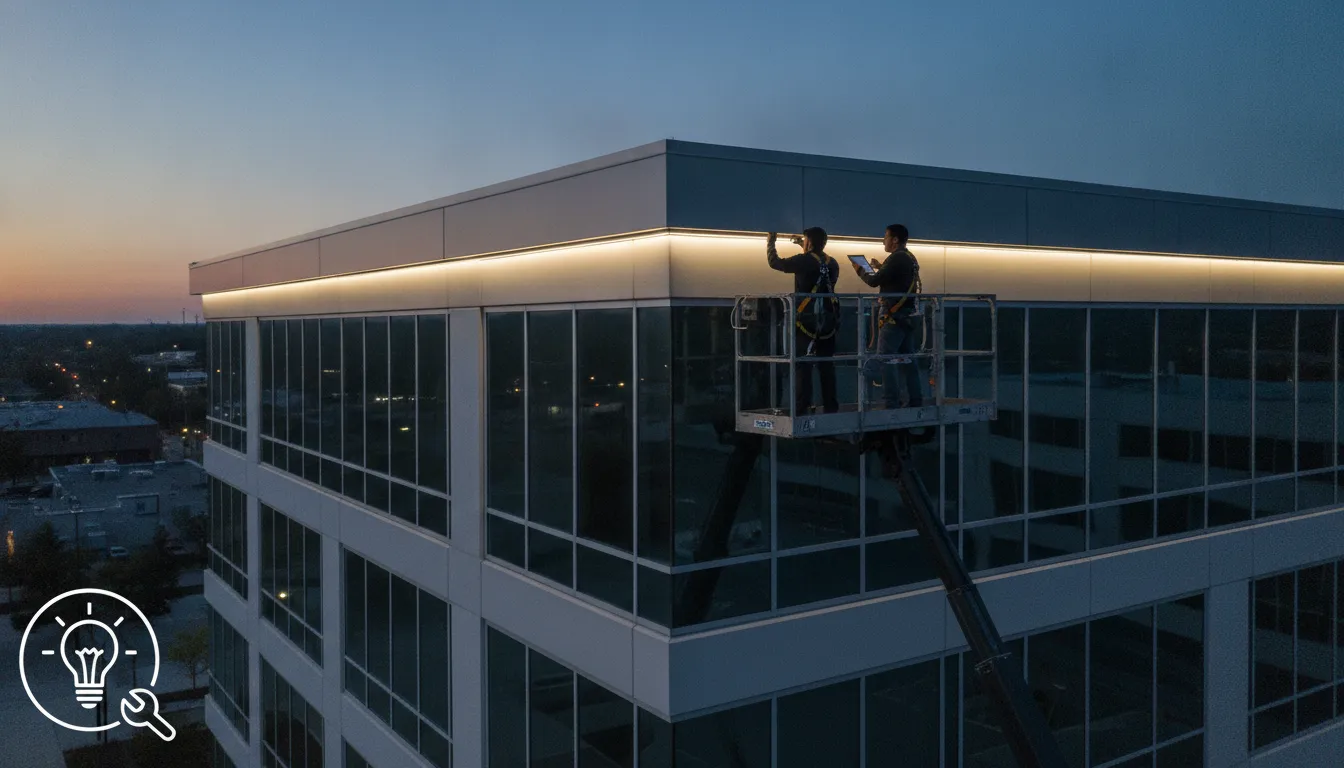
A dark section along your roofline can make a polished lighting display look uneven, while flickering or repeat outages may point to a problem that app settings alone can’t fix. For commercial properties, dependable exterior lighting helps customers recognize your building after dark and supports a consistent look around entrances and signs. Knowing when to check the app and when to call a professional can save time and help prevent unsafe troubleshooting. This guide covers permanent roofline lighting repair and maintenance, including common warning signs, safe checks, inspection schedules, and questions to ask a provider. TX Gutter Solutions offers permanent exterior lighting for Central Texas properties.
Key Takeaways
- Plan lighting around your business needs: Align colors and schedules with your brand, signage, entrances, and operating hours.
- Handle only safe checks yourself: Review app settings from the ground, and call a qualified professional about wiring, moisture, roof access, or repeated outages.
- Set a maintenance plan and choose service carefully: Schedule seasonal inspections, record recurring problems, and request a written estimate that explains the work, parts, and warranty.
Why Commercial Properties Need Permanent Roofline Lighting
Reinforce Your Brand and Improve Visibility
A clearly lit roofline can help customers spot your business after dark and distinguish it from nearby buildings. Choose colors that complement your logo or storefront, then switch to seasonal displays when they suit your plans. Some systems make it easy to change colors without installing new lights for each occasion. For example, Wade Roofing describes using holiday colors and brand colors at different times of year. Keep the display simple enough to remain recognizable from the street, and check any property or signage guidelines before choosing colors. A professional installation can also be tailored to your building’s shape and exterior. TX Gutter Solutions offers permanent exterior lighting for commercial properties.
Welcome Customers With an Inviting Exterior
Your exterior shapes a customer’s first impression, especially when they arrive in the evening. Well-placed roofline lighting can make a building easier to identify and give its exterior a cared-for appearance. It can also complement existing signage, landscaping, and entrance lights. Consider the view from the parking area and sidewalk, not only from the road. The goal is to create a cohesive look without overwhelming the building or competing with signs. Before installation, consider the property’s architecture and the routes customers use to reach the entrance. A lighting professional can help plan a display that fits the building and works with other exterior fixtures.
Coordinate Lighting Around Entrances and Walkways
Roofline lighting can contribute to a consistent exterior, but it should not replace lighting designed for entrances, walkways, stairs, or parking areas. Map the paths customers and employees take from the parking lot to the door, then note any areas that need better illumination. Coordinate the roofline display with existing fixtures to reduce visual clutter and avoid glare that could distract drivers. Dependable lighting around commercial properties may also help address safety concerns and complaints, as Lights Over Atlanta notes. Ask a qualified provider to review how the roofline lighting fits with the rest of your exterior lighting plan.
Manage Colors, Zones, and Schedules With an App
App-controlled systems let staff adjust a lighting display without accessing roof-mounted fixtures. Depending on the system, controls may include color selection, schedules, and separate zones for different parts of the building. A business might use a subtle everyday display, then change the colors for a holiday, event, or promotion. Some systems let users switch displays with a button, as Wade Roofing explains. Before choosing a setup, confirm which controls are included and decide who will manage access. Clear settings and schedules can help staff keep the display consistent while adapting it to the property’s needs.
How to Spot Roofline Lighting Problems
A quick visual check can help you catch lighting issues before they become harder to diagnose. After dark, scan the roofline from the ground, paying particular attention to entrances, walkways, and parking areas. If you have app-controlled lights, compare their appearance with the selected settings.
Look for Flickering, Dark Spots, and Uneven Colors
Turn on the system and look for sections that flicker, switch off, or appear dimmer than nearby fixtures. Dark spots near entrances, steps, and parking areas can leave important parts of your property poorly lit. Also check whether colors look inconsistent across the roofline, which may point to a fixture issue or a setting that differs from the rest of the system.
Note when the problem occurs and which lights are affected. For example, does a section flicker every time it turns on, or does it go dark only occasionally? These details can help a technician assess the issue. Lighting maintenance guidance recommends watching for inconsistent operation and dark areas around key parts of a property.
Check for Dirty, Loose, Damaged, or Misaligned Fixtures
From the ground, look for fixtures that appear dirty, cloudy, crooked, or out of line with the rest of the roofline. Surface debris can make a light look dim, while a misaligned fixture may shine in the wrong direction. Also watch for visible cracks or damage, particularly after strong winds or exterior work.
Do not climb a ladder or touch fixtures to inspect them. If you notice a concern from a safe location, take a photo and note where it is. This gives a lighting professional a useful starting point. Commercial lighting maintenance advice identifies dirty, cloudy, dim, or misaligned fixtures as signs that maintenance may be needed.
Check the App, Timer, Controller, Power, and Zones
If the lights do not look as expected, check the app settings before assuming a fixture has failed. Confirm that the system has power and review the schedule, brightness, color, and selected zones. A changed timer or zone setting may explain why part of the roofline is dark or why colors do not match.
If the app shows an error or a zone repeatedly fails to respond, make a note of the message and affected area. Avoid opening electrical components or attempting repairs. A clear description can help a professional determine whether the issue may involve settings, power, the controller, or a fixture. A diagnostic assessment can also help identify whether the system needs repair, maintenance, an upgrade, or replacement.
Watch for Moisture, Exposed Wiring, and Repeat Outages
Look from a safe distance for visible moisture around fixtures or connections, exposed or damaged wiring, and other signs that water may have entered the system. Do not touch wet components or try to reconnect wires. Keep people away from the area and contact a qualified professional to inspect it.
Pay attention to repeat outages, even if the lights turn back on by themselves. Record when they happen and whether they affect one fixture, a whole zone, or the entire system. This pattern can help a technician identify the source. Sealed connections help keep water out, but roofline wiring and electrical components should be inspected or repaired by a professional. For permanent, app-controlled exterior lighting, TX Gutter Solutions can help homeowners assess their system.
How to Troubleshoot Roofline Lighting Safely
Check Power, App Settings, Schedules, and Zones
Begin with checks you can make from the ground. Confirm the system has power, then use its app to review brightness, colors, schedules, and selected zones. A schedule or inactive zone may make working lights seem faulty. If the system has an accessible controller or breaker, check its status only when you can do so safely. Don’t open electrical components or handle plugs and controls with wet hands. Stop if you notice heat, moisture, or damaged wiring. Follow the manufacturer’s instructions, and test lights on the ground before installation when possible. These lighting safety recommendations can help prevent avoidable problems.
Identify Whether the Issue Affects a Fixture, Zone, or Whole System
Note how much of the system is affected before trying to fix anything. One dark or discolored fixture may point to a local issue. Several lights in the same zone may suggest a setting or connection problem, while a system-wide outage could involve power, the controller, or app settings. Record when the issue began and whether it followed a storm, cleaning, or other exterior work. This gives a technician useful details to start with. For permanent exterior lighting, noting which fixtures or zones are affected can make it easier to explain the problem when you request service.
Clean Accessible Fixtures as the Manufacturer Recommends
Dust, leaves, and other debris can affect how fixtures look. Before cleaning, switch off the system using its normal controls and check the manufacturer’s care instructions. Use only the recommended materials and method. Abrasive tools, harsh cleaners, or excess water may damage the fixture or its finish. Clean only components you can reach safely from the ground or another stable, approved surface. Don’t pull on a fixture or its wiring to remove debris. If a light is high on the roofline, appears loose, or has moisture inside, leave it alone and arrange professional service.
Avoid Roof Access and Electrical Repairs Without Proper Training
Don’t climb onto the roof or lean from a ladder to inspect or repair roofline lights. A roof or ladder can become unstable, and a fall can cause serious injury. Don’t open a controller, splice wires, or test electrical components unless you have the right training and equipment. If you see exposed wiring, water near electrical parts, scorch marks, or repeated outages, stop using the system and keep others away from the affected area. Contact a qualified professional instead. Roofing safety guidance explains why avoiding improper roof repairs helps protect both people and property.
What Roofline Lighting Repair and Maintenance Include
A maintenance visit can help identify small issues before they affect a larger part of a permanent roofline lighting system. The exact work depends on the product, installation, and manufacturer’s instructions. A qualified provider can inspect the system, explain what needs attention, and recommend repair or replacement where appropriate. TX Gutter Solutions installs permanent exterior lighting for Central Texas properties, and can help homeowners ask the right questions about their system’s care.
Clean Fixtures and Remove Surface Debris
Dust, pollen, leaves, and cobwebs can collect on fixtures and make lights appear dull or uneven. A technician can clean accessible fixtures and remove surface debris using methods suited to the system. Clean surfaces also make it easier to notice cracks, loose parts, or signs of moisture.
Follow the manufacturer’s instructions when cleaning. Abrasive tools and harsh chemicals may damage lenses or seals, and spraying water near electrical connections can create a hazard. Regular cleaning can help commercial entrances, signs, and walkways look well maintained. A professional lighting maintenance inspection may include cleaning alongside checks for performance issues.
Inspect Mounts, Wiring, Connections, and Controls
A technician can check that fixtures remain secure and aligned along the roofline. They may also inspect visible wiring, connections, mounting channels, and control equipment for wear or damage. Signs of water intrusion deserve attention, especially if lights flicker or stop working after rain.
A diagnostic can help identify whether the problem calls for repair, maintenance, an upgrade, or replacement. Avoid handling exposed wires or opening electrical components yourself. If you notice damaged wiring or moisture near a connection, keep people away from the area and arrange a professional assessment. TX Gutter Solutions lists its lighting and exterior services online, so you can review the available work before requesting an estimate.
Adjust Fixtures and Replace Failed LEDs or Compatible Parts
Fixtures can shift over time, affecting the look and direction of the light. A technician can adjust misaligned fixtures and check whether failed LEDs or other parts can be replaced. Replacement components should match the system’s specifications. An incompatible part may cause uneven brightness, mismatched colors, or trouble with app controls.
Before work begins, ask the provider to identify the system’s make and model and confirm the appropriate replacement parts. Some systems use integrated LEDs or specific components, which can limit repair options. An inspection can help determine whether one fixture needs attention or a larger section of the system is affected. Ask for a written estimate that describes the parts and labor before approving the work.
Test App Controls, Schedules, Zones, and System Performance
After maintenance or repair, test the system to confirm that it responds as expected. A technician can check whether the app connects to the controller, schedules run at the correct times, and each zone responds to commands. They can also look for consistent colors and brightness across the roofline, particularly around entrances and signs.
If one zone is not working, the issue may be limited to a setting, fixture, or connection in that section. If the entire system is unresponsive, the controller, power supply, or network connection may need attention. Keep control equipment and accessible connectors clear so they are easier to inspect later. An installation walkthrough offers a look at connector access, but follow the product manual for system-specific care.
Check Warranty Coverage Before Making Repairs
Before approving a repair, check the warranty for the fixtures, controller, and installation. Coverage can differ by component and may depend on the product and installer. Keep purchase records, product details, and service paperwork together so you can share them with the provider.
Ask whether a proposed repair could affect coverage and whether the manufacturer requires specific parts or service procedures. If another company installed the system, a provider may need to inspect it before recommending repairs. Request an estimate that lists the problem, proposed work, parts, and any warranty on the repair itself. Clear details make it easier to compare a targeted fix with replacement, especially if the same issue has returned more than once.
How Often to Service Commercial Roofline Lighting
A consistent maintenance schedule helps commercial roofline lighting look polished and work as intended. Spring and fall inspections are a practical starting point, with extra checks after severe weather or exterior projects. The right frequency depends on your building’s surroundings, exposure, and operating schedule. Follow the system manufacturer’s care instructions, and ask a qualified lighting professional to recommend service based on your property.
Schedule Inspections in Spring and Fall
A spring inspection can catch problems left by winter weather and check for pollen or other seasonal buildup. In fall, prepare the system for storms, falling leaves, and longer hours of darkness. During each visit, check for loose or misaligned fixtures, uneven colors, damaged wiring, and issues with app controls or schedules.
Seasonal inspections also give you time to address small problems before busy periods, such as holiday events or extended evening hours. Some providers recommend spring and fall as a regular maintenance rhythm. Use that as a starting point, then adjust based on your system and property. You can learn more about TX Gutter Solutions’ permanent exterior lighting, including its app-controlled features.
Inspect the System After Severe Weather or Exterior Work
Arrange an inspection after high winds, hail, heavy rain, or other severe weather if you notice a change in how the lights look or operate. Storms can shift fixtures, damage wiring, or lead to moisture intrusion. Roofing, painting, sign installation, and other exterior projects can also disturb lights or their connections.
Avoid climbing onto the roof to investigate. Roof access can involve fall and electrical hazards, so leave hard-to-reach inspections to trained professionals. If you see exposed wiring, moisture near electrical components, or repeated outages, switch off the system only if you can do so safely, then arrange service. Roofing safety guidance explains why proper precautions matter when working at height.
Adjust Service Frequency for Debris, Exposure, and Operating Hours
A property surrounded by trees may need more frequent inspections than one with little nearby vegetation. Leaves, pollen, dust, and other debris can collect around fixtures and affect their appearance or performance. Buildings exposed to strong sun, high winds, or frequent storms may also benefit from closer monitoring. Consider operating hours, too: systems that run for longer periods have more time to develop performance issues.
Start with the manufacturer’s maintenance recommendations, then adjust the schedule based on what you observe. Keep a record of inspections, repairs, and recurring problems so you can identify patterns and plan service. Before cleaning or handling a fixture, check that the method is suitable for your system. Lighting safety tips reinforce the value of checking equipment and following safe handling practices. For wiring concerns or roof access, contact a qualified professional.
When to Call a Roofline Lighting Professional
Basic checks, such as reviewing app settings or schedules, are usually safe to do yourself. If the problem involves wiring, moisture, roof access, or repeated failures, stop troubleshooting and contact a qualified professional. An inspection can help pinpoint the cause and clarify whether repair, maintenance, or replacement is the right next step.
Get Help With Damaged Wiring, Moisture, or Electrical Issues
If you notice exposed or damaged wiring, moisture near electrical components, scorch marks, or a damaged power connection, stop using the affected lights. Don’t touch the wiring or try to dry electrical parts yourself. Water and electricity can create a serious hazard, and damage may extend beyond what you can see from the ground.
A lighting professional can inspect the system, identify the source of the issue, and recommend a safe response. A diagnostic inspection can help determine whether the system needs repair, maintenance, an upgrade, or replacement. For permanent exterior lighting in Central Texas, review TX Gutter Solutions’ lighting service and ask whether the company can assess your system.
Call About Persistent Flickering, Repeat Outages, or System Failures
One dark fixture may have a localized problem. Flickering across multiple lights, repeated outages, or lights that shut off unpredictably may point to an issue with a connection, controller, or power source. Check the app, schedule, and zones first. If the settings are correct and the problem continues, avoid repeatedly resetting the system or replacing parts without identifying the cause.
A professional can test the system and trace the fault. Lighting maintenance guidance lists inconsistent operation and fixtures that no longer turn on as signs that service may be needed. Before you call, note when the problem occurs and which fixtures or zones are affected. Those details can help the technician narrow down the issue.
Leave Roof Access, Hard-to-Reach Fixtures, and Electrical Testing to Professionals
Roofline fixtures can be difficult to reach, especially on multistory buildings or roof sections with a steep pitch. Climbing a ladder or walking on the roof to inspect or clean them can put you at risk of a fall and may damage the roof or lighting system. Keep your visual checks to areas you can see safely from the ground.
Leave elevated work and electrical testing to trained professionals with suitable equipment. Roofing safety guidance emphasizes taking precautions when working on a roof. If a fixture looks loose, misaligned, or damaged, take a photo from a safe distance and share it when you request service.
Compare Repairs With Replacement When Problems Persist
If the same fixtures or zones keep failing, repeated repairs may not address the underlying problem. Ask the provider to explain what is causing the failures, which parts need attention, and whether other components show signs of wear. Request a written estimate that separates immediate repairs from longer-term options.
For an older system or one with recurring wiring, controller, or fixture problems, compare the cost and expected reliability of continued repairs with replacement. Some providers may recommend replacing a system that has needed repeated patching instead of continuing to repair individual parts. Before approving work, check your warranty and confirm what the estimate includes, including parts, labor, and follow-up service.
How to Choose a Roofline Lighting Maintenance Provider
The right provider can help keep your permanent lighting working reliably and looking consistent. Before booking service, check the team’s experience with app-controlled systems, clarify what repairs and warranties cover, and make sure its schedule and service area suit your property.
Choose a Provider Experienced With Permanent, App-Controlled LED Systems
Permanent roofline lighting differs from seasonal lights: fixtures, wiring, controls, and zones remain in place year-round. Choose a provider who can work with your system’s specific components and app. Ask whether the team can diagnose connection issues, adjust schedules and colors, and replace failed parts with compatible components.
For a commercial property, also ask how the provider tests the system after a repair and whether it can coordinate work around your business hours. Review examples of similar projects and check that the team understands how to keep lighting consistent across different roofline sections. TX Gutter Solutions offers permanent exterior lighting, including app-controlled options. When you request information, ask what maintenance the system may need and which service tasks the company provides.
Confirm Insurance, Repair Scope, Warranties, and Written Estimates
Ask for proof of insurance before work begins, and request a written estimate that describes the inspection or repair, labor, parts, and any exclusions. A clear scope helps you compare providers and understand what will happen if the technician finds an additional issue.
Check how proposed repairs may affect the manufacturer’s warranty. Some systems require specific components or service procedures, so confirm that any replacement parts are compatible and that the work will not void coverage. Ask whether the provider offers a separate warranty on labor or parts, how long it lasts, and how to request service under it. Get all promises in writing. When reviewing a provider’s permanent lighting services, use the details as a prompt to ask what support is included after installation.
Ask About Inspection Frequency, Response Times, and Service Areas
A useful maintenance schedule depends on your building, local conditions, and how often the lights operate. Ask how frequently the provider recommends inspections, what each visit includes, and whether you can arrange a check after severe weather or exterior work. Seasonal visits in spring and fall are one option; Lights Over Atlanta’s maintenance guidance discusses scheduled checkups during those seasons.
Clarify typical response times for outages and whether urgent appointments are available. For a business, ask whether technicians can work outside customer-facing hours or coordinate access with your staff. Before requesting a quote, confirm that the provider serves your property’s location. TX Gutter Solutions lists its Central Texas and Dallas–Fort Worth service areas; contact the team to confirm availability and ask whether it provides the maintenance your lighting system requires.
Related Articles
Frequently Asked Questions
How often should commercial roofline lighting be inspected?
Spring and fall inspections are a practical starting point. You may need additional checks after severe weather or exterior work, especially if you notice flickering, dark spots, or changes in color.
What can I safely check if my roofline lights stop working?
From the ground, confirm the system has power and review the app’s schedule, colors, brightness, and zones. If the problem continues, note which lights are affected and when the issue occurs. Don’t climb onto the roof or handle wiring.
What does professional roofline lighting maintenance include?
Depending on the system, a technician may clean accessible fixtures, inspect mounts and visible wiring, check the controller and app settings, and test each zone. Ask which tasks are included before scheduling service.
When should I call a lighting professional?
Contact a qualified professional if you see exposed wiring, moisture near electrical components, scorch marks, loose fixtures, or repeated outages. Avoid touching damaged or wet components, and keep others away from the affected area.
Can recurring lighting problems mean the system needs replacement?
Not always. A diagnostic inspection can help identify whether the issue calls for a repair, maintenance, or replacement. Ask for a written estimate and check your warranty before approving work.