
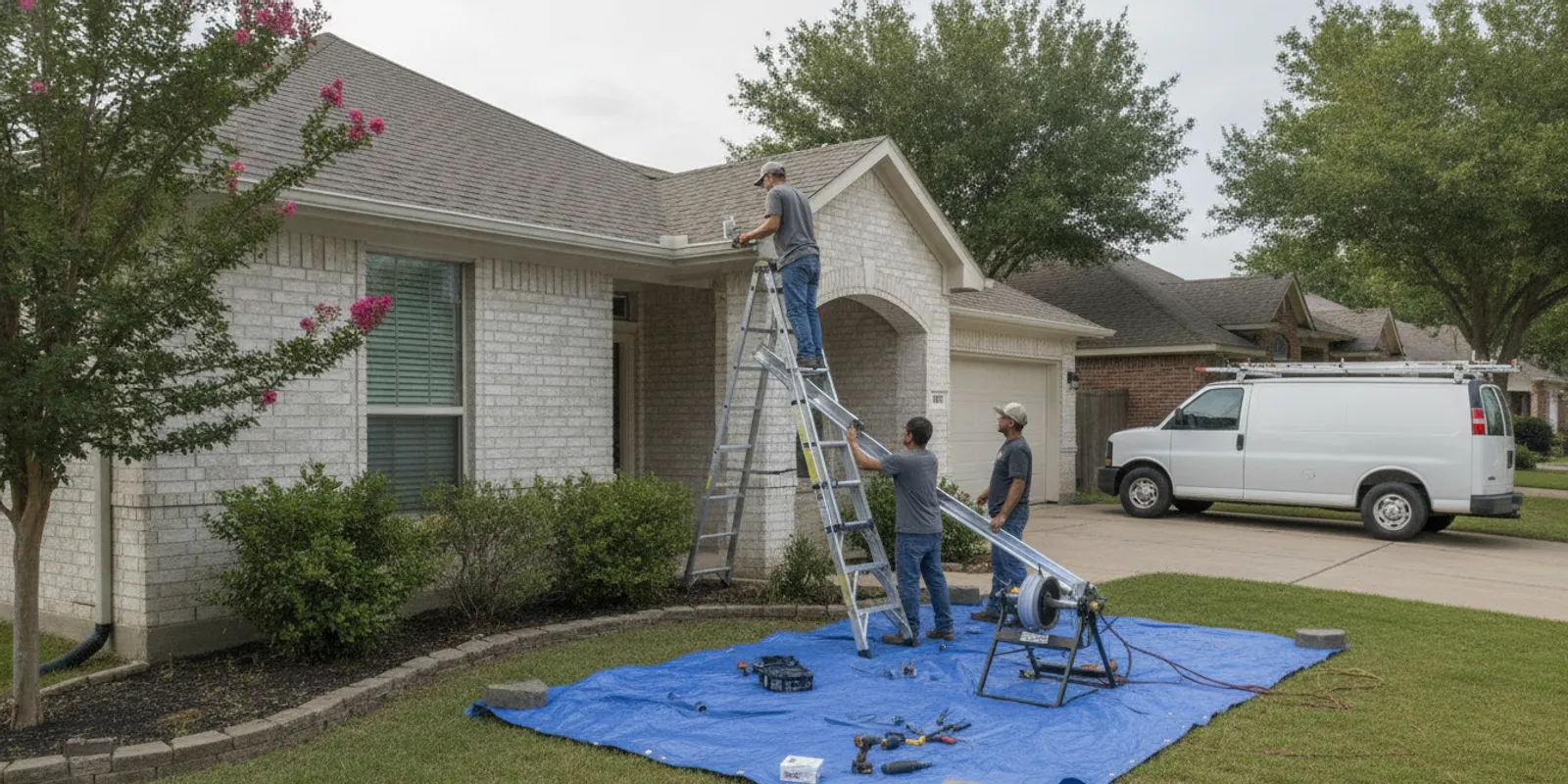
If you are planning exterior work, it is reasonable to ask: how long does gutter installation take? For many straightforward homes, the on-site work may fit into part of a day, while a larger or more complicated project can take a full day or longer. The exact schedule depends on the home, the scope, access, and conditions on installation day. Knowing what affects the timeline can help you plan without treating a general estimate as a promise.
Request a free, no-obligation estimate
How long does a typical gutter installation take?
For an average-size home with a straightforward roofline and clear access, installation is often completed in several hours to about a day. A smaller, uncomplicated job may take less time. A large home, multiple roof levels, difficult access, or additional drainage work can extend the schedule. If the project includes removal of an existing system, repairs to the attachment area, or changes to downspout routing, those tasks also affect the time on site.
These are planning ranges, not a guaranteed appointment length. A contractor may be able to give a more useful estimate after reviewing the home and confirming what is included. The time needed to fabricate and install seamless gutters can also differ from a project involving replacement sections, guards, drainage extensions, or repairs. Ask whether the expected duration refers only to crew work at the property or also includes preparation and any follow-up work.
It helps to separate the project timeline into two parts:
- Time before installation: arranging an estimate, confirming the scope, selecting details, and scheduling a date.
- Time at the home: preparing the work area, removing old material if needed, installing the system, checking water flow, and cleaning up.
The first part can span more than one day because it depends on communication and scheduling. The second part is what most homeowners mean when they ask how long installation takes. Do not assume that a short visit means the full project is complete, or that every project needs the same crew time. Get the expected sequence and a realistic time window for your own property.
What can make the installation take longer?
Two homes with similar floor plans may have different installation schedules. The roofline and the conditions around it matter as much as the home’s size. More edges, corners, valleys, and changes in roof height create more places to measure, fit, and secure components. A simple one-story roofline is usually more direct to work on than a multi-level layout with complicated transitions.
Common factors that can extend the on-site work include:
- Home size and total roof edge: More linear roofline generally means more gutter runs and more time to install them.
- Roof shape: Several roof sections, corners, returns, or steep changes in elevation require careful fitting and connection planning.
- Height and safe access: Two-story areas, steep grades, landscaping, fences, or limited space for ladders and equipment can slow access.
- Existing gutters: Old material may need to be removed, and the attachment surface may need to be checked before new gutters go up.
- Downspouts and drainage: The team needs to place outlets and direct discharge in a practical way. Longer runs or additional drainage elements can add work.
- Added services: Leaf guards, repairs, cleaning, or drainage work can change the scope beyond a basic installation.
- Weather and site conditions: Rain, strong winds, wet surfaces, or unsafe working conditions may require a pause or a new date.
A useful estimate should account for the actual home rather than rely only on a standard duration. If a contractor has not seen the roofline or asked about access, ask how the schedule was determined and what assumptions it includes. Photos can help explain the property, but they may not reveal every condition at the fascia or around downspout discharge points.
For a general overview of the kinds of work a gutter project can involve, see the company’s gutter installation, repair, and cleaning services. The scope selected for a specific home is what determines the actual schedule.
Does seamless gutter installation take longer?
Seamless gutters are formed to fit the measured roofline, so the process is not identical to assembling pre-cut sections. The crew measures the runs and forms gutter lengths for the home, then positions and secures the system and connects the downspouts. The amount of work still depends on the number and shape of the runs, how the crew can access them, and whether old gutters must be removed first.
It is not helpful to assume that seamless means either a longer or a shorter job in every case. On-site fabrication is part of the installation method, and a skilled crew plans for it as part of the project. A simple layout may move efficiently. A more intricate roofline can take more time to measure, form, position, and finish correctly. If you want to understand the sequence in greater detail, the related guide to how seamless gutters are installed explains the process itself. This article focuses on the schedule rather than repeating those installation steps.
When comparing timelines, ask whether the estimate is for seamless gutters made for the roofline or for a different type of system. Also confirm whether the time includes removing the existing gutters, fitting downspouts, and addressing any agreed drainage details. These questions make two schedules easier to compare and help prevent a misunderstanding about what “installation day” covers.
What happens before installation day?
The work at the house is only one part of the timeline. Before a date is set, the installer needs to understand what the home needs. A visit or other assessment can establish the roofline, existing gutter condition, likely downspout locations, access constraints, and whether the request includes related services. Homeowners can use that conversation to explain where water currently spills, where the yard stays wet, or which areas are difficult to reach for maintenance.
After the scope is clear, confirm the practical details in writing or in the estimate. A few points worth checking are:
- Which sides or roof edges are included in the work?
- Is removal and disposal of the old system included, if there is one?
- Are downspout locations and discharge direction part of the agreed plan?
- Are leaf protection, drainage work, repairs, or cleaning included or separate?
- What needs to be moved or kept clear before the crew arrives?
- What is the expected arrival window and approximate time on site?
- How will the team handle a weather delay or an unexpected condition?
Some planning decisions can affect the schedule even before the crew arrives. For example, a homeowner may want to discuss where downspouts should discharge or whether leaf protection should be installed at the same time. It is easier to settle these questions ahead of the appointment than while the crew is working above the ground. If you are considering a system update, start with an assessment and share the concerns you want addressed.
Scheduling can also depend on the season and the contractor’s calendar. Once you have an estimate, ask what date range is available and when the company will confirm the appointment. An estimate of on-site work does not tell you how soon that work can be scheduled. Keeping these two timelines separate gives you a more accurate picture of the full project.
What should you expect on the day of the work?
Installation day typically begins with the crew reviewing the work area and confirming the agreed scope. They may need room to position ladders, equipment, and materials along the home. If existing gutters are being replaced, removing those materials can be part of the day’s work. The crew then works through the planned roofline, fits and secures the gutters, installs or connects downspouts, and checks the result. At the end, the work area should be cleared of installation debris and the completed work reviewed with you.
The exact order may vary with the property and the project. The team may work around the home in sections, and access to one side can affect when another side is completed. A crew may also need to pause to move equipment, adjust a fit, or deal with a condition that was not visible during the initial assessment. Those are reasons to ask for a reasonable time window instead of planning around an exact finish time.
You do not usually need to supervise every task, but it is helpful to be reachable if a question comes up. Before the crew begins, make sure everyone understands the agreed locations and any access instructions. If you are not going to be home, ask in advance how the team will handle questions and how completion will be confirmed.
At the end, ask for a walkthrough or a clear explanation of what was completed. From a safe place on the ground, you may be able to look for consistent lines, secure-looking downspouts, and a clean work area. Do not climb a ladder to inspect roof-level work. If you notice a concern after the crew leaves, contact the installer and describe the location rather than trying to adjust the system yourself.
How do removal, repairs, and leaf guards affect the schedule?
Replacing gutters can involve more than installing the new runs. The existing system may need to be taken down first. Once it is removed, the attachment area can be assessed, and agreed repairs may be completed before the new system is installed. If the old material is difficult to access or there are several layers of work to address, the crew may need additional time. Ask whether removal and disposal are part of the plan and what happens if the crew finds a condition that changes the scope.
Leaf guards can add work because they must be fitted to the gutter and roof edge. The time depends on the length of the protected runs, the design of the roof edge, and the product selected. Discuss whether the guards are being installed across every gutter run or only particular areas. It is also useful to understand how the product affects future inspection and cleaning, rather than treating guards as a reason to assume maintenance will never be needed.
Repairs and cleaning are different from a full new installation, but they can be requested alongside it. A loose section, a leaking joint, debris, or a downspout issue may need separate attention. Combining work can be convenient, but it also means the schedule should reflect all requested tasks. Share those needs before the appointment so the estimator can determine whether they fit the planned visit.
Drainage work is another possible addition. Directing roof runoff away from the home may involve planning beyond the gutter edge, depending on the property and the discharge point. A request to extend or change how water leaves a downspout can add time, so describe the issue clearly. A gutter system collects and conveys roof runoff; what happens after the water exits the downspout depends on the site and the scope of the drainage work.
Can weather or access delay the work?
Yes. Exterior work depends on conditions that allow a crew to work safely and handle materials properly. Rain or wet surfaces can make ladder work unsafe. Strong winds or severe weather may also lead to a delay. In Texas, conditions can change, so the installer may need to reassess the forecast and the site rather than promise a fixed finish time far in advance.
Access can create a delay even when the weather is suitable. A locked gate, parked vehicle, low tree branches, pets in the work area, or items stored against the house can keep the crew from reaching part of the roofline. A narrow side yard or a steep slope may require a different setup. If you know about a constraint, mention it when the estimate is arranged and confirm the plan before installation day.
If the date changes, ask whether the entire job will be rescheduled or whether work on another accessible section can proceed. The answer depends on safety, the layout, and the crew’s plan. Do not ask a crew to work in unsafe conditions just to preserve a schedule. Clear communication about delays is more useful than an unrealistic assurance that every installation will finish on the original date.
How can you prepare your home for a smoother installation?
A little preparation can reduce avoidable interruptions. You do not need to do the installer’s work; the goal is to make access straightforward and clarify decisions before the crew arrives. Use the estimate conversation to ask whether the company has any specific preparation instructions for your property.
- Clear the perimeter. Move patio furniture, grills, planters, toys, and other movable items away from the work area if practical. Leave enough room for safe ladder placement and equipment.
- Provide access. Unlock gates, explain any access codes, and let the team know about areas that require special entry. Keep pets and children away from active work zones.
- Move vehicles. If a driveway or parking area is near the roofline, ask whether it should be kept clear so the crew can park and move materials.
- Identify concerns. Point out places where water overflows, sections that appear loose, or downspouts that discharge in an inconvenient location. Share observations without climbing to inspect the roof.
- Confirm choices. Settle the planned gutter runs, downspout locations, leaf protection, and any included drainage work before installation day.
- Plan for noise and movement. Let household members know that a crew will be working outside and that access around the house may be limited for a while.
- Keep communication open. Make sure the crew has a way to reach you if a hidden condition or scope question comes up.
Ask the installer what to do with items that cannot be moved or areas that are hard to access. Do not remove roof components, disconnect existing equipment, or climb to clear a work area unless the installer specifically confirms it is safe and appropriate. The crew should direct the work setup and explain any site-specific needs.
How should you plan around the installation?
For a straightforward job, it may be possible to remain at home while the crew works, but expect noise and activity outside. Whether you need to be present depends on the company’s process and whether decisions may be needed. Ask this before the date. If an adult needs to be available for access or approval, arrange that in advance rather than assuming someone can leave work at short notice.
Keep an open window in your schedule instead of booking a tightly timed commitment immediately after the estimated finish. This is especially sensible if the home is large, has multiple stories, or includes removal and drainage work. A crew may complete the work sooner than expected, but a careful installation should not be rushed to meet an arbitrary clock. Set expectations around an arrival window, the likely duration, and how you will receive an update if something changes.
If you are coordinating several exterior projects, discuss their order. Roof work, fascia repairs, painting, and gutter installation can affect one another. The appropriate sequence depends on the work being done and the condition of the home. Ask the trades involved to coordinate rather than assuming every task can happen at once. For example, any work that changes the roof edge or attachment surface should be discussed before gutters are installed.
It can also help to photograph the exterior before work starts, particularly if you want a record of an existing condition. Take photos from the ground and do not enter a work area or interfere with the crew. Keep the estimate and any written scope available so you can refer to what was agreed if questions arise.
What questions should you ask about the timeline?
A clear schedule comes from clear scope. Instead of asking only, “How many hours will it take?” ask what the time estimate includes and what could change it. The answers should connect to the actual roofline and requested work.
- How long do you expect the crew to be at my home, and is that a firm duration or a planning range?
- Does the estimate include removing the current gutters and clearing away the old material?
- Are all planned gutter runs, downspouts, and drainage details included in that time?
- Are leaf guards or other requested services included in the installation visit?
- What site conditions might require additional work or a return visit?
- What areas need to be clear, and do I need to be present?
- How will you notify me if weather or another issue changes the appointment?
- Will someone review the finished work and explain any care or maintenance guidance?
Listen for a response that explains the variables rather than offering a precise time without context. An estimate is more useful when it identifies the included work, likely duration, and process for handling changes. If the answer is unclear, ask for clarification before approving the scope. That gives both you and the installer a shared understanding of the day.
When does a gutter project require more than one visit?
Many routine installations can be completed in one visit, but there is no rule that every home must be finished in a single day. A large or complex property, difficult access, a weather interruption, or an unexpected condition may require additional time or a return visit. A project that combines gutter installation with repairs or extended drainage work may also need a different schedule from a simple replacement.
Sometimes the first visit is for assessment, not installation. The installer may need to inspect the roofline, discuss where water should go, and define the work before setting an installation date. That should not be confused with the number of days the crew will be working at the property. Ask whether a visit is an estimate, preparation, installation, or follow-up so you can plan accordingly.
If a project cannot be finished as planned, ask what remains, whether the installed sections are usable as they are, and when the crew expects to return. The answer will depend on what interrupted the work and what has already been completed. Do not assume that a partial installation has the same function as a finished drainage system. Get clear instructions from the installer about the condition of the home until the work is complete.
How do you know the work is complete?
Before the crew leaves, confirm that the agreed work has been completed and that the remaining materials and debris have been cleared from the work area. Review the locations of downspouts and ask the team to explain how runoff is directed. If there is a specific concern you raised during the estimate, such as a roof edge that previously overflowed, point it out and ask what was done to address it.
A visual check from the ground can help you notice an obvious issue, but it cannot replace a safe professional inspection. Avoid leaning ladders against a new gutter or testing the system by climbing onto the roof. If you see a loose-looking component, an unexpected gap, or debris left behind, contact the company promptly and describe the location. It is easier to resolve a question while the installation details are fresh.
Ask what routine care is appropriate for the system and whether the installer has recommendations for inspecting it after heavy debris or weather. Leaf guards can reduce the amount of debris that enters gutters, but they do not mean the roofline should never be checked. Follow the guidance provided for the specific products and home rather than relying on a universal maintenance schedule.
How can you build a practical appointment plan?
Start by deciding what you need the gutter system to do, then organize the project around those questions. A homeowner who wants a replacement may need to discuss removal, the condition of the roof edge, and where current downspouts send water. Someone planning a new installation may want to focus on which roof edges need collection and how runoff should leave the home. If maintenance or leaf protection is also part of the request, include that when you first describe the project rather than adding it after the schedule is set.
A simple planning sequence can keep the timeline clear:
- Describe the issue. Note where you see overflow, loose sections, frequent debris, or water collecting near a discharge point. Record observations from the ground; do not climb to inspect roof-level areas.
- Arrange an assessment. Ask what information the estimator needs and whether a visit is appropriate for the home and requested work.
- Review the written scope. Confirm the included roof edges, downspouts, removal, guards, repairs, and drainage tasks. Clarify anything that is excluded or conditional.
- Set the appointment. Get the arrival window, expected time on site, preparation instructions, and the process for updates if conditions change.
- Prepare access. Move what you can, unlock access points, and keep household members and pets away from active work areas.
- Review completion. Confirm what was finished, ask any maintenance questions, and report a concern with its location.
For example, if a homeowner works outside the home and has a vehicle parked beside the house, the useful planning question is not only how many hours the crew expects to work. The owner should also ask whether the vehicle needs to be moved, whether anyone must be present, and how the company will contact them if an unexpected condition affects the scope. Solving these practical details can avoid a preventable interruption even though it does not change the amount of installation work itself.
For another household, the main constraint may be coordinating gutter work with painting or roof-edge repairs. In that case, ask the contractors to confirm the correct sequence and make sure each team understands the planned work. A change to the roof edge or attachment surface may affect gutter installation, so coordination matters more than guessing which crew can finish first. Scheduling the work in a sensible order can also reduce the chance of needing to revisit a newly finished area.
Use the estimate to document decisions while they are easy to discuss. If you later remember another area that needs attention, contact the company before installation day to ask whether the scope and time window should change. Clear communication gives the installer an opportunity to plan for the full request instead of trying to fit added work into an appointment that was scheduled for something else.
How can you get a more reliable time estimate?
Share accurate information about the home and the work you want done. Let the estimator know whether the project is a new installation or replacement, whether you want leaf protection, and whether you have concerns about downspout discharge or drainage. Mention the number of stories, roofline features, access limits, and any known repairs. These details help the installer make a schedule that reflects the property rather than a generic example.
TX Gutter Solutions provides gutter installation, repair, cleaning, leaf protection, and drainage services. The company serves Austin, San Antonio, Dallas-Fort Worth, and surrounding Central Texas markets; availability depends on the service area and project. If you are not sure whether your location is covered, review the service area information before making plans. A free estimate or consultation is the practical next step when you want a timeline based on your home.
Contact TX Gutter Solutions to discuss your project
How do different home layouts affect the workday?
Thinking through a few common home layouts can make a general schedule easier to interpret. These are examples, not promises about the duration of any particular job. An installer must still consider the actual roofline, site access, and scope before estimating time.
A compact, single-story home
A compact home with a simple roof edge and open access may be a relatively direct installation. The crew has fewer runs to measure and fit, and equipment can often be moved around the house without many obstacles. If there is no existing system to remove and no additional drainage work, the work may fit into part of a day. A homeowner should still leave room for the crew to finish checks and cleanup, rather than treating the shortest possible visit as the expected appointment.
A larger home with several roof sections
A larger footprint often means more roof edge, more gutter runs, and more downspout locations to plan. Roof sections may meet at corners or at different heights. Even when each run is straightforward, the number of transitions and the distances between work areas can lengthen the day. The estimator can explain whether the layout is likely to fit in one visit and whether there are sections that need a particular access setup.
A two-story home with restricted access
A taller home may need additional setup and careful movement of ladders and equipment. A narrow side yard, landscaping close to the wall, a steep slope, or a fence can limit where the crew can work. If access is restricted to one side, it may change the order in which the installation proceeds. Point out those constraints during the estimate. A photo from the ground can help communicate what the estimator should look at, though it does not replace an on-site assessment when one is needed.
A replacement combined with other work
A replacement project can involve removing existing gutters, checking the attachment area, fitting the new system, and completing any included work on downspouts or leaf protection. Each task has its own sequence. If an unexpected condition appears after removal, the installer may need to discuss a change before continuing. This is why an estimate should distinguish the planned scope from work that might depend on what is found once the old system is down. Ask how approval will work if the scope needs to change, and whether the schedule will be updated accordingly.
These examples show why a single answer cannot fit every address. A home’s square footage alone does not tell the whole story. Roofline length, height, shape, access, removal, and the requested finish all influence the plan. An estimate based on those factors is more useful than a generic rule based on the number of bedrooms or the home’s approximate size.
What does “installation time” include?
Homeowners and installers sometimes use “installation time” to mean different things. One person may mean the hours the crew is physically working at the property. Another may include the time needed to unload equipment, protect the work area, remove old material, clean up, and review the finished work. Neither definition is automatically wrong, but the difference can lead to mismatched expectations if it is not discussed.
Ask the installer to describe the planned day from arrival to departure. The answer can clarify whether the crew expects to start with a brief scope review, whether old gutters will be removed, and what final checks or cleanup are included. You can also ask whether materials and equipment will arrive with the crew or be delivered separately, and whether the work requires access to a power source or other part of the property. Follow the installer’s specific instructions rather than making assumptions about what the team needs.
It is useful to distinguish three kinds of time:
- Scheduling lead time: The period between requesting an estimate and getting an available installation date. This depends on the company’s calendar and is separate from the duration of the work.
- On-site work time: The period the crew is at the home performing the agreed tasks. This is the usual meaning when people ask how many hours installation takes.
- Project completion time: The broader period from the first assessment through any separate work or follow-up. A project may include more than one visit, particularly if weather, access, or additional work changes the plan.
When arranging household plans, the on-site window matters most, but knowing the other intervals helps avoid confusion. A crew may be able to complete the physical installation in a day while the appointment itself was scheduled weeks later. Similarly, an assessment visit does not mean installation has begun. Confirm the date, arrival window, duration estimate, and whether any additional visit is anticipated.
There can also be a difference between a crew’s expected time and the time a homeowner should reserve. The crew’s estimate describes its planned work; your personal schedule should leave room for arrival variation and questions. If you have a narrow availability window, say so early and ask whether that can be accommodated. Do not presume that a crew can start at an exact minute or finish at a precise time, especially when exterior conditions can change.
A clear conversation about the meaning of “time” gives you a better basis for planning. It also helps you compare project scopes fairly: one estimate may include removal and cleanup while another may describe installation alone. Confirming included tasks is more useful than comparing the shortest number of hours.
Frequently asked questions
Can gutters be installed in one day?
Many straightforward residential installations can be completed in one day or less, but that is not a guarantee for every home. Size, roofline complexity, access, removal, added services, and weather all affect the schedule. Ask for a time range based on the scope of your specific project.
Will I need to be home during installation?
That depends on the installer’s process and whether access or decisions are needed. Confirm in advance whether someone must be present, how the crew will enter the property, and how they will contact you if a question comes up.
Does replacing existing gutters take longer than a new installation?
It can, because the old system may need to be removed before the new one is fitted. The condition of the attachment area and any agreed repairs can add work. Ask whether removal, disposal, and any repair work are part of the estimate and the time window.
Can leaf guards be installed at the same time?
Leaf guards may be included in the same project, depending on the system and the roof edge. They add fitting work, so tell the estimator you are considering them and confirm which gutter runs are included. The schedule should account for all services you request.
What happens if rain delays the appointment?
The installer may postpone or pause work when conditions make exterior ladder work unsafe or unsuitable. Ask how the company provides updates and reschedules affected work. Keep the work area accessible until you receive confirmation of the revised plan.
For many homes, gutter installation is a one-day project, but a dependable schedule comes from looking at the roofline, access, and full scope. Share your questions in advance, prepare the work area, and confirm what the time estimate includes so the installation can proceed with clear expectations.