
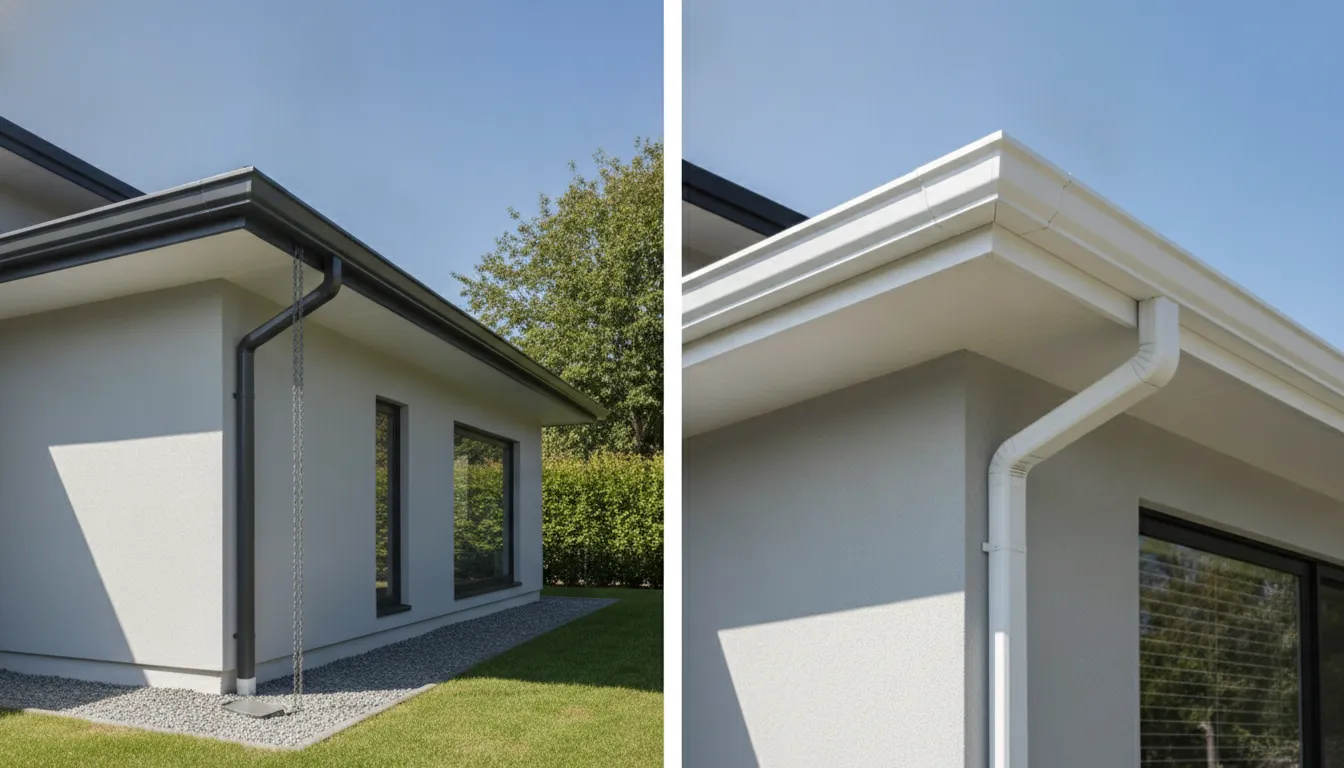
A gutter can complement your home’s exterior, but a good-looking profile needs to work with the roof and drainage plan, too. When comparing half-round vs K-style gutters, start with the shape of your roofline and fascia, then consider how much runoff your system must manage. Half-round gutters suit many traditional homes, while K-style gutters pair with a wide range of architectural styles. Their capacity and mounting needs can differ, and both require regular care to keep water moving. We’ll walk through the key differences, including how downspouts and drainage affect performance, so you can choose a system that fits your property.
Key Takeaways
- Match gutter style to your home: Half-round gutters add a classic curved detail, while K-style gutters complement a wide range of rooflines and trim.
- Plan for effective drainage: Gutter size, roof pitch, downspout placement, and discharge locations all help determine how well runoff stays away from your foundation and landscaping.
- Compare the complete project: Review materials, mounting needs, maintenance, and leaf protection, then request a site assessment and written estimate.
Half-Round vs. K-Style Gutters: Compare Appearance
Gutter shape affects the look of your roofline. Half-round and K-style gutters each bring a different profile, so consider your home’s architecture, trim, and preferred finish when comparing them.
See the Traditional Curve of Half-Round Gutters
Half-round gutters have a smooth, U-shaped channel that resembles a circle cut in half. Their curved profile suits historic, rustic, and traditionally styled homes, where it can complement detailed rooflines and classic exterior features. The simple shape may also pair well with textured materials such as slate, tile, or wood shake.
Material can change the effect. Copper gives half-round gutters a distinctive, traditional look, while aluminum offers a more understated finish. Their rounded shape can stand out against angular trim, so consider how the gutters will look alongside your fascia and roof edge. See how half-round gutters can complement different home styles as you compare profiles.
See the Angular Profile and Decorative Face of K-Style Gutters
K-style gutters have a flat back and an angled front with a decorative shape similar to crown molding. That detail echoes common exterior trim, helping the gutter look like a natural part of the roofline. The profile suits many traditional and contemporary homes, including houses with straight roof edges and defined fascia.
Color also influences their appearance. A close match to the fascia can help K-style gutters blend in, while a contrasting finish makes the decorative face more noticeable. If you are comparing the two shapes, take a look at the profiles of K-style and half-round gutters to see which better fits your home’s exterior details.
Compare Materials, Finishes, Colors, and Seamless Options
Both gutter styles are available in aluminum, a lightweight, rust-resistant option. Half-round gutters may also be made from copper, which adds a distinctive finish and traditional character. Available colors and finishes can help gutters coordinate with your roof, siding, or fascia.
Seamless gutters are custom-fitted to a home, creating long runs with fewer joints along the roofline. The style and material you choose can affect how those runs look, so ask about options for your home before deciding. TX Gutter Solutions provides custom seamless gutter installation tailored to the property. Compare samples or finish options with your exterior materials to choose a look that feels cohesive.
How Do These Gutters Handle Central Texas Weather?
Central Texas storms can bring heavy rain, hail, and fast-moving runoff, while long stretches of heat put steady wear on exterior materials. Half-round and K-style gutters can both manage local weather when the system is properly designed. The best fit depends on your roof, drainage needs, and home.
Match Capacity to Gutter Size, Roof Area, and Pitch
A gutter needs enough capacity to collect runoff from the roof sections above it. Larger or steeper roof areas can send more water into the system, and valleys may concentrate runoff at particular points. These details help determine the right gutter size and placement.
K-style gutters generally hold more water than half-round gutters of the same width. Joyland Roofing’s comparison estimates that K-style gutters can hold up to 40% more. Still, shape is only one factor. Roof area, pitch, gutter dimensions, local rainfall, and downspout placement all affect capacity, so ask for a system sized to your home rather than choosing by style alone.
Plan for Downpours, Hail, Heat, and Roof Runoff
During a downpour, gutters need to collect roof runoff and move it toward downspouts without spilling over. Both styles can perform well when they’re sized and installed correctly. Roof area, pitch, valleys, gutter slope, and outlet placement influence how effectively water flows through the system, as Joyland Roofing explains.
Hail can dent gutters or loosen components, while prolonged sun exposure can wear materials and finishes over time. After a severe storm, check for dents, loose hangers, leaks, and areas where water pools. If you spot damage, arrange a gutter inspection or repair before the next heavy rain.
Size Downspouts to Protect Foundations and Landscaping
Downspouts carry water from the gutters to the ground, making their size and placement important parts of the drainage plan. If they can’t handle the volume of runoff, water may back up and spill over the gutter edge. If they discharge too close to the home, runoff can collect near the foundation or wash away landscaping.
A proper plan considers roof area and pitch, valleys, local rainfall, gutter slope, and the number and size of downspouts. It should also account for where each downspout releases water. Joyland Roofing’s guide identifies discharge location as one factor in system sizing. Ask whether extensions or other drainage solutions make sense for your property.
Remember: Gutter Shape Alone Won’t Prevent Overflow
Even a higher-capacity gutter can overflow if it’s too small for the roof, installed without the right slope, or paired with too few downspouts. Leaves and other debris can also block outlets and slow water flow. Secure mounting and clear drainage paths are essential for either gutter style.
Overflow can stain siding, damage wood, and lead to repairs, as Braga Buildings notes in its gutter style guide. Consider the entire system, including gutter dimensions, roof runoff, hangers, seams, outlets, and discharge points. A site assessment can help identify a setup that suits your roof and directs water away from your home.
Which Gutter Style Fits Your Home?
The right gutter style should complement your home and manage runoff effectively. Half-round gutters have a curved, traditional profile, while K-style gutters feature a flat back and a decorative front. Either style can work when it’s properly sized and installed. Start by looking at your roofline, fascia, exterior materials, and trim. Then consider practical details such as roof area, slope, downspout placement, and where the water will drain. In Central Texas, a good fit should look at home on your house and move rainwater away from the foundation and landscaping.
Choose Half-Round for Craftsman, Victorian, and Colonial Revival Homes
Half-round gutters can complement traditional homes, including Victorian and Colonial Revival styles, as well as some Craftsman homes. Their smooth, rounded shape creates a softer line along the roof edge, which can pair well with detailed trim, brick, or textured siding. They may also suit farmhouse and custom homes where a simple, classic profile feels more fitting than an angular one.
Architectural labels are a helpful starting point, not a strict rule. Compare the gutter’s shape with your roofline, fascia, and exterior details. A half-round gutter profile can help you picture the look, but an installer should also confirm that the mounting approach and drainage plan suit your home.
Choose K-Style for Ranch, Modern Farmhouse, and Contemporary Homes
K-style gutters work well with many ranch, modern farmhouse, and contemporary homes. Their flat back sits against the fascia, while the shaped front resembles crown molding. This profile can complement decorative trim and pair naturally with angular rooflines. K-style gutters also suit many traditional homes, so you don’t need to rule them out based on your home’s age or style.
Look at the gutter alongside your fascia and roof edge before making a decision. A side-by-side look at K-style and half-round gutters can help you compare their profiles. Then check that the gutter size and downspout layout can handle runoff from your roof, especially where roof sections meet or direct water into one area.
Match Spanish and Mediterranean Details, Rooflines, and Trim
Spanish and Mediterranean-inspired homes often feature tile roofs, stucco, curved details, and distinctive exterior colors. Half-round gutters can complement these textures with a simple, rounded line. On other homes, K-style gutters may be a better match for angular fascia or understated trim. The best choice depends on how the gutter works with the home’s specific details.
Consider the roof material, fascia depth, window trim, and gutter color together. A guide to choosing between half-round and K-style gutters offers examples of how each shape can pair with different exteriors. If you’re unsure, compare finish samples against the house in natural light and ask an installer to check the roof edge and mounting requirements.
Balance Architectural Fit with Local Drainage Needs
A gutter’s appearance matters, but its shape alone doesn’t determine how well it handles rain. Both styles can drain effectively when the system is designed for the roof. Roof area and pitch, valleys, gutter size, slope, and downspout placement all affect water flow. In Central Texas, account for intense rain and plan how runoff will move away from the foundation, walkways, and landscaping.
Ask an installer to assess the full drainage path, from the roof edge to the discharge point. TX Gutter Solutions’ gutter and drainage services can help homeowners weigh gutter style alongside downspouts and runoff management. A well-planned system should complement your home while directing water where it belongs.
What Affects Gutter Costs and Installation?
The price of a gutter project depends on more than the length of your roofline. Material, gutter size and style, fascia condition, mounting needs, and downspout placement can all affect the work. In Central Texas, the system also needs to move roof runoff away from your home’s foundation and landscaping.
Before choosing an option, ask how the proposed system fits your roof and what the written estimate covers. TX Gutter Solutions provides custom gutter installation and related services for homes and properties across the region.
Compare Materials, Sizes, Custom Options, and Finishes
Material and shape can affect both the price and installation process. K-style gutters are widely available in seamless aluminum and are generally more budget-friendly. Half-round gutters may cost more because they can require specialized manufacturing, premium materials, or a more involved bracket-mounting process. This comparison of K-style and half-round gutters can help you understand the differences before discussing options with an installer.
Gutter size should suit your roof, not just your preferred look. Roof area, pitch, valleys, and expected rainfall all affect how much water reaches the gutters. Custom colors and finishes may also change the estimate. Ask which recommendations address drainage needs and which are mainly for appearance.
Check Fascia, Roof Edges, Brackets, and Mounting Needs
Gutters need a secure surface, so the condition of your fascia and roof edges can affect installation time and cost. If the fascia is damaged or rotting, it may need repair before new gutters can be attached securely. Ask whether any needed repairs are included in the estimate or quoted separately.
The gutter profile also affects how it mounts. K-style gutters have a flat back and are often attached with hidden hangers. Half-round gutters have a curved channel and typically use brackets. The roofline, overhang, and existing mounting points help determine which setup fits. A site assessment can clarify the requirements for your home. TX Gutter Solutions can review these details as part of its gutter services.
Ask What Your Seamless Gutter Estimate Includes
Seamless gutters are made in long runs to fit a roofline, reducing the number of joints along it. K-style gutters are often formed on-site to match a home’s measurements. Ask whether your estimate covers the full gutter run, corners, end caps, outlets, downspouts, and removal of old materials. This guide explains more about K-style gutters and their installation.
A clear written estimate should list the material, size, color, and any custom options. Confirm whether cleanup and fascia or roof-edge repairs are included, too. If a detail is unclear, ask for it to be spelled out before approving the work. TX Gutter Solutions offers free estimates so you can discuss the project scope and your property’s needs.
Confirm Slope, Hanger Placement, Seams, and Downspout Locations
Proper slope helps guide water toward the downspouts instead of letting it collect in the gutters. Ask how the installer will set the slope, space the hangers, and position seams and outlets. The right plan depends on roof area and pitch, valleys, expected rainfall, gutter size, and the number and size of downspouts. These details all shape drainage performance, as outlined in this guide to gutter styles and sizing.
Downspouts should release water away from the foundation and areas where runoff could damage landscaping. Ask where each one will discharge and whether extensions or additional drainage work are needed. Planning the gutters, downspouts, and ground-level drainage as one system can help manage runoff around your property.
How Do You Maintain Each Gutter Style?
Both half-round and K-style gutters need regular care to carry rainwater away from your roof, siding, foundation, and landscaping. Their shapes affect how debris collects, but neither style is maintenance-free. Check the full system, including downspouts and the places where water exits. Regular inspections can help you spot clogs or damage before they contribute to overflow.
Clear Gutters and Downspouts Regularly, Especially Near Trees
Leaves, seed pods, twigs, and roof grit can collect in gutters and block downspouts. K-style gutters have flat bottoms and corners where debris may settle, so inspect them often if your roof is near trees. Half-round gutters have smoother interiors, but debris can still restrict water flow. Clear the gutter channel and downspout openings, then check that water drains freely away from your home.
In Central Texas, inspect your system after heavy storms and as part of routine seasonal maintenance. If you’re not comfortable working on a ladder, arrange professional gutter cleaning and maintenance. Keeping outlets clear helps direct runoff away from your foundation and landscaping.
Remember: Smooth Half-Round Interiors Can Still Clog
The rounded interior of a half-round gutter has fewer corners where debris can settle, which may help water and material move through the channel. Still, leaves, roof granules, and small twigs can collect, especially around outlets and downspout connections. Check these areas during routine inspections and after storms.
Half-round gutters may hold less water than some K-style systems, so a blockage can contribute to water spilling over during heavy rain. They can also be more prone to splashing over in a downpour, making clear drainage paths especially important. Learn more about how half-round and K-style gutters handle water as you plan maintenance for your home.
Check for Sagging, Leaks, Corrosion, and Poor Slope
Look along the full gutter run for sections that sag, pull away from the fascia, or hold standing water. Check joints, end caps, and downspout connections for drips or corrosion. If water pools instead of flowing toward an outlet, the gutter may have a slope issue. Stains on the fascia or siding can also indicate that water is escaping where it shouldn’t.
K-style gutters often attach securely to the fascia, but their hangers and connections still need periodic checks. If you spot a problem, consider having a professional assess the system before the next major storm. A gutter repair specialist can help determine whether the gutter needs an adjustment, repair, or replacement.
Use Guards to Reduce Debris, Not Eliminate Maintenance
Gutter guards can reduce the amount of leaves and debris that enter a gutter, but they don’t remove the need for inspections. Material can build up on top of a guard, and fine debris may still get through or collect near an outlet. Guards also need to fit the gutter profile, so confirm compatibility with your half-round or K-style system before choosing one.
Check the guards, gutter channels, and downspouts periodically, particularly after storms or when nearby trees shed heavily. A professional can recommend a suitable leaf-protection system and explain the upkeep it requires. Guards are most helpful as part of a complete water-management plan, alongside clear downspouts and drainage that carries runoff away from the home.
Half-Round vs. K-Style Gutters: Common Myths
Gutter shape affects appearance and water flow, but it doesn’t tell the whole story. Size, slope, downspout placement, and installation all matter. Keep these common myths in mind as you compare options for your home.
Don’t Expect Half-Round Gutters to Clean Themselves
Half-round gutters have a smooth, curved interior with fewer corners than K-style gutters. Debris may be less likely to catch in those corners, but that doesn’t make half-round gutters self-cleaning or clog-proof. Leaves, seed pods, roof grit, and twigs can still collect in the trough or block a downspout.
Check your gutters regularly, especially after storms and when nearby trees shed leaves or seeds. Guards can reduce the amount of debris that enters the system, but they still need periodic inspection. Joyland Roofing’s comparison covers the differences between the profiles, but neither style removes the need for maintenance.
Don’t Assume K-Style Gutters Suit Every Home
K-style gutters are popular for good reason: their angular profile works with many rooflines, and they can carry more water than a half-round gutter of the same nominal width. Their shape also pairs well with homes that have defined trim. Still, practical advantages don’t automatically make K-style the best choice for every property.
A half-round profile may better suit a home with traditional architectural details, while K-style can complement ranch or contemporary exteriors. Consider appearance alongside your roofline and drainage needs. Braga Buildings’ comparison highlights that capacity and price aren’t the only factors. Choose a style that fits your home and can manage its roof runoff.
Size Gutters and Plan Drainage for Higher Capacity
Gutter shape alone doesn’t determine how much rainwater a system can handle. Capacity also depends on gutter size, roof area and pitch, local rainfall, and the number, size, and placement of downspouts. A large or steep roof may send substantial runoff into the gutters, so choosing a profile by appearance alone can leave drainage needs unaddressed.
Ask an installer to assess how water moves off your roof and where it should discharge. Downspouts should direct water away from the foundation and landscaping, not release it beside the house. TX Gutter Solutions’ services include downspout and drainage options that can be considered as part of a complete system.
Match Installation to Roof Edges and Mounting Needs
Gutters need a secure mounting surface to perform well. K-style gutters have a relatively flat back that often fits common fascia boards. Half-round gutters use a curved profile and may require brackets or hangers designed to support their shape. The right setup depends on your roof edge, fascia condition, and available mounting space.
Before choosing a style, have the installer check the fascia and roofline, then confirm how the gutters will be supported and sloped. Poor attachment or slope can contribute to sagging, standing water, or overflow, regardless of the gutter profile. A site assessment and written estimate can clarify the mounting approach, downspout locations, and other installation details for your home.
How Should Central Texas Homeowners Choose?
The right gutter is the one that suits your home’s style and manages its roof runoff effectively. Compare capacity, upkeep, and installation needs before deciding.
Prioritize Capacity and Drainage Alongside Appearance
A gutter’s profile matters, but its capacity and drainage plan matter just as much. K-style gutters can hold up to 40% more water than half-round gutters of the same width, which may make them a practical choice for Central Texas downpours. The right size still depends on your roof area, pitch, and how quickly rain runs off.
Look for signs that your current system struggles: water spilling over the edge, pooling near the foundation, or washing away mulch and soil. Both gutter styles can work well when sized and installed for the home. A gutter system tailored to your roof and drainage needs can help manage runoff while complementing your home’s exterior.
Weigh Cost, Maintenance, and Architectural Fit
K-style gutters are often more budget-friendly and widely available in seamless aluminum. Half-round gutters can cost more because of specialized manufacturing, premium material options, or mounting requirements. Your estimate will also depend on the home’s size, gutter dimensions, finish, and installation conditions, so compare the full project scope rather than the profile alone.
Both styles need regular inspection and cleaning, especially when trees near the roof shed leaves or seed pods. Consider how each profile fits your home, too: half-round gutters often suit traditional architecture, while K-style gutters pair well with a range of classic and contemporary designs. A professional assessment of your gutter options can help you balance appearance, cost, and maintenance.
Plan Leaf Protection, Downspouts, and Drainage as One System
Gutters work best when the entire water-management system is planned together. Gutter shape and size, roof area, pitch, downspout placement, and the path water takes away from the house all affect performance. Even a well-sized gutter can overflow if downspouts are too few or poorly located. Roof and drainage factors are just as important as gutter shape.
If trees drop leaves or other debris onto your roof, ask whether guards suit your home. Guards can reduce buildup, but they don’t eliminate the need for maintenance. Think through where each downspout will release water, especially near the foundation, walkways, and planting beds. The aim is to carry runoff away from the home without causing pooling or soil erosion.
Request a Site Assessment and Clear Written Estimate
Before choosing a style, ask a contractor to assess your roof edge, fascia, existing gutters, and drainage patterns. Point out any leaks, overflow, or spots where water collects. The assessment should consider gutter sizing, downspout placement, mounting needs, and whether seamless gutters or guards fit your property. A gutter installation assessment can help identify these details before work begins.
Request a written estimate that outlines the materials, project scope, and any recommended repairs or add-ons. Clear details make it easier to compare proposals and understand what installation includes. TX Gutter Solutions provides free estimates and can recommend gutter and drainage options suited to your Central Texas home.
Related Articles
- When You Should Be Using Half-Round Gutters vs. K-Style for Your Home
- K-Style Gutters vs. Half-Round Gutters: What’s the Difference?
- Half-Round vs. K-Style Gutters
Frequently Asked Questions
Are half-round or K-style gutters better for heavy Central Texas rain?
Either style can work when sized and installed for your roof. K-style gutters typically hold more water than half-round gutters of the same width, but roof area, pitch, gutter dimensions, and downspout placement also affect performance. Ask an installer to assess the full drainage system.
Which gutter style is right for my home’s architecture?
Half-round gutters often complement traditional homes and rounded exterior details. K-style gutters pair well with defined fascia and many classic or contemporary rooflines. Compare the profiles with your trim, roof edge, and exterior materials, then consider how each option will manage runoff.
Do gutter guards mean I won’t need to clean my gutters?
No. Guards can reduce the amount of leaves and debris entering the gutters, but material may collect on top or near outlets. Inspect the guards, gutters, and downspouts regularly, especially after storms or when nearby trees shed.
Can seamless gutters be made in half-round or K-style?
Seamless options are available depending on the style, material, and project. They’re custom-fitted to create longer runs with fewer joints. Ask your installer which profiles and finishes suit your roofline and drainage requirements.
What should I ask for in a gutter estimate?
Request a written estimate that details the gutter style, material, size, downspouts, mounting approach, and any fascia repairs or drainage work. TX Gutter Solutions offers free estimates and can assess your property’s roof and runoff needs.