
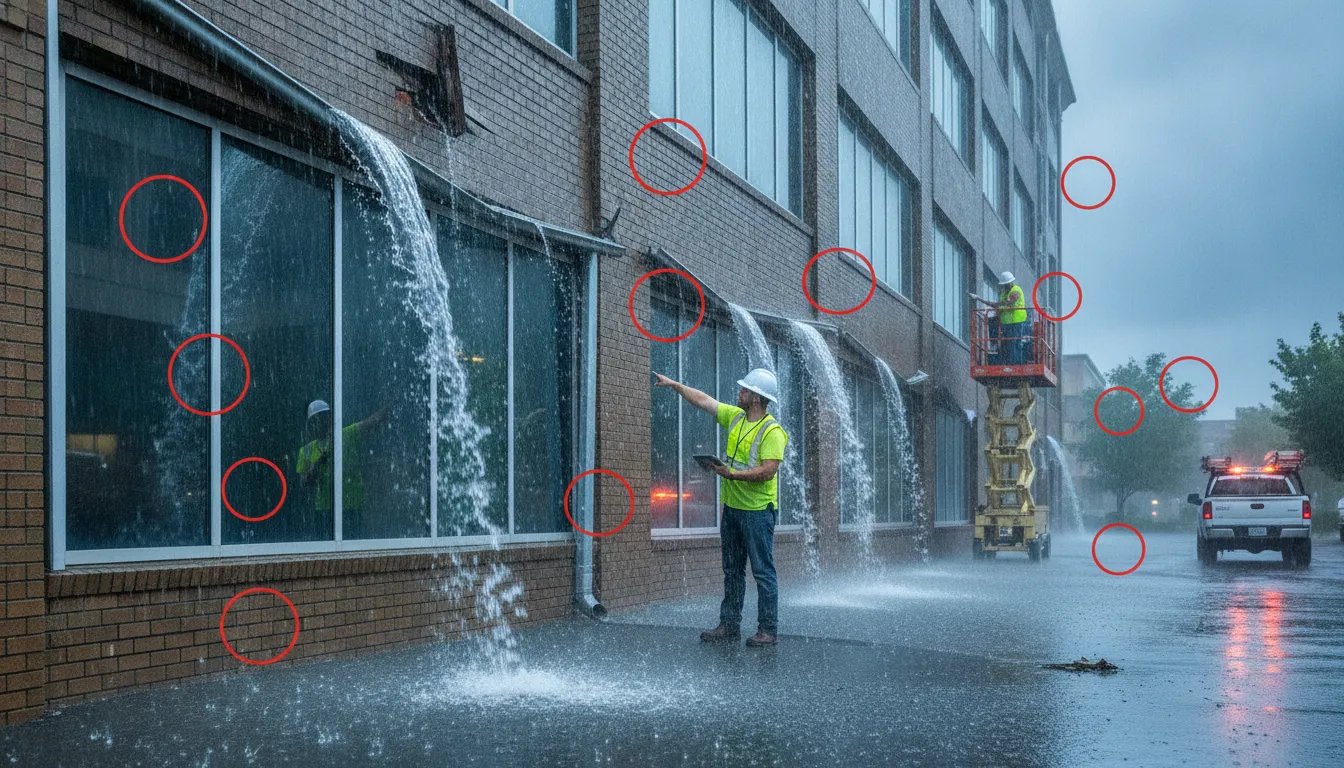
Water damage rarely stays where it starts. A blocked downspout can create pooling beside a foundation, while a leaking gutter seam may wet fascia, siding, insulation, and interior walls. On a commercial property, these problems can also create slippery walkways, interrupt deliveries, damage inventory, and place employees or visitors at risk. Emergency commercial gutter repair provides a fast response when the system can no longer control runoff safely. This guide explains which issues need prompt attention, what temporary steps can limit damage, how professionals assess the full drainage system, and why regular maintenance can help prevent the next gutter emergency.
Key Takeaways
- Respond quickly to serious gutter damage: Interior leaks, flooding, detached sections, storm damage, and water near electrical equipment can threaten safety, operations, and property.
- Inspect the complete drainage system: Effective repairs should address gutters, seams, hangers, outlets, downspouts, extensions, discharge areas, and nearby foundations.
- Use maintenance to reduce future problems: Schedule cleanings, inspect gutters after severe weather, repair minor defects early, and consider leaf protection for debris-prone properties.
Which Signs Require Emergency Commercial Gutter Repair?
Commercial gutter problems can affect much more than the roofline. Overflow may reach entrances, loading areas, inventory, electrical equipment, landscaping, and building foundations. Some issues can wait for a scheduled appointment, but active water intrusion, structural separation, and storm damage need prompt attention.
A fast response can limit property damage while helping keep employees, tenants, customers, and visitors safe. If water is entering the building or collecting near a critical area, protect people and property first. Then contact a professional commercial gutter repair provider for an inspection. This commercial gutter repair guide explains why conditions that threaten safety, structure, or daily operations require immediate attention.
Before calling, note where the water is appearing, when the issue began, and whether recent rain, hail, wind, or falling branches may have contributed. Take photos from ground level if it is safe to do so. Avoid climbing onto the roof or using a ladder to investigate active damage, since wet surfaces, unstable gutters, and hidden structural problems can create serious hazards.
Respond to active leaks, overflow, and interior water
Active leaks require immediate attention, particularly when water is entering offices, warehouses, retail spaces, electrical rooms, or areas that store valuable inventory. Water can travel through roof assemblies and appear far from the original gutter or roof-edge problem, so a visible drip may not show the full extent of the damage.
Overflow can also create slip hazards, stain walls, damage ceilings, and affect insulation or interior finishes. Move people and property away from the affected area. Place containers under minor drips only when it is safe, and keep water away from electrical equipment. Then contact a commercial gutter professional.
A prompt inspection can determine whether the source is a clogged outlet, failed seam, damaged gutter section, disconnected downspout, or broader drainage problem. Addressing the source quickly can help protect the building’s interior and reduce disruption to daily operations.
Address pooling near foundations, entrances, and loading areas
Standing water near a foundation, entrance, loading dock, or parking area can create both safety and operational concerns. It may soften soil, wash away landscaping, attract pests, and create slippery walking surfaces. Repeated pooling near the building can also contribute to foundation erosion and water intrusion.
Look for water collecting below downspouts, along exterior walls, or beside walkways after rainfall. Blocked outlets, short extensions, poor grading, and disconnected downspouts can all contribute to the problem. Water that reaches a loading area may also interfere with deliveries and damage stored materials.
A professional downspout and drainage service can help identify where runoff is collecting and recommend a safer discharge point. The solution may include clearing a blockage, extending a downspout, correcting a connection, or improving drainage around the property.
Repair sagging, detached, separated, or misaligned gutters
A gutter that sags, pulls away from the fascia, or separates at a joint may no longer carry water safely to the downspout. During heavy rain, water can release along the roof edge in concentrated streams. That runoff may damage fascia boards, soffits, siding, landscaping, and soil near the foundation.
Misalignment can leave low spots where water and debris collect. A visibly detached section may also fall, especially after additional rain or wind. Keep employees, tenants, and visitors away from any hanging gutter above a walkway or entrance, and arrange an inspection as soon as possible.
Repairs may include replacing hangers, securing fasteners, correcting the slope, sealing joints, or replacing a damaged section. A technician should also check the fascia and roof edge, since prolonged overflow may have affected the surfaces supporting the gutter system.
Clear clogged gutters and blocked downspouts
Leaves, roof grit, branches, and other debris can stop water from moving through a commercial gutter system. When a downspout is blocked, water may spill over the gutter edge or back up beneath the roofline. The resulting moisture can contribute to foundation erosion, mold growth, damaged landscaping, and costly repairs.
Overflow during one storm does not always mean the entire system needs replacement. A technician can check the gutters, outlets, downspouts, extensions, and discharge points to locate the obstruction. They can also identify recurring debris problems or sections that hold water because of poor alignment.
Avoid sending untrained employees onto roofs or ladders, especially around tall buildings and wet surfaces. Professional gutter cleaning and maintenance can address the immediate clog and help determine whether the property needs more frequent cleaning or leaf protection.
Repair wind, hail, rain, and falling-branch damage
Severe weather can bend gutters, tear away hangers, puncture metal, shift downspouts, and damage roof-edge components. Falling branches may crush a section or block an outlet, while hail and wind can create small defects that worsen during the next storm.
Inspect the property from ground level after severe weather, but do not climb onto the roof to investigate damage. Look for hanging sections, new leaks, displaced downspouts, water stains, and debris around outlets. Also check entrances, loading areas, and foundation walls for new pooling or runoff.
Take photographs before cleanup when possible, then contact a commercial gutter repair provider. Prompt stabilization can help protect the building while you determine whether the system needs a section repair or a larger replacement. Keep damaged areas clear until the gutter system has been inspected.
Fix rust, holes, failed seams, and broken hangers
Rust, pinholes, failed seams, and broken hangers can start as small defects and become active leaks. Corrosion may weaken the gutter material, while a failed seam can release water directly against the fascia or siding. Broken hangers can place extra strain on nearby sections, causing additional separation over time.
A professional inspection should cover visible and less obvious problems, including end caps, outlets, corners, fasteners, and connections to downspouts. The technician should also check whether leaking water has affected the fascia, soffits, or exterior wall.
Depending on the condition, the repair may involve sealing a small leak, replacing hardware, or installing a new gutter section. If damage is widespread, ask for a clear comparison between targeted repairs and complete system replacement. This makes it easier to choose a practical solution based on the system’s condition and the property’s drainage needs.
Address stains, mold, mildew, erosion, and pests
Stains beneath the roofline, mold or mildew on exterior surfaces, and eroded soil near downspouts can indicate ongoing drainage problems. Pests may also gather around standing water, clogged gutters, or damp building materials. These signs do not always require after-hours service, but they should not be ignored.
Pay special attention when moisture is affecting occupied spaces, food storage, electrical equipment, or structural materials. Repeated dampness can damage finishes and create conditions that become harder to correct. Erosion may also expose roots, undermine walkways, or leave water flowing toward the building.
A commercial gutter and exterior inspection can help connect these warning signs to their source. The cause may be a blocked downspout, leaking seam, poor discharge location, damaged gutter section, or inadequate drainage near the building.
Know when routine issues become emergencies
Routine cleaning may be enough when gutters contain debris but remain attached, properly aligned, and capable of moving water away from the building. The situation becomes more urgent when the problem threatens people, operations, structural components, or valuable contents.
Call for prompt service when you notice active interior leaks, water near electrical systems, severe sagging, widespread punctures, detached sections, major storm damage, or flooding at entrances and loading areas. Also act quickly when a recurring issue continues after basic cleaning, since repeated overflow may point to a deeper drainage or capacity problem.
When you call, share photographs, the affected building area, recent weather conditions, visible safety concerns, and any access restrictions. Explain whether tenants, deliveries, customers, or equipment could be affected. These details help the technician assess urgency, plan a safe response, and prepare for the most appropriate repair.
What to Do Before Emergency Commercial Gutter Repair
A commercial gutter failure can put people, equipment, inventory, and building operations at risk. Overflow may spread across entrances and walkways, while an active leak can damage ceilings, walls, electrical equipment, and stored materials. Start with steps you can take safely from the ground, then contact a qualified commercial gutter repair company for an inspection.
If water is entering the building or collecting near the foundation, treat the problem as urgent. Allied CPM’s commercial gutter guidance recommends requesting prompt service when leaks occur near people, power, or critical equipment. The following steps can help limit damage while you wait for professional assistance.
Secure affected areas
Restrict access to any area where water is leaking, pooling, or falling from the roof edge. Use cones, caution tape, signs, or temporary barriers to keep employees, customers, tenants, and visitors away from slippery surfaces and falling debris. Pay particular attention to entrances, sidewalks, loading docks, stairwells, and spaces beneath damaged gutters.
If water is near outlets, electrical panels, lighting, machinery, or exposed wiring, keep people away and contact the appropriate building or electrical professional. Do not touch wet electrical equipment or inspect a ceiling leak from directly below it. OSHA’s guidance on slips, trips, and falls reinforces the importance of controlling workplace hazards promptly.
Move inventory, equipment, vehicles, and people
Move merchandise, files, machinery, vehicles, and other valuable items away from active leaks and overflowing downspouts when it is safe to do so. Water can damage packaging, electronics, flooring, stored materials, and finished products quickly. If moving an item could expose someone to electrical hazards, unstable materials, or contaminated water, leave it in place until qualified help arrives.
You may also need to close an entrance, reroute foot traffic, pause deliveries, or relocate employees from the affected area. Leaks near people, power, or critical equipment require prompt attention, according to Allied CPM’s commercial gutter repair recommendations. Keep a record of where items were moved so the area can be restored after the repair.
Document storm damage and water intrusion
From a safe location, take photos and videos before cleanup changes the scene. Capture damaged gutter sections, detached downspouts, fallen branches, hail marks, standing water, stained walls, wet ceilings, and erosion near the building. Include both wide images that show the location and close-ups that show the damage.
Record when the problem began, whether it followed severe weather, and which areas are affected. Note whether water appears only during rainfall or continues afterward. These details can help a contractor determine whether the source involves the gutter, roof edge, downspout, or surrounding drainage. A small corner drip or a single overflowing section can indicate a larger issue, as General Roofing Co. explains.
Protect valuable contents from leaks and overflow
When safe, place waterproof covers over furniture, shelving, equipment, and stored materials. Set containers beneath controlled drips, but do not climb on furniture or position containers beneath unstable ceiling materials. Move sensitive contents to a dry location when possible, and keep them off wet floors.
Overflow can stain walls, damage ceilings, soak insulation, and create conditions that support mold and mildew. Blocked downspouts may also cause water to collect near the roof edge or travel toward interior walls. General Roofing Co.’s guide to commercial gutter warning signs explains how overflow and drainage blockages can contribute to stained walls and ponding. Check rooms below the affected roof section, including storage areas and tenant spaces.
Avoid ladders, roofs, and unsafe DIY repairs
Do not climb onto a roof or use a ladder to inspect gutters during a storm or while surfaces remain wet. Commercial buildings often have greater heights, complex rooflines, skylights, fragile materials, and difficult access points. A ladder near traffic, machinery, or a slippery surface can create an additional hazard.
Avoid pulling down damaged gutter sections, removing heavy debris, drilling holes, or applying sealant from an elevated position. A quick patch may redirect water into the fascia, soffit, roof edge, or wall. Constitution Contracting’s roofing guidance warns that poor DIY repairs can create safety risks, conceal water damage, and affect material warranties. Keep employees on the ground and leave elevated work to trained professionals.
Use safe, temporary water-control measures
Ground-level measures may help reduce damage while you wait for service. If they can be reached safely, clear loose leaves and branches from ground-level drains, catch basins, and outlets. Place absorbent materials near interior drips, use containers beneath controlled leaks, and keep people away from pooled water.
Do not push debris onto the roof, reach into an overflowing downspout, or use a hose to test a damaged system. Never redirect water toward an entrance, neighboring property, electrical equipment, or foundation. Temporary measures should reduce exposure, not replace professional repair. If water is entering the building or spreading near critical areas, request an urgent evaluation, as Allied CPM advises.
Notify managers, tenants, insurers, and occupants
Inform the property manager, facilities team, business owner, tenants, and affected occupants about the damage and any restricted areas. Clear communication can prevent someone from walking through pooled water, using a damaged entrance, or placing equipment under an active leak. Share changes to access routes, delivery schedules, and business hours as the situation develops.
If wind, hail, or another covered event caused the damage, contact your insurance representative before discarding materials or completing nonessential cleanup. Ask whether the insurer needs specific photos, estimates, inspection notes, or receipts. Keep copies of messages, calls, service records, and expenses. Reliable drainage supports property risk management, which is why Pine Country Windows recommends working with a dependable commercial gutter maintenance partner.
Share access details and site constraints
Give the repair company useful information before the appointment. Describe the building’s height, the location of the damaged section, the type of problem, and whether water is entering the interior. Mention locked gates, security procedures, loading schedules, restricted areas, tenant requirements, parking limitations, and equipment that could limit access.
Also identify roof access points, atriums, canopies, power lines, fragile landscaping, nearby traffic, and difficult roof edges. Taller or more complex buildings may require specialized equipment and additional coordination. As Pine Country Windows notes, access is an important consideration for commercial gutter work involving height, atriums, and challenging roof edges. These details help the contractor plan a safer inspection and arrive prepared to assess the gutters, downspouts, roof edge, and drainage system.
Which Emergency Commercial Gutter Repairs Are Available?
Emergency commercial gutter repair can involve anything from clearing a blocked downspout to replacing a storm-damaged section. The right solution depends on the location of the problem, the amount of damage, the building’s roof design, and whether the existing system can continue handling runoff safely.
A complete inspection should look beyond the visible leak. Gutters work as part of a connected water-management system that includes roof edges, hangers, outlets, downspouts, extensions, splash blocks, and drainage areas around the building. Fixing only the most obvious symptom may leave another blockage, slope problem, or damaged connection in place.
Commercial properties also have practical concerns that residential repairs may not involve. Entrances, loading docks, walkways, parking areas, tenants, inventory, and business hours can all affect how repair work is planned. A contractor may need to stabilize the system first, then schedule permanent work around deliveries or occupied areas.
TX Gutter Solutions provides commercial gutter repair and maintenance services throughout Central Texas. A professional assessment can identify urgent risks, explain available repairs, and help determine whether the property needs a targeted fix, system replacement, or a drainage adjustment.
Repair leaks, seams, and holes
Leaks often develop at seams, corners, end caps, and points where fasteners have loosened. Small holes caused by corrosion, impact, or wear can release water against siding, fascia, walkways, landscaping, or the foundation. During heavy rain, even a small opening can create a steady stream of runoff in the wrong location.
A repair may involve sealing a joint, patching a small hole, replacing a connector, or securing a loose section. The affected surface must be cleaned and prepared first so the repair material can adhere correctly. Applying sealant over dirt, standing water, or deteriorated metal may provide only short-term relief.
If several areas are leaking, the gutter is badly rusted, or seams continue to fail, replacement may be more practical than repeated patching. A commercial gutter professional can determine whether the damage needs a targeted repair or a broader solution.
Clean gutters and remove clogs
Leaves, pine needles, roof grit, and other debris can prevent water from reaching the downspouts. When the gutter channel is blocked, rainwater may overflow over the front edge or collect along the roofline. The extra weight can strain hangers and pull sections away from the building.
Emergency cleaning begins with removing visible debris from the gutter channel. The system should then be checked for compacted material near outlets, corners, and end caps. Cleaning may reveal additional concerns, such as rust, separated seams, damaged fasteners, or sections with an improper slope.
Commercial buildings often have larger roof areas and more difficult access than homes. Professional gutter cleaning services can clear blockages while reducing risks around ladders, roofs, entrances, walkways, and active work areas.
Clear downspouts, outlets, and extensions
A clean gutter cannot move water effectively when the downspout or outlet is blocked. Debris may collect where the gutter meets the downspout, inside vertical sections, at elbows, or near underground connections. Water trapped above a blockage can overflow quickly during a storm.
A technician may clear the outlet, flush the downspout, disconnect sections, or inspect the lower end for additional obstructions. Downspout extensions also need attention. If an extension is crushed, disconnected, or too short, water may discharge beside the building instead of flowing toward a suitable drainage area.
The repair should include a flow test when conditions permit. This confirms that water can travel from the gutter through the downspout and away from the foundation. If the current layout is not working, rerouting or extending the drainage system may be necessary.
Repair sagging gutters and broken hangers
Sagging gutters cannot maintain the consistent slope needed to move water toward their outlets. Water may collect in low spots, overflow at the wrong locations, or place additional strain on the gutter material. Commercial properties may then develop wet entrances, damaged landscaping, and puddles near busy areas.
Common causes include loose or missing hangers, damaged fascia, heavy debris, storm impact, and gutter sections that have warped over time. Repairs may involve replacing fasteners, adding hangers, repositioning supports, realigning the gutter, or replacing a section that no longer holds its shape.
The supporting surface must also be inspected. If fascia or roof-edge materials have deteriorated, new hangers may not remain secure until that issue is corrected. A complete assessment helps determine whether the problem is limited to the gutter or connected to the building itself.
Stabilize storm-damaged systems
High winds, hail, heavy rain, and falling branches can damage gutters in several ways. A storm may bend the front edge, pull sections away from the roofline, break hangers, separate seams, or disconnect downspouts. The immediate priority is to control runoff and secure loose components.
Emergency stabilization may include securing a detached section, removing hazardous debris, closing an open seam, restoring a temporary water path, or protecting a vulnerable roof edge. These steps can reduce active water intrusion while a permanent repair plan is prepared.
Property owners should not approach unstable gutters from ladders or roofs after severe weather. Wet surfaces, loose metal, falling branches, and nearby electrical hazards can create serious risks. TX Gutter Solutions can assess storm-related gutter and exterior water-management needs through its contact page.
Redirect downspouts and correct drainage
A downspout can be functioning properly while still sending water to the wrong location. Discharge beside a foundation, loading dock, sidewalk, or landscaped slope may cause pooling, erosion, mud, or recurring water intrusion. Repairing the gutter alone will not resolve a drainage problem in these situations.
Possible solutions include adding extensions, replacing damaged elbows, installing additional downspouts, redirecting discharge, or connecting the system to a suitable drainage route. The best option depends on the building layout, soil conditions, grade, hardscapes, and existing drainage features.
Central Texas properties may experience intense rainfall, expansive clay soils, and landscaping that changes how water moves across a site. A tailored assessment helps direct runoff away from foundations and high-traffic areas instead of moving the discharge only a short distance from the building.
Replace damaged gutter sections or systems
Some commercial gutter damage is too extensive for a localized repair. Replacement may be necessary when sections are badly corroded, repeatedly leaking, crushed by impact, separating along long runs, or too small for the roof area. Replacing one section can be practical when the rest of the system remains in good condition.
A larger replacement may make sense when failures are widespread or when the existing system has ongoing capacity and drainage problems. The assessment should consider gutter dimensions, roof area, pitch, downspout placement, material condition, and the volume of runoff the system must handle.
Seamless gutter installation can reduce the number of joints along long runs, which may reduce common leak points. TX Gutter Solutions can review available gutter services and recommend an approach based on the property’s needs rather than assuming the entire system requires replacement.
Choose temporary stabilization or permanent repairs
Not every emergency can be resolved with a permanent repair during the first visit. A business may need to keep entrances open, protect inventory, or maintain operations while materials are ordered or larger work is scheduled. Temporary stabilization can help control water during that period.
Short-term measures may include securing loose sections, sealing an active leak, clearing a blockage, attaching an extension, or protecting a vulnerable area from continued overflow. These steps should be treated as temporary controls, not as a substitute for correcting the underlying problem.
Permanent repairs may require new gutter sections, replacement hangers, improved downspout routing, or broader drainage work. Ask the contractor to explain what has been stabilized, what still needs attention, and when follow-up work should occur. Written details help property managers track unresolved risks.
Add leaf protection to high-debris properties
Properties near mature trees may experience recurring clogs even with regular cleaning. Leaves, seed pods, pine needles, and small branches can collect in open gutters and restrict water flow. Frequent overflow can create problems around entrances, sidewalks, parking areas, and delivery zones.
Leaf protection systems can reduce the amount of debris entering the gutter while allowing rainwater to move toward the downspouts. They still need periodic inspection because certain debris may collect on top or around the edges. No guard eliminates the need to check the entire system.
Before recommending protection, a professional should evaluate the roofline, gutter condition, debris type, and downspout capacity. Installing guards over damaged or poorly sloped gutters may hide the problem instead of solving it. In some cases, the right sequence is to repair or replace the system first, then add leaf protection to support easier maintenance.
How Can Emergency Commercial Gutter Repair Prevent Damage?
Commercial gutter problems can affect far more than the roofline. A blocked downspout, separated seam, or sagging section can direct water toward foundations, entrances, landscaping, parking areas, and valuable business assets. Emergency repairs restore a controlled drainage path and help prevent a manageable issue from becoming a larger property problem.
Prompt service also helps property owners address immediate risks before normal operations continue. TX Gutter Solutions provides commercial gutter services for businesses and properties across Central Texas, including gutter repair, cleaning, downspout solutions, drainage improvements, and ongoing maintenance.
Direct runoff away from foundations
Gutters collect roof water and carry it toward downspouts, which should discharge runoff at a safe distance from the building. When a gutter overflows or a downspout separates, water may collect beside the foundation instead. Repeated saturation can contribute to soil erosion, settlement, cracks, and moisture intrusion.
Emergency commercial gutter repair restores a controlled path for runoff. A technician may repair the damaged section, clear the downspout, add an extension, or correct the discharge point. These steps help keep water away from the foundation before the next storm. Properly working gutters also protect siding, landscaping, and other property features from water damage, as CR Gutters explains.
Protect roofs, fascia, soffits, siding, and interiors
A damaged gutter can leave water sitting along the roof edge. Moisture may then affect fascia boards, soffits, siding, roof components, and the areas behind exterior walls. A small seam leak can also send water into the building, causing ceiling stains, wet insulation, damaged finishes, or problems near electrical and mechanical systems.
Prompt repairs help keep water moving away from vulnerable materials. Depending on the damage, a technician may reseal a seam, replace a section, secure loose hangers, or correct the gutter slope. The inspection should include the roof edge and nearby building surfaces because gutter problems rarely remain confined to the gutter. Commercial gutter repair guidance explains how water can move behind fascia and into interior areas.
Reduce erosion near landscaping, sidewalks, and parking areas
Uncontrolled discharge can wash soil away from planting beds, sidewalks, driveways, and parking areas. On a commercial property, erosion may expose roots, undermine pavement, create uneven walking surfaces, or carry soil and mulch into storm drains. Water crossing an entrance or loading zone can also interfere with deliveries and pedestrian access.
Emergency repair helps direct runoff to a more suitable discharge point. Solutions may include downspout extensions, splash blocks, underground drainage connections, or adjustments to the existing layout. The right option depends on roof size, site grading, soil conditions, and nearby hardscapes. Commercial gutter system guidance describes effective drainage as a way to reduce disruptions, repairs, and larger water-related claims.
Limit mold, mildew, pests, and standing water
Clogged gutters and blocked downspouts can leave water sitting along the roof edge or beside the building. Persistent moisture creates favorable conditions for mold, mildew, insects, and other pests. It can also keep exterior materials damp and allow water to reach roof assemblies or wall cavities.
Emergency cleaning and repair remove the immediate source of standing water. A technician can clear leaves, sediment, and nesting debris, then check whether the blockage caused hidden damage. The inspection should include downspout outlets and extensions, since water may continue pooling after the gutter appears clear. Commercial gutter maintenance information explains how ponding near the roof edge can allow water to travel beyond its original entry point.
Protect inventory, equipment, tenants, and operations
A leaking gutter above a warehouse door, retail entrance, loading dock, or mechanical area can disrupt daily operations quickly. Water may damage inventory, equipment, packaging, records, and stored materials. At a multi-tenant property, an active leak can also affect occupants and create complaints that require immediate attention.
Emergency repairs help property managers address the most critical areas first. The response may focus on an active leak over a workroom, a blocked drain near a loading area, or overflow above a customer entrance. Once the immediate threat is controlled, the technician can recommend permanent repairs and system improvements. Conditions that threaten safety, structure, or operations warrant urgent attention, according to commercial gutter repair guidance.
Reduce slip hazards and property liability
Overflowing gutters can send water across walkways, stairs, entrances, and ramps. During heavy rain, that water may create slippery surfaces, hide uneven pavement, or enter the building through doors. Wet floors inside a lobby, corridor, or work area can create another hazard for employees, tenants, customers, and visitors.
Repairing the source helps reduce repeated water exposure. Property teams should still place warning signs, restrict affected areas, and remove standing water until surfaces are safe. A complete repair should address the gutter, downspout, and discharge location instead of moving the water only a short distance. This approach matters because leaks can worsen during changing weather and create hazards away from the original gutter problem.
Prevent recurring failures from temporary fixes
A temporary patch may stop visible dripping without correcting the reason the gutter failed. The system could still have loose hangers, poor slope, blocked outlets, undersized sections, or damaged fascia. When the next storm arrives, the same area may leak again or cause overflow elsewhere along the roofline.
Temporary stabilization can help control immediate damage, but it should lead to a permanent repair plan. A qualified technician can inspect the full roof-edge system, identify related defects, and explain which work needs prompt attention. Scheduled gutter maintenance can help keep seams, hangers, outlets, downspouts, and drainage paths in proper working order.
Limit rising repair costs
Delaying commercial gutter repair can allow water to affect more building components. A damaged seam may lead to wet fascia, while a blocked downspout may contribute to foundation erosion or interior water intrusion. As the affected area grows, the property may require additional work involving roofing, siding, drywall, insulation, landscaping, or concrete.
Prompt service gives property owners a better chance to control the scope of the damage. A technician can separate urgent stabilization from recommended follow-up work and provide a clear estimate for each priority. This helps with planning and may prevent unnecessary replacement when a targeted repair can restore the system. Property owners can request a free estimate from TX Gutter Solutions to review commercial gutter and drainage concerns.
How Do You Choose a Reliable 24/7 Commercial Gutter Repair Service?
Choosing a commercial gutter repair company takes more than calling the first contractor who appears in a search. Commercial buildings often have taller rooflines, larger drainage systems, limited access points, active tenants, and valuable equipment near vulnerable areas. The right provider should respond promptly while also having the training, insurance, equipment, and planning needed to work safely.
Before hiring a company, ask specific questions about after-hours availability, response times, inspection methods, repair options, and pricing. A dependable contractor should explain what caused the problem, identify immediate risks, and separate temporary stabilization from permanent repairs. This helps you protect the building, inventory, employees, customers, tenants, and landscaping without approving unnecessary work.
Look for a contractor that can evaluate the entire water-management system, not just the most visible leak. Gutters, downspouts, roof edges, drainage paths, soil, and foundation areas all affect how runoff moves across your property. TX Gutter Solutions provides commercial gutter and drainage services for properties throughout Central Texas, with recommendations based on the building and site conditions.
Verify after-hours availability and response times
A company that advertises 24/7 service should explain exactly what that includes. Ask whether a live representative answers calls after regular business hours, how quickly a technician usually responds, and whether emergency inspections are available on weekends and holidays. Confirm that the contractor handles active leaks, overflowing gutters, blocked downspouts, and storm damage instead of only scheduling routine appointments.
When water enters the building or collects near electrical equipment, public walkways, or stored goods, treat the issue as urgent. Commercial gutter emergency guidance recommends prioritizing safety and requesting immediate service when active water intrusion or visible damage is present. Before the technician arrives, be ready to share photos, the leak location, property access instructions, and any site restrictions.
Confirm commercial experience and access capabilities
Commercial gutter work involves challenges that residential repairs may not. A warehouse, retail center, office building, medical facility, or apartment complex may require lifts, extended ladders, roof access coordination, traffic control, or work around tenants and customers. Ask whether the contractor has worked on properties similar to yours and understands the demands of larger roofs and commercial drainage systems.
Confirm that the company can reach the damaged area without disrupting deliveries, parking, entrances, or occupied spaces. Ask whether the crew owns or can obtain the equipment required for your building’s height and layout. Commercial gutter contractors must account for access, tenant coordination, safety planning, and weather exposure, so these details should be discussed before work begins.
Check licenses, insurance, workers’ compensation, and certifications
Before allowing a crew onto your property, request proof of applicable licenses, general liability insurance, and workers’ compensation coverage. These documents help protect your business if a worker is injured, a vehicle or building is damaged, or an installation error causes additional property damage. Do not rely on a verbal promise. Ask for current documentation and confirm that it applies to the work being performed.
You can also ask about manufacturer training, safety certifications, and experience with commercial water-management systems. Requirements vary by location and project, but a professional contractor should explain its qualifications clearly. Licensing and insurance are important considerations when selecting a repair company, as this guide to choosing a gutter repair company explains.
Review safety training and fall-protection practices
Gutter repairs can involve ladders, lifts, roof edges, wet surfaces, and unstable materials. Ask how the crew will protect workers, occupants, customers, and nearby property during the repair. A reliable provider should have clear procedures for fall protection, equipment inspections, ladder placement, roof access, weather monitoring, and restricting access around active work areas.
Safety planning matters even more on tall or complex buildings. Ask whether the company will use warning signs, cones, barriers, spotters, or temporary access restrictions around entrances and walkways. The contractor should also explain what happens if rain, high wind, or lightning makes the work unsafe. Commercial gutter safety planning is especially important when repairs involve difficult access or elevated work areas.
Choose one provider for gutters, downspouts, and drainage
A gutter repair may not solve the problem if water still discharges beside the foundation, pools near a loading dock, or flows across a sidewalk. Choose a provider that can inspect the connected system, including gutters, outlets, downspouts, extensions, splash blocks, grading, and drainage paths. One coordinated assessment makes it easier to identify the cause of the issue and assign responsibility for the solution.
Ask whether the contractor can redirect water away from foundations, entrances, landscaping, parking areas, and other vulnerable locations. Commercial drainage planning treats drainage as risk control because effective water management can reduce disruptions, repeated repairs, and larger building claims. A complete recommendation should explain where water starts, how it moves, and where it should discharge.
Request a full roof-edge, gutter, and drainage inspection
Do not accept a repair recommendation based only on the first visible leak. Ask the technician to inspect the roof edge, fascia, gutters, seams, hangers, end caps, outlets, downspouts, extensions, and nearby drainage areas. Water can travel along rooflines and building materials, so the stain or drip inside the building may not identify the original source.
Request photos or written notes showing damaged areas and explaining the recommended work. The inspection should identify immediate hazards, contributing causes, and conditions that could lead to another failure. If water is dripping near electrical equipment, occupied areas, medical spaces, or important inventory, ask for a same-day evaluation. Emergency commercial gutter guidance recommends treating active water intrusion as urgent.
Confirm proper gutter capacity for the roof and rainfall
A gutter system must handle the runoff produced by the roof. Ask the contractor to confirm that the gutter profile, downspout size, outlet placement, and number of downspouts match the roof area and local rainfall patterns. Replacing one damaged section with a smaller or poorly matched component may leave the property vulnerable to overflow during the next heavy storm.
Roof pitch, drainage layout, nearby roof sections, and concentrated runoff from upper roofs can also affect performance. Commercial gutter sizing guidance explains that roof area and local storm data are key factors in determining gutter capacity. A trustworthy contractor should explain the recommendation clearly instead of simply suggesting the largest available system.
Compare priorities, estimates, and emergency fees
Request an itemized estimate that separates emergency response, inspection, cleaning, materials, labor, equipment, repairs, replacement, and drainage work. Ask whether after-hours calls include a service fee, whether the estimate is binding, and what could cause the final price to change. Clear pricing helps property managers make timely decisions without overlooking necessary work.
When comparing companies, consider the scope and quality of each recommendation, not only the lowest price. An unusually low estimate may leave out lift access, proper fasteners, disposal, testing, or drainage corrections. This advice on evaluating gutter repair estimates also warns that very low pricing can indicate inferior materials or workmanship. Ask each provider to quote the same priorities so the comparison is fair.
Choose transparent recommendations over automatic replacement
Storm damage can make replacement seem like the simplest answer, but not every failed gutter requires a new system. Ask the contractor whether the issue involves a clogged section, failed seam, loose hanger, isolated hole, damaged downspout, or widespread deterioration. A professional should explain repair and replacement options, along with the expected service life and limitations of each choice.
The recommendation should reflect the condition of the entire system, not a sales target. If a temporary repair can safely control water while you plan a larger project, ask about that option. Preventive inspections and routine cleaning can extend a roof’s service life and reduce major expenses, as noted in this guidance on roof and gutter maintenance. Request photos and a written explanation before approving extensive replacement work.
Ask about materials, guarantees, cleanup, and reviews
Ask which materials the contractor will use, how replacement sections will match the existing system, and whether fasteners, sealants, hangers, and outlets are suited to commercial conditions. Clarify the workmanship guarantee, manufacturer warranty, expected repair life, and process for handling a callback. You should also confirm that the crew will remove gutter debris, damaged materials, packaging, and waterlogged waste from the property.
Reviews can show how a company handles communication, scheduling, cleanup, and problems after the work is complete. Look for feedback from commercial property owners or managers with similar buildings, not only small residential jobs. Customer reviews and testimonials can provide useful insight into reliability, workmanship, and customer service. For a large or time-sensitive project, ask for references from comparable properties.
Look for Central Texas storm, heat, and soil experience
Central Texas properties face intense sun, sudden storms, strong wind, falling branches, heavy debris, and expansive soil that can shift around foundations. These conditions affect gutters, sealants, fasteners, downspouts, landscaping, and drainage paths. Choose a contractor familiar with commercial properties in Austin, San Antonio, Dallas, Fort Worth, and surrounding communities.
Local experience should include more than knowing the service area. Ask how the company addresses storm runoff, foundation protection, erosion, soil movement, heat-related material wear, and drainage near sidewalks or parking lots. Commercial systems collect substantial runoff because of their larger roof areas, as explained in this commercial gutter sizing resource. TX Gutter Solutions serves properties across Central Texas service areas and can assess gutter, downspout, and drainage needs as one connected system.
What Does Emergency Commercial Gutter Repair Cost?
Emergency commercial gutter repair does not have one fixed price. The final cost depends on the type of damage, the size of the affected area, the building’s height, and how quickly the work is needed. A small leak above an office entrance may only require a focused repair, while storm damage across a warehouse or retail property may involve cleaning, replacement sections, downspout work, drainage corrections, and water-damage repairs.
Access also affects the estimate. A contractor may need lifts, additional safety equipment, extra crew members, or special scheduling for a busy commercial property. After-hours service and storm-related demand can affect labor and equipment availability as well.
The most reliable way to understand the cost is to request an inspection and a written scope of work. TX Gutter Solutions provides commercial gutter services throughout Central Texas, including gutter repair, cleaning, downspout service, and drainage solutions. A complete assessment can address the immediate emergency while identifying conditions that may cause another failure.
Consider damage type, severity, and scope
The type and extent of damage usually have the greatest effect on repair costs. A failed seam, loose hanger, small hole, or disconnected downspout may be repaired without replacing an entire gutter run. More extensive damage may require several new sections, replacement outlets, additional hangers, or a complete system replacement.
Replacement may be more practical when gutters are heavily rusted, undersized, repeatedly leaking, poorly pitched, or separating in multiple areas. These conditions often indicate that a patch will only delay a larger repair. This commercial gutter repair guidance explains when replacement may be more appropriate than repeated repairs.
The contractor may also check for damage to fascia, soffits, siding, roofing materials, landscaping, and interior spaces. Repairs to these areas can increase the project total, but addressing them early may help prevent more costly structural or water-related problems.
Account for building height, roof access, and site conditions
Commercial properties often require more labor and safety planning than residential buildings. Height, roof design, access points, tenant activity, delivery schedules, and nearby power lines can all affect the repair process. A contractor may need lifts, specialized equipment, additional crew members, or carefully timed access to work safely.
Site conditions can also change the estimate. A clear service lane is easier to work around than a crowded loading area, active parking lot, fenced facility, or property with limited roof access. Heat, rain, wet surfaces, unstable ground, and limited staging space may create additional challenges.
Commercial repairs should account for tenant coordination and safety planning before work begins. This commercial gutter system resource explains why building height, access, tenant activity, and weather exposure can affect commercial work.
Include cleaning, repairs, replacement, and drainage work
A repair estimate should identify every part of the water-management system that needs attention. Cleaning may be necessary before a contractor can locate leaks, inspect the gutter slope, or determine whether water is reaching the downspouts. A blocked outlet can make an otherwise sound gutter appear to be failing.
The project may include seam repairs, new hangers, replacement end caps, downspout clearing, extensions, or damaged gutter sections. If water is pooling near the building, the contractor may recommend splash blocks, grading adjustments, underground drainage, or another way to direct runoff away from the structure.
Commercial gutter cleaning should cover the full drainage path, not just the channel. This includes gutters, outlets, downspouts, extensions, and discharge areas, as noted in this commercial gutter system resource.
Expect after-hours and storm-related demand
Emergency work requested after severe weather may cost more than a scheduled service visit. After-hours labor, urgent dispatch, difficult weather conditions, equipment availability, traffic control, and high demand can all affect pricing. A major storm may also create a broader scope of work when several gutter runs, roof edges, and downspouts are damaged at once.
When many commercial properties need service at the same time, response schedules may be limited. When calling, describe the problem clearly. Mention active leaks, flooding, interior water, blocked entrances, damaged inventory, and safety concerns. This helps the contractor assess urgency and prepare the right equipment.
If a storm caused the damage, ask whether the contractor can provide photos, written findings, and a detailed scope of work. These records may support an insurance claim and help separate emergency stabilization from permanent repairs.
Plan for temporary stabilization and follow-up repairs
An emergency visit may focus first on controlling water and limiting additional damage. Temporary stabilization could include securing a loose gutter, removing an active blockage, redirecting discharge, protecting a vulnerable area, or installing a short-term section until permanent materials are available.
Temporary work is not always the final repair. A contractor may need to return to replace damaged metal, correct the gutter pitch, repair fascia, install new downspouts, or improve the discharge area. Your estimate should identify what has been completed, what remains, and whether a follow-up visit is included.
Active water should receive prompt attention, especially when it reaches electrical equipment, inventory, occupied areas, or the foundation. This commercial gutter repair guide recommends requesting an evaluation when water is entering or accumulating around a commercial property.
Compare single-section repairs with full replacement
A localized repair may be the most practical option when the surrounding gutter system is structurally sound. A contractor may replace one crushed section, repair a seam, install new hangers, or reconnect a downspout without disturbing the rest of the system. This can reduce material and labor costs while addressing the immediate failure.
Full replacement may make more sense when damage is widespread or the existing system is no longer suited to the building. Repeated leaks, extensive corrosion, poor capacity, improper slope, and separation across long runs can indicate that multiple small repairs will not provide lasting value.
Ask the contractor to explain both options when appropriate. Localized commercial gutter repairs may work when the damage is limited, while replacement may offer better long-term value when the system has recurring or widespread problems.
Prepare insurance records and storm documentation
Clear documentation can make the repair and insurance process easier. Take photos and videos of damaged gutters, overflowing areas, interior leaks, standing water, damaged inventory, fallen branches, and affected landscaping. Capture wide views that show the building and close-ups that show the damage clearly.
Record when the issue began, what weather occurred, and whether anyone noticed warning signs before the event. Save inspection reports, invoices, maintenance records, contractor recommendations, and receipts for emergency work. Do not remove damaged materials before photographing them unless they create an immediate safety hazard.
Ask for a written estimate that separates emergency stabilization, permanent gutter repairs, replacement materials, drainage work, cleanup, and related building repairs. Clear restoration documentation can help property owners communicate what happened, what was done, and what still needs attention.
Request detailed estimates
A detailed estimate should describe the problem, recommended solution, materials, labor, equipment, access requirements, cleanup, and expected schedule. It should also state whether the price includes emergency service, follow-up visits, lift rental, disposal, permits, and drainage testing after the repair.
Ask for clarification if the estimate only says “gutter repair” without identifying the affected areas. A reliable contractor should explain whether the work involves cleaning, seam repair, section replacement, downspout service, drainage improvements, or complete system replacement. Ask what conditions could change the final price after work begins.
TX Gutter Solutions offers free estimates for gutter and drainage concerns in Central Texas. When comparing providers, choose a clear scope of work over the lowest initial number. A thorough estimate helps you understand the proposed repair and whether it addresses the source of the water problem.
What Happens During Emergency Commercial Gutter Repair?
Emergency commercial gutter repair begins with a quick review of the immediate risk, followed by a detailed inspection of the property’s water-management system. The goal is to stop active leaks and protect employees, tenants, customers, inventory, equipment, and the building itself.
For Central Texas properties, emergency issues may follow intense rain, wind, hail, falling branches, or heavy debris. Expansive clay soil can also make drainage problems more serious when water collects near a foundation. A professional crew will identify the source of the issue, control water where possible, and explain which repairs need immediate attention.
The process may include cleaning blocked gutters, securing loose sections, repairing failed seams, correcting downspout discharge, or replacing damaged components. TX Gutter Solutions provides commercial gutter services designed to address the full drainage system, not just the most visible symptom.
Complete a phone assessment and urgency review
The first step is a phone assessment. Describe what you see, where water is entering, when the issue began, and whether it followed a storm. Photos or videos can help the repair team understand the situation before arriving.
The provider may ask whether water is near people, electrical equipment, inventory, office areas, or critical operations. A leak near power or valuable equipment requires a faster response than an isolated drip in a low-traffic area. Share details about the building’s height, access points, and known roof or gutter issues so the crew can prepare safely. Guidance on commercial gutter emergencies recommends prioritizing people and critical assets during active water intrusion.
Discuss leaks, clogs, storm damage, and operations
During the initial conversation, explain whether the issue involves overflowing gutters, standing water, blocked downspouts, separated seams, sagging sections, or visible storm damage. Mention stains, damp ceilings, wet walls, erosion, or water collecting near entrances and loading areas.
The repair team should also understand how the property operates. Share delivery schedules, tenant access requirements, customer traffic patterns, restricted areas, and equipment that cannot be moved easily. This information helps the crew plan a safer response with less disruption. Even a slow leak deserves prompt attention if it can reach insulation, drywall, electrical components, inventory, or structural materials.
Inspect gutters, roof edges, downspouts, and drainage
Once on site, the technician will inspect more than the visible leak. They may examine gutter channels, end caps, corners, seams, hangers, fascia, roof edges, outlets, downspouts, extensions, and nearby drainage areas. A small drip at a corner may point to a larger blockage or a problem with the gutter’s slope.
The inspection should also consider where water goes after it leaves the downspout. Pooling beside the foundation, erosion near sidewalks, saturated landscaping, or water entering a loading area can indicate a drainage issue beyond the gutter itself. A full review helps identify the source instead of treating only the symptom. Commercial gutter repair signs often begin with localized dripping or overflow that property owners may overlook.
Control water and stabilize the system
The first on-site priority is to limit water movement and prevent further damage. Depending on the situation, the crew may clear an immediate blockage, redirect a downspout, secure a loose section, cover an opening, or install a temporary measure until permanent work can begin.
Stabilization may be necessary after wind, hail, heavy rain, falling branches, or other severe weather. The technician should explain which measures are temporary and how long they are expected to last. Temporary work can protect the property while materials, access equipment, or additional repairs are arranged. It should not replace a complete solution when the system remains unsafe or unreliable. Emergency gutter services may use temporary controls to limit leaks and property damage after severe weather, as explained by American Roofing and Waterproofing.
Review repair options, priorities, and estimates
After assessing the system, the contractor should explain the findings in clear terms. Recommendations may include cleaning, seam repair, replacement of a damaged section, new hangers, downspout work, drainage correction, or full system replacement.
Ask which work needs immediate attention and which items can wait. A reliable provider should explain the reason for each recommendation, the materials involved, the expected service life, and the risks of delaying the work. Request a written estimate that separates emergency stabilization from permanent repairs when possible. This makes it easier to approve urgent work while planning additional improvements within the property’s budget. A qualified gutter repair company should evaluate the system’s material and condition before recommending replacement.
Coordinate around tenants, deliveries, and business hours
Commercial repairs require careful scheduling. The crew may need access to service drives, loading docks, rooftops, parking areas, tenant spaces, or secured sections of the building. Share access instructions, the site manager’s contact information, and any rules for working around employees, customers, or residents.
If the issue can wait until a lower-traffic period, the contractor may schedule repairs before opening, after closing, or between deliveries. For urgent problems, the team can establish a safe work zone and keep people away from falling debris, wet surfaces, ladders, and equipment. Clear planning helps protect daily operations while allowing repairs to proceed. Effective drainage can also reduce disruptions and the risk of larger water-related claims, according to guidance on commercial gutter systems.
Complete repairs and remove debris
Once the plan is approved, the crew completes the agreed repairs. This may involve removing leaves and sediment, clearing blocked outlets, resealing joints, replacing damaged hangers, correcting alignment, securing loose sections, or installing new gutter and downspout components.
The crew should check for both visible and hidden blockages instead of clearing only the area where water was first noticed. Debris should be removed from the roof, gutters, walkways, landscaping, and work areas so it does not wash back into the drainage system. If branches or storm debris caused the damage, ask whether removal is included in the service. Proper cleanup helps restore reliable flow and reduces the chance of another overflow during the next heavy rain.
Test drainage and inspect property protection
After the repair, the technician should test the system rather than relying only on a visual check. Water may be flushed through the gutters and downspouts to confirm that it flows freely, exits at the correct locations, and does not back up or spill over repaired sections.
The crew should also inspect the surrounding property for continuing risks. This includes water near foundations, saturated soil, erosion, damaged landscaping, wet entryways, and pooling around parking or loading areas. If the original discharge point is causing problems, the repair may require a downspout extension, splash block, underground drain, or another drainage adjustment. Drainage testing helps confirm that the completed work performs as intended.
Receive written maintenance recommendations
Before service is complete, request written notes describing the work performed, materials used, areas that need monitoring, and recommended follow-up. Keep photographs, invoices, estimates, and storm documentation with the property’s maintenance records.
The contractor may recommend cleaning at set intervals, inspecting the system before and after severe weather, repairing a vulnerable seam, adding leaf protection, or monitoring drainage near the foundation. Maintenance frequency depends on nearby trees, roof design, debris levels, rainfall, and gutter capacity. A written schedule makes future inspections easier to plan and helps property managers address small issues before they require another emergency response. Regular commercial gutter cleaning is particularly important for properties surrounded by trees or exposed to frequent debris.
How Can Commercial Gutter Maintenance Prevent Emergencies?
Commercial gutter emergencies often begin with small problems that are easy to overlook. A clogged downspout can cause overflow, while a loose hanger can allow an entire gutter run to sag during the next storm. Routine maintenance gives property owners time to find these issues before they affect roofs, walls, foundations, landscaping, inventory, or daily operations.
A complete maintenance plan should cover more than the gutter channel. It should include roof valleys, outlets, downspouts, extensions, drainage paths, and the areas surrounding the building. Commercial roofs collect large volumes of rainwater, so undersized or poorly maintained systems can become overwhelmed quickly. The following steps can help reduce avoidable damage and the need for urgent repairs.
Schedule debris and downspout cleaning
Leaves, branches, roofing granules, dirt, and pest debris can block the path water needs to reach the downspouts. Once a gutter fills, rainwater may spill over the edge or collect against the roofline. A blocked downspout can create the same problem, even when the gutter itself appears relatively clear.
Set cleaning appointments according to the property’s roof size, surroundings, and seasonal debris. A building near mature trees may need more frequent service than one in an open area. Cleaning should include the gutter channel, downspout openings, elbows, extensions, and discharge points. A regular commercial gutter cleaning schedule helps reduce overflow and makes developing problems easier to identify.
Inspect gutters before and after severe weather
A pre-storm inspection can reveal loose sections, clogged outlets, damaged hangers, and standing debris before heavy rain or strong winds arrive. Check that each gutter run is firmly attached and that downspouts direct water away from entrances, foundations, loading areas, and other vulnerable locations.
After severe weather, look for dents, separated seams, displaced sections, fallen branches, and new overflow marks. Storm damage may not be obvious from the ground, especially on large commercial buildings. If water is entering the building or visible damage creates a safety concern, keep people away from the affected area and request professional service promptly. Commercial gutter safety guidance recommends protecting people and critical assets when active water intrusion is present.
Check seams, hangers, outlets, and end caps
During each inspection, examine the points where gutters are most likely to fail. Seams can develop small leaks, hangers can loosen, outlets can separate from the gutter, and end caps can pull away from corners. These defects may seem minor, but they can release water directly onto fascia, siding, walkways, or landscaping.
Look for dark streaks, wet spots, rust around fasteners, gaps, and sections that no longer maintain a consistent slope. Long commercial gutter runs also need enough support to handle water and debris without bowing. If the system is badly rusted, undersized, repeatedly leaking, or separating in several areas, replacement may be more practical than repeated repairs.
Clear roof valleys and drainage paths
Roof valleys collect water from two roof planes and can send a large volume of runoff toward one gutter section. Leaves and other debris in these areas can restrict flow before water reaches the gutter. During heavy rain, that blockage may lead to overflow near walls, entrances, equipment, or stored materials.
Maintenance crews should clear roof valleys when conditions are safe and check that water can move from the roof edge into the gutter outlet. They should also inspect downspout extensions, splash blocks, underground drains, swales, and other connected drainage features. Properly working gutters help protect foundations, siding, landscaping, and other property features from concentrated runoff.
Repair leaks, sagging, rust, and separation early
A small leak can become a much larger problem when it repeatedly wets fascia, soffits, exterior walls, or soil near the foundation. Sagging gutters can hold standing water, adding weight and placing more stress on hangers and fasteners. Rust and separation can also spread along a section, especially when water remains trapped in the system.
Address these conditions when they first appear instead of waiting for the next major storm. Depending on the damage, a technician may reseal a seam, replace a hanger, realign a section, repair a hole, or replace a damaged length of gutter. Early attention can help prevent foundation erosion, mold growth, and other costly water damage.
Add guards to high-debris properties
Properties surrounded by trees, located near wooded areas, or exposed to frequent wind may collect debris faster than standard cleaning intervals can address. Leaf protection can reduce the amount of material entering the gutter, helping water reach the downspouts more consistently.
Guards are not a substitute for inspections. Small debris can still collect on top of or beneath some guard systems, and downspouts can still become blocked. Have the gutter protection checked during routine service, particularly before periods of heavy rainfall. Properly selected gutter guards and leaf-protection systems can help reduce clogs caused by leaves, debris, and pests.
Monitor erosion, pooling, stains, and foundation water
The ground around a commercial building can show signs of drainage trouble before the gutter system fails visibly. Check for soil erosion beneath downspouts, standing water near entrances, wet areas below seams, stained walls, peeling finishes, and moisture near the foundation. Inside the building, watch for damp ceilings, wall stains, musty odors, and water around windows or roof-edge areas.
Record where each issue appears and whether it follows rainfall. A recurring wet spot may indicate a blocked outlet, short downspout extension, poor grading, or a leak above the area. Even a small seam leak can send water behind fascia or into the building, so visible water stains and pooling should be investigated instead of treated as cosmetic issues.
Maintain a documented service schedule
A written maintenance record helps property owners track what was inspected, when service occurred, which repairs were completed, and which areas need follow-up. Include photographs, weather observations, clogged locations, replaced components, and recommendations for future visits.
Use the record to plan cleanings and inspections around seasonal conditions, tenant activity, tree growth, and the building’s drainage needs. Documentation also gives managers a clear history to share with owners, insurers, tenants, and maintenance teams. Establishing a regular commercial gutter maintenance schedule is especially important for properties with large roofs or complex drainage layouts.
Inspect the entire drainage system
Gutter maintenance should not stop at the roof edge. Inspect the full path that carries water away from the building, including downspouts, elbows, extensions, underground connections, catch basins, drainage channels, and discharge areas. A clean gutter cannot protect the property if its downspout is blocked or its outlet releases water beside the foundation.
During service, confirm that water flows freely and exits in a safe location. Check whether extensions have shifted, buried drains are backing up, or runoff is washing toward sidewalks, loading zones, and parking areas. A full-system approach matters because commercial gutter cleaning should cover the complete drainage path, not only the visible gutter channel. TX Gutter Solutions can assess commercial gutters, downspouts, and drainage needs through its commercial gutter services.
How TX Gutter Solutions Helps Central Texas Commercial Properties
Commercial gutter problems can affect far more than a building’s exterior. Overflowing rainwater may damage entrances, siding, landscaping, foundations, sidewalks, and loading areas. It can also create standing water and slippery surfaces where employees, customers, tenants, deliveries, and equipment move throughout the day.
TX Gutter Solutions provides commercial gutter and exterior water-management services for properties in Central Texas, San Antonio, and the Dallas-Fort Worth area. The team evaluates the roofline, gutters, downspouts, drainage paths, and surrounding property before recommending practical next steps. This thorough approach helps property owners address immediate concerns while planning maintenance that supports long-term protection. Explore the company’s full range of gutter and exterior protection services to learn more.
Repair, clean, protect, and maintain commercial gutters
Commercial gutters need regular attention, particularly on properties surrounded by trees or exposed to heavy rain and wind. Leaves, twigs, roof debris, and sediment can restrict water flow and add weight to the system. Over time, these conditions may cause sagging sections, loose hangers, separated seams, rust, or overflow near the building.
TX Gutter Solutions can clean commercial gutters, repair damaged areas, replace sections when needed, and inspect the system for developing problems. The team can also recommend leaf protection for properties that collect frequent debris. Regular maintenance gives property owners a practical way to address minor concerns before they interrupt operations or contribute to expensive exterior damage.
Solve downspout and drainage issues
A gutter system may look intact while still sending water toward the wrong part of the property. Blocked outlets, short extensions, undersized downspouts, and poor grading can leave water pooling near foundations, entrances, sidewalks, and loading zones. Concentrated discharge may also erode landscaping or affect paved areas.
TX Gutter Solutions examines how water moves from the roof edge through the downspouts and across the property. Recommended work may include clearing blockages, repairing or replacing downspouts, adding extensions, or redirecting discharge toward a safer drainage area. These water-management solutions help protect the building and the surrounding grounds.
Serve Austin, Cedar Park, Leander, Round Rock, and Georgetown
Commercial property owners in the Austin area and nearby communities can request service from a team familiar with local weather, mature trees, and changing soil conditions. TX Gutter Solutions serves Austin, Cedar Park, Leander, Round Rock, Georgetown, and surrounding Central Texas communities.
This local coverage helps property owners, facility managers, and commercial tenants arrange gutter cleaning, repairs, inspections, and drainage evaluations. Whether a building needs attention after a storm or a scheduled maintenance visit, the team can assess the system according to the roof design, site layout, and water-flow concerns. Review the complete Central Texas service area before requesting an appointment.
Provide gutter services across San Antonio and Bexar County
San Antonio commercial properties experience heavy rain, intense heat, wind, and changing ground conditions. These factors can expose weak seams, loosen fasteners, and direct concentrated runoff toward foundations, entrances, and paved areas. A system that worked well in previous seasons may need repairs, adjustments, or additional drainage support as the property changes.
TX Gutter Solutions serves San Antonio and communities throughout Bexar County with gutter installation, repair, cleaning, leaf protection, and drainage services. The team can review the roofline, existing components, discharge points, and areas showing signs of pooling or erosion. This process helps property owners address the source of a water problem instead of relying on repeated temporary fixes.
Serve Dallas-Fort Worth communities
TX Gutter Solutions also serves commercial properties throughout the Dallas-Fort Worth area, including Dallas, Fort Worth, Plano, Frisco, Arlington, McKinney, and surrounding communities. Larger sites may include multiple buildings, varied rooflines, covered walkways, loading areas, and extensive landscaping. Each feature can affect how rainwater should move across the property.
The team can assess gutter performance across the site, identify sections that need repair or replacement, and review downspout placement and drainage conditions. Property owners can check the company’s Dallas-Fort Worth service areas to confirm coverage and discuss the needs of a specific location.
Deliver transparent, family-owned, veteran-led service
Choosing a contractor for a commercial property requires clear communication and dependable workmanship. TX Gutter Solutions is family-owned and veteran-led, with an approach centered on honest assessments, quality materials, and careful installation. The goal is to explain the condition of the system clearly and recommend focused repairs when replacement is not necessary.
The team can identify urgent concerns, outline available repair options, and separate immediate work from future maintenance priorities. This information helps owners and managers plan service around tenants, employees, deliveries, and operating hours. Learn more about the company’s background and service values on the TX Gutter Solutions About Us page.
Provide free commercial gutter and water-management estimates
Every commercial property has different roof areas, access requirements, drainage patterns, and maintenance needs. TX Gutter Solutions provides free estimates so property owners and managers can understand the recommended work before making a decision. An estimate may include gutter repairs, cleaning, replacement sections, leaf protection, downspout work, or broader drainage improvements.
When requesting an estimate, share details about active leaks, overflow, storm damage, pooling, access limitations, and areas where water is affecting the property. Photos may also help the team prepare for the initial conversation. To discuss a commercial gutter concern or schedule an evaluation, contact TX Gutter Solutions.
Frequently Asked Questions
When does a commercial gutter problem require emergency service?
Request prompt help when water is entering the building, pooling near electrical equipment, threatening entrances or loading areas, or causing a gutter section to hang or separate. Major storm damage, severe overflow, and runoff collecting beside the foundation also deserve quick attention.
What should I do while waiting for a commercial gutter repair company?
Keep employees, customers, tenants, and visitors away from wet or damaged areas. Move inventory and equipment when it is safe, place warning signs around hazards, and document the damage from the ground. Do not climb onto the roof, use a ladder, or touch wet electrical equipment.
Can emergency gutter repair prevent foundation and interior damage?
Yes. Repairing leaks, clearing blocked downspouts, securing loose sections, and redirecting runoff can help keep water away from foundations, walls, ceilings, landscaping, and high-traffic areas. A professional should inspect the connected drainage system to identify the source of the problem.
How much does emergency commercial gutter repair cost?
Pricing depends on the damage, building height, access, materials, equipment, after-hours timing, and whether the project includes cleaning or drainage work. Ask for a written estimate that separates temporary stabilization, permanent repairs, replacement, cleanup, and any follow-up service.
How can commercial property owners reduce future gutter emergencies?
Schedule routine cleaning and inspections, especially when the property has mature trees or a large roof. Check gutters, seams, hangers, outlets, downspouts, extensions, and discharge areas. Leaf protection and a documented maintenance schedule may also help reduce recurring clogs and overflow.