
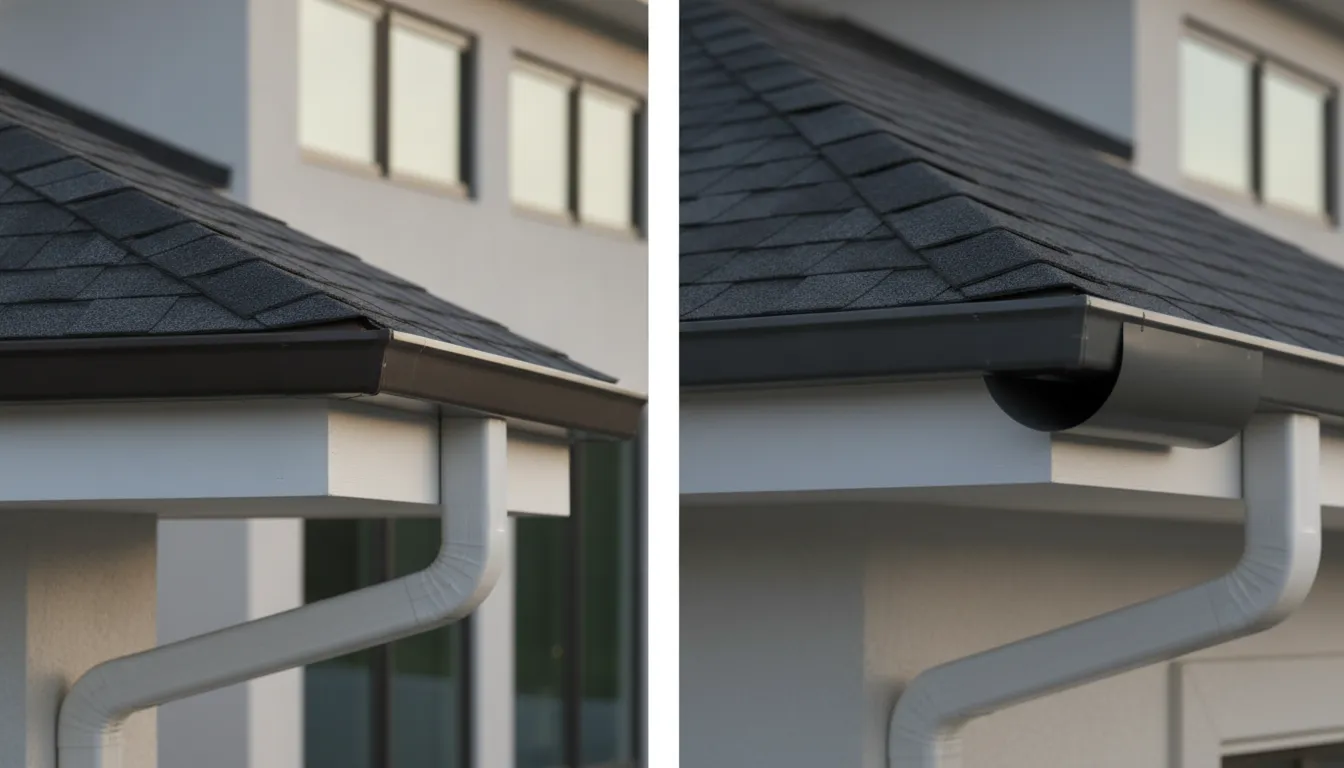
Peeling paint below the roofline, stained siding, or water running behind a gutter can all point to a roof-edge drainage issue. But the cause isn’t always obvious. The flashing may be missing or poorly positioned, or the gutter could be clogged, sagging, or out of alignment. Knowing the difference between drip edge and gutter apron gives you a useful starting point when discussing the problem with a contractor. This guide covers what each component does, where it typically sits, and how it fits into the larger drainage system. You’ll also find practical maintenance tips and signs that call for a closer inspection.
Key Takeaways
- Match flashing to its purpose: Drip edge protects roof edges; a gutter apron helps direct runoff into gutters. Roof design and gutter position determine what fits.
- Check the whole water route: Keep gutters and downspouts clear and aligned so rainwater flows away from your home and foundation.
- Watch for signs of trouble: Water behind gutters, stains, peeling paint, or soft fascia warrant a professional inspection of the roof edge and drainage system.
What Is a Drip Edge?
See its profile and purpose
A drip edge is a strip of metal flashing installed along a roof’s perimeter. Its bent shape helps guide rainwater off the roof and toward a gutter or away from the home. Many drip edges have a projecting lip and a shorter flange, creating a profile that looks roughly like a “T” from the side. Exact shapes vary by product, and the names used for roof-edge flashing can differ between manufacturers and contractors. A drip edge profile can help distinguish it from a gutter apron, which generally has a wider section that reaches into the gutter. Both are designed to manage water at vulnerable roof edges.
Protect roof edges, fascia, and decking
Rainwater can damage roof materials when it slips beneath shingles or runs behind a gutter. Drip edge helps direct water away from the roof edge and fascia, reducing the chance that moisture will reach the wood beneath the roofing. It also gives runoff a defined path toward the gutter or off the roof. As United Renewals explains, drip edge protects the fascia and roof edge by guiding water away from these surfaces. It is one part of a working drainage system, however. Gutters and downspouts must also be clear and properly positioned to carry water away from the home.
Find it at eaves and rakes
Drip edge is commonly installed along roof rakes, the sloped edges at the gable ends. It may also be used along eaves, the lower edges of the roof, depending on the roof design and whether gutters are installed. The flashing’s location and installation sequence depend on the roofing materials and the roof assembly, so configurations can vary from one home to another. Roof-edge guidance notes that drip edge is often found at rakes and may be installed at eaves without gutters. If you see water running behind a gutter or signs of damaged fascia, have a professional inspect the roof-to-gutter connection. TX Gutter Solutions offers gutter and drainage services for Central Texas property owners.
What Is a Gutter Apron?
A gutter apron is roof-edge flashing that helps guide rainwater from the roof into the gutter. It connects the roof edge with the gutter opening, helping keep runoff on the right path.
See its wider profile and path into gutters
A gutter apron has a lower flange that extends toward or into the gutter. Compared with many standard drip-edge profiles, that flange reaches farther over the gutter’s back edge, giving runoff a direct route into the channel. The exact shape and dimensions vary by product, so check the flashing profile rather than relying on its name alone.
This extended profile can help direct water into the gutter when there is a small gap between the roof edge and the gutter. It is designed to work at the roof-to-gutter connection, while other roof-edge flashing may simply direct water away from the roof edge. See this comparison of gutter aprons and drip edges for examples of how their profiles differ.
Keep runoff from slipping behind gutters
When water misses the gutter, it can run down the fascia or collect behind the gutter. Repeated exposure to moisture may damage painted surfaces, fascia boards, or nearby roof decking. A gutter apron helps bridge the connection between the roof and gutter, directing runoff into the channel instead of behind it. Roof-edge flashing can help reduce water flow behind gutters.
An apron is only one part of an effective drainage system. Clogged gutters, poor slope, loose hangers, or blocked downspouts can still cause overflow. Keep the full route clear so water can flow from the roof through the gutters and away from the home.
Find it along eaves with gutters
Gutter aprons are generally installed along the eaves, the lower edges of a sloped roof where gutters are attached. The upper part sits beneath the roofing material, while the lower flange extends toward the gutter to help guide runoff into it. The precise placement depends on the roof assembly and the flashing product.
Roof design, existing materials, and gutter position all affect which setup fits. When planning a roof or gutter project, have the roof-to-gutter connection assessed as part of the drainage system. TX Gutter Solutions provides gutter and drainage services for homes across Central Texas.
How Do Drip Edges and Gutter Aprons Differ?
Compare profiles, placement, and water paths
Both drip edges and gutter aprons are metal flashing, but their shapes and placement differ. A drip edge usually has a compact, angled profile, sometimes described as T-shaped. It’s commonly installed along the sloped rake edges of a roof and may also be used at the eaves. A gutter apron generally has a wider, L-shaped profile. It sits beneath the shingles and extends into the gutter, guiding rainwater into the channel.
The names and profiles can vary by product, so appearance alone may not tell the whole story. What matters is where each piece sits and how it directs water. This comparison of drip edge and gutter apron profiles offers a useful overview.
Understand their distinct protective roles
A drip edge helps move water away from the roof edge and fascia, reducing the amount of moisture that reaches exposed wood. Depending on where it’s installed, it may direct runoff into a gutter or away from the roof. A gutter apron has a more specific role: it carries water over the back edge of the gutter and into the channel.
That connection can help prevent water from running behind the gutter, where it may damage fascia or stain siding. Both components work as part of a larger drainage system, so they can’t compensate for clogged gutters, poor gutter alignment, or blocked downspouts. Learn how each flashing type manages runoff to understand why the roof-to-gutter connection matters.
Account for varying names and shapes
Roofing terms aren’t always used consistently. A contractor may describe flashing by its shape, function, or product name, and similar products can differ in width and bends. If you’re discussing a repair or installation, ask which component is being used and where it will sit in relation to the shingles, fascia, and gutter.
Some roofs use both: drip edge along the rake edges and a gutter apron along eaves with gutters. The appropriate setup depends on the roof assembly, existing flashing, gutter position, and product instructions. When planning a project, ask the installer to explain how the pieces will direct water into the drainage system. TX Gutter Solutions offers gutter and drainage services for homeowners looking to address roof runoff and protect their property.
Where Do Drip Edges and Gutter Aprons Go?
Position them at roof edges and roof-to-gutter connections
A drip edge runs along the roof perimeter, usually at the eaves and rakes. The eaves are the lower edges of the roof; the rakes are the sloped edges at the ends. Drip edge flashing guides water away from the roof decking and fascia. A gutter apron is installed along eaves with gutters. It tucks beneath the roofing material and extends over the gutter’s back edge, helping direct runoff into the channel instead of behind it.
Their placement reflects their roles: drip edge protects roof edges, while a gutter apron helps manage the roof-to-gutter connection. See how these pieces fit into a wider water-management plan by exploring TX Gutter Solutions’ gutter and drainage services.
Follow roof assembly and product instructions
Flashing placement depends on the roof’s design and materials. Drip edge sections are installed in overlapping pieces, with rake sections typically laid from the bottom upward. At the eaves, the flashing must work with the shingles, underlayment, and gutter to create a clear path for water. A gutter apron should tuck beneath the roofing material and extend over the gutter so runoff enters the channel.
Installation details can vary, so follow the instructions for the specific product and roof assembly. The roofing installation guidance also recommends overlapping sections and following manufacturer directions to help prevent water from getting through the joints.
Check local code and direct water into gutters
Local building codes may specify when roof-edge flashing is required and how it must be installed. Check the rules for your area before starting a roof or gutter project. A qualified professional can help determine which components suit your roof and how they should fit together.
The goal is a continuous route from the roof into the gutter. Flashing that stops short, sits out of position, or leaves gaps can allow water to reach the fascia or siding. Make sure the gutter lines up to catch runoff, then check that downspouts carry water away from the home. Proper placement helps the whole drainage system do its job.
When Should You Use a Drip Edge, Gutter Apron, or Both?
Choose roof-edge flashing based on the roof design, gutter position, and path water needs to follow. A standard drip edge may work well in some locations, while a gutter apron can help direct runoff into gutters and protect the fascia. Some roof systems use both in different areas. Check the manufacturer’s instructions and local requirements, and have a qualified professional assess the connection if you’re unsure which setup fits.
Choose drip edge when it fits
A standard drip edge is often enough when its shape directs water off the roof and into the gutter without leaving a gap behind it. It can also protect exposed roof decking along roof edges without gutters, such as rakes, where wind-driven rain may reach the roof assembly. The key is how the flashing fits with the roof and gutter, not just what it’s called. If water misses the gutter or runs behind it, another profile may be a better fit. Compare drip edge and gutter apron profiles to understand how their shapes affect water flow.
Use a gutter apron to help protect fascia
Consider a gutter apron when the connection between the roof edge and gutter makes it difficult for a standard drip edge to direct runoff into the gutter. A gutter apron extends farther into the gutter, helping guide water away from the fascia rather than letting it run behind the gutter. Water stains, peeling paint, or deteriorating fascia can be signs that runoff is reaching the wood. A gutter apron must still fit the roof and gutter correctly, and it won’t solve problems caused by clogged gutters or poor drainage. If you notice signs of water damage, have the roof-to-gutter connection inspected.
Assess both during roof replacement or gutter installation
Roof replacement or new gutter installation is a good time to assess the entire roof edge. Depending on the roof design, drip edge may be used in some areas and gutter apron along eaves with gutters. Ask your contractor to explain where each component will go and how the flashing layers will direct water. The assessment should include fascia condition, gutter alignment, and the route water takes through downspouts and away from your home. TX Gutter Solutions provides gutter services tailored to properties across its service areas. Discussing the roof-to-gutter connection before work begins can help ensure the new components fit together.
Pair compatible components without blocking drainage
Using both components can make sense when each has a clear purpose, but they need to work together as part of the roof assembly. Drip edge can protect roof edges without gutters, while a gutter apron can direct runoff into gutters along eaves. Follow the product instructions for placement, overlap, and fastening, and keep the water path clear so runoff flows into the gutter rather than behind it. Avoid adding flashing layers or sealant without confirming they suit the roof materials and design. If you’re unsure whether the parts are compatible, ask a qualified professional to inspect the connection and recommend a setup for your property.
How Should You Install Drip Edge and Gutter Apron?
Drip edge and gutter apron need to work with the roof covering, underlayment, fascia, and gutter. The right placement depends on the roof assembly and the flashing product, so there isn’t one installation sequence for every home. The goal is a clear, continuous path that carries water into the gutter without letting it run behind the gutter or along the fascia.
Follow the roof assembly’s installation sequence
Roof-edge flashing must fit correctly with the shingles, underlayment, and roof deck. The installation order can vary by roof edge, product, and local code, so follow the instructions for the specific roofing and flashing materials rather than assuming one sequence works everywhere. A mismatch between layers can leave gaps or direct water beneath the roof covering.
Before installation, check the condition of the roof edge and fascia, and identify any existing flashing that needs to be removed or replaced. When roof work is already planned, coordinate the flashing with the full assembly. A roofing professional can help assess the installation and identify damage that should be addressed before new materials cover it.
Extend flashing into gutters and keep water paths clear
A gutter apron has a longer lower flange than many standard drip edges. That profile is designed to carry runoff farther into the gutter, which can help when there is a small gap between the roof edge and the gutter. The flashing should direct water into the channel without blocking it or leaving a path for runoff to travel behind the gutter. See how a gutter apron guides water into the gutter.
The gutter must also be positioned to catch roof runoff and carry it toward the downspout. Flashing cannot correct a gutter that is out of alignment, sagging, or clogged with debris. After installation, check that water can move freely through the gutter and downspout, rather than pooling at the roof edge or spilling against the fascia.
Overlap and fasten sections as the manufacturer specifies
Flashing is installed in sections, so joints should be arranged to shed water instead of allowing it to seep between pieces. Installers generally overlap adjoining sections and keep seams to a minimum where practical. At roof rakes, drip edge is commonly installed from the bottom upward, with upper sections overlapping lower ones. The product instructions and applicable building codes determine the required overlap and fastening method. Review common drip-edge installation guidance.
Fasteners need to hold the flashing securely without bending or distorting it. Sealant should not replace correct overlap and fastening. If a section shifts, buckles, or leaves an exposed gap, water may get beneath the roof covering. Because fastening requirements vary by product and roof assembly, use the manufacturer’s specifications rather than relying on a general rule.
Avoid poor fit, incorrect fastening, incompatible metals, and excess sealant
Flashing can look neat and still fail to direct water properly. A poor fit may leave gaps at the roof edge, while misplaced or unsuitable fasteners can loosen or create openings. Metals that are not compatible can also corrode when they touch, so check the product guidance before pairing flashing with existing roof or gutter materials.
Avoid using excess sealant to compensate for a gap or incorrect installation. It can interfere with the intended drainage path and may not hold up as a substitute for properly fitted flashing. Requirements also vary by location and roof type, so check applicable building codes. For unusual roof angles, multiple layers, or signs of water damage, ask a qualified professional to inspect the connection before the flashing is covered.
Hire a qualified professional for complex roof edges and repairs
Roof-edge work can involve both fall hazards and hidden damage. Consider hiring a qualified professional if the roof has steep slopes, multiple levels, valleys, or difficult-to-reach edges. Soft or discolored fascia, water stains, and recurring leaks can indicate damage that new flashing alone will not resolve.
A professional can assess how the roof, flashing, and gutter fit together, and recommend repairs before the drainage system is put back into service. If your project also includes gutter installation, repair, or drainage work, TX Gutter Solutions provides gutter and exterior water-management services in Central Texas and the Dallas–Fort Worth area. For complex roof repairs, consult a qualified roofing contractor.
What Damage Can Poor Roof-Edge Protection Cause?
Roof-edge flashing helps guide rainwater from the roof into the gutter. If it is missing, damaged, or poorly fitted, water can escape the intended path and reach roof materials, siding, or the ground around your home. The damage may not be obvious at first, so watch for stains, peeling paint, soft wood, or pooling water after rain.
Water behind gutters can damage fascia and roof decking
When water repeatedly slips behind a gutter, it can soak the fascia board, the trim that runs along the roof edge. Over time, the wood may soften or rot. That can weaken the points where gutter hangers attach, causing the gutter to sag or pull away. If moisture reaches the roof decking near the eaves, it may also damage the wood beneath the shingles. Peeling paint, discoloration, soft spots, and loose gutters are signs worth checking. A roofing professional can inspect the flashing and look for damage behind it.
Gaps can expose roof edges to wind-driven rain
The flashing needs to connect the roof edge to the gutter in a way that directs water into the channel. If it falls short or does not fit the roof and gutter properly, runoff can travel behind the gutter. Wind-driven rain may push water into the same gap, leaving fascia and roof materials exposed. Water marks beneath the eaves or dampness behind the gutter after a storm can signal a problem. A gutter apron may help direct runoff into the gutter, but the right configuration depends on the roof assembly and how its components meet.
Uncontrolled runoff can stain siding and collect near foundations
Water that misses the gutter can leave streaks on siding, splash soil, and collect near the foundation. Repeated pooling may contribute to drainage problems, particularly if the ground slopes toward the house or downspouts release water close to it. Runoff can also wash away mulch and soil, disturbing landscaping around the home. After rainfall, look for muddy patches, erosion, water stains, or areas that stay damp. These signs may point to an issue with flashing, gutter alignment, or the broader drainage path. A gutter and drainage assessment can help identify where water is escaping and how to direct it away from the property.
Remember: flashing can’t fix clogged gutters, ice dams, or faulty downspouts
Roof-edge flashing is one part of a larger water-management system. Leaves and debris can block gutters and cause overflow, even when the flashing is properly installed. A disconnected or poorly positioned downspout can also release water too close to the foundation. In areas and conditions where ice dams form, backed-up water may get beneath shingles or behind fascia, which flashing alone may not resolve. If water overflows or pools, check the full route from the roof to the ground. Gutter cleaning and maintenance help keep water moving; persistent leaks, ice dams, or drainage concerns warrant a professional inspection.
How Can You Maintain Roof-Edge Flashing?
Check for gaps, movement, rust, or stains from the ground
From the ground, look for flashing that appears loose, bent, separated, or rusty. Dark streaks on the fascia or siding may also indicate that water is escaping near the roof and gutter. Use binoculars for a closer look, and avoid climbing onto the roof or a ladder to inspect flashing yourself.
Check again after heavy rain or strong winds, when movement or water stains may be easier to spot. Water that gets behind a gutter can soak the fascia and lead to rot over time, as United Renewals explains. If you notice a change, note where it is and arrange a closer inspection.
Clear gutters and downspouts to keep water flowing
Flashing helps direct runoff toward the gutter, but debris can block the drainage path. Leaves, seed pods, and roof grit may collect in gutters and downspouts, particularly after storms or seasonal leaf fall. When water cannot flow freely, it may spill over the gutter or pool near the roof edge.
Clean gutters regularly, or arrange professional cleaning if they are difficult to reach safely. Check that downspouts carry water away from the home instead of releasing it beside the foundation. Thumbtack’s guide to gutter aprons and drip edges explains that clogged gutters can overflow and contribute to fascia or foundation damage. For help with cleaning and drainage, explore gutter services from TX Gutter Solutions.
Watch for sagging gutters, peeling paint, or decaying fascia
Look for gutters that sag, pull away from the roofline, or hold standing water. Peeling paint, darkened or soft fascia, and visible wood decay can also signal a moisture problem, especially near the roof-to-gutter connection.
These signs do not confirm a flashing issue, but they can point to ongoing water exposure or weakened gutter supports. Damaged fascia may weaken the points where gutter hangers attach, which can contribute to sagging or separation. United Renewals describes how fascia damage can affect gutter support. Note what you see and have the roof edge and gutter attachment checked before the damage worsens.
Call a professional if water runs behind gutters or leaks appear
If water runs behind a gutter during rain, arrange a professional inspection. The flashing may not extend into the gutter correctly, may have shifted, or may be missing where it is needed. Leaks, recurring damp patches, and water stains near the eaves also warrant attention because the source may be hidden beneath roofing materials.
Avoid lifting shingles or repositioning flashing yourself. Roof-edge components overlap, and moving one piece without checking the surrounding parts can create new gaps or redirect water. Thumbtack recommends checking the roof edge when water runs behind gutters. A qualified professional can assess the flashing, gutter alignment, and drainage path together. TX Gutter Solutions provides gutter inspections and related services across its service areas.
How Do You Choose the Right Roof-Edge Setup?
Assess roof design, gutter alignment, and the full drainage path
Start by tracing how water should travel from your roof to the ground. The right roof-edge setup depends on the roof shape, where gutters sit, and how downspouts move water away from your home. Drip edge may work along some roof edges, while a gutter apron can help guide runoff into gutters along the eaves. Some homes use both, with drip edge along the rakes and gutter apron where gutters attach. This approach can protect different roof edges while directing water into the drainage system, as roofing specialists explain.
Then check where downspouts release water. The full system should carry runoff away from your foundation and landscaping, not leave it pooling beside the house.
Look for water intrusion or runoff problems
Notice where water goes during rain. If it runs behind the gutters, the roof-to-gutter connection may have a gap. Standard drip edge does not always prevent this, while a gutter apron’s longer flange may help direct runoff into the gutter. The right fix depends on the roof assembly and existing installation, so compare how these components work before deciding.
From the ground, look for peeling paint, stains below the roofline, or signs of deteriorating fascia. These clues can point to a drainage issue, but they may also come from clogged gutters, loose joints, or downspouts that are not carrying water away. Note where and when you see runoff, then have the roof edge and drainage system checked together.
Ask a qualified professional to assess the roof-to-gutter connection and local requirements
Roof-edge flashing must fit the roofing material, gutter position, and installation sequence. A qualified roofing or gutter professional can inspect how water moves from the roof into the gutters, check for gaps, and recommend compatible components. They can also review manufacturer instructions and local requirements, which may affect the materials and installation details. Quality Exteriors recommends a professional assessment when choosing between drip edge and gutter apron.
Before work begins, ask what the proposed setup will address and how it will connect to your gutters and downspouts. For help assessing your home’s water-management system, review TX Gutter Solutions’ services.
Frequently Asked Questions
Is a drip edge the same as a gutter apron?
No. Both are metal flashing, but they have different profiles and roles. A drip edge protects roof edges by guiding water away from the fascia, while a gutter apron extends toward the gutter to help carry runoff into the channel. Product names can vary, so check the flashing’s shape and placement.
Can a roof use both a drip edge and a gutter apron?
Yes. Some roofs use drip edge along sloped rake edges and a gutter apron along eaves where gutters are attached. The right combination depends on the roof assembly, gutter position, product instructions, and local requirements.
Why is water running behind my gutters?
Possible causes include flashing that is missing or out of position, a gap between the roof and gutter, clogged gutters, or poor gutter alignment. A professional can inspect the roof-to-gutter connection and the rest of the drainage system to find the source.
How can I tell if roof-edge flashing needs attention?
From the ground, look for water stains, peeling paint, rust, or flashing that appears bent or loose. Sagging gutters and soft or discolored fascia may also point to ongoing moisture. Avoid climbing onto the roof to check; arrange an inspection if you notice these signs.
Should a roofer or gutter professional install roof-edge flashing?
The right professional depends on the work involved. Roof-edge flashing needs to fit the roofing materials and connect properly with the gutters, so ask whether the installer has experience with your roof assembly. For gutter or drainage concerns in Central Texas or the Dallas–Fort Worth area, TX Gutter Solutions offers gutter and drainage services.