
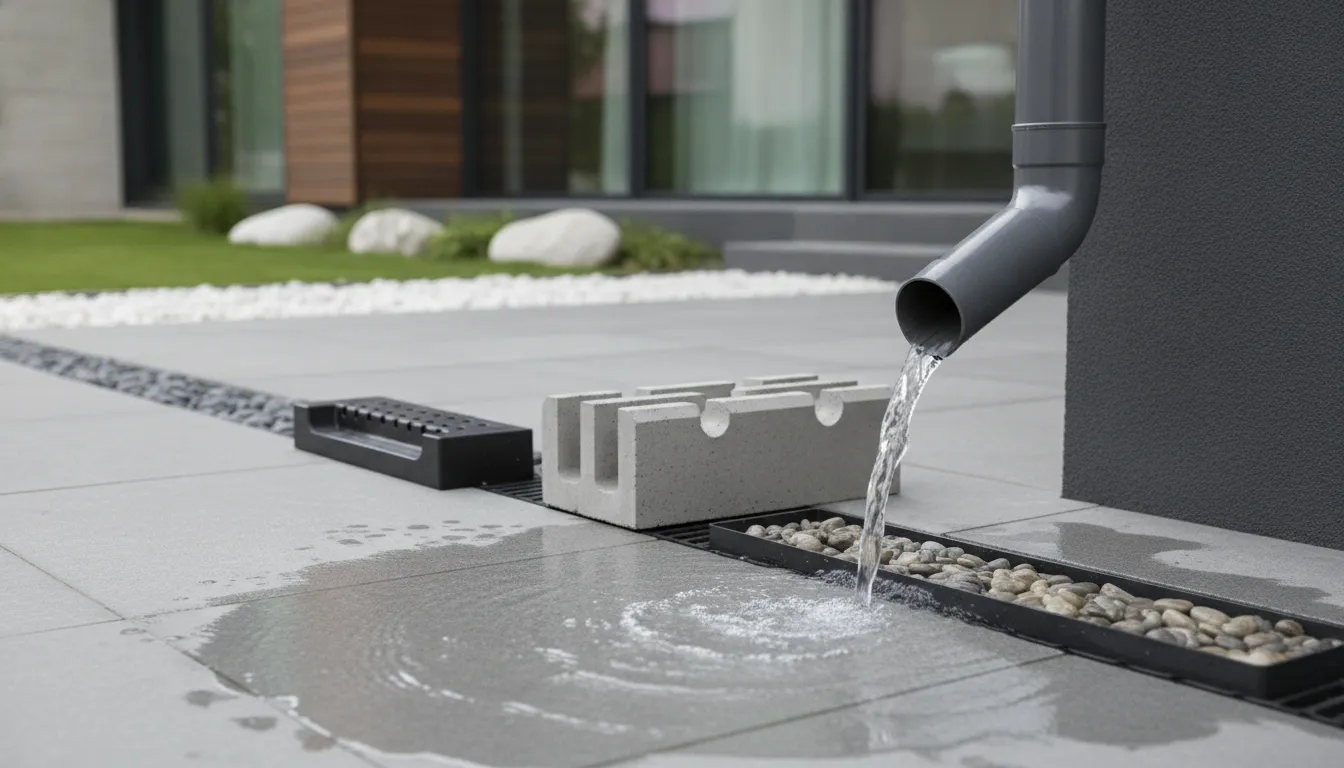
Standing water beside your home after a storm is worth paying attention to. A splash block may help direct downspout runoff away from the foundation, but the right choice depends on your property. The best splash block for downspouts is one that suits the volume of water, fits securely beneath the outlet, and leads runoff toward a safe drainage area. A lightweight plastic block may be easy to move, while a heavier concrete option may stay put more reliably. We’ll cover the key differences, installation and maintenance tips, and situations where a splash block alone may not be enough to manage water around your home.
Key Takeaways
- Choose a splash block that suits the site: Check the downspout size, runoff volume, block material, and ground slope before buying.
- Keep runoff on a clear path away from the house: Position the block correctly, clear debris, and inspect it after heavy rain for shifting, pooling, or erosion.
- Consider a larger drainage fix if problems persist: A downspout extension or other drainage solution may help when water still collects near the foundation. TX Gutter Solutions offers free estimates in Austin, San Antonio, Dallas, and surrounding areas.
What Is the Best Splash Block for Downspouts?
The best splash block is one that fits your downspout, handles the runoff from your roof, and sends water along a safe path away from your home. The right choice depends on the soil, slope, and available drainage route around your foundation.
Choose based on runoff, soil, slope, and drainage path
Watch where water flows from the downspout during a rainstorm. A splash block should catch the runoff and guide it away from the foundation, rather than letting it pool at the base of the house. As LeafFilter explains, directing water away can help reduce pooling and soil erosion near the home.
Consider how much water the roof sends through that downspout, along with the condition of the ground. Loose soil may erode more easily, while a sloped yard can help move water farther away. Make sure the block’s channel follows the slope and does not send runoff toward a walkway, a neighbor’s property, or another low spot. If the ground is flat or slopes toward the house, a splash block may not be enough. Explore downspout and drainage options if water has no clear route away.
Know what splash blocks can—and can’t—do
A splash block is a surface-level guide for water, not a complete drainage system. It directs runoff away from the downspout outlet and can help limit splashing and erosion near the foundation. For the block to work, water needs a clear path to flow away from the home.
A splash block cannot fix clogged gutters, a blocked drainage route, or ground that slopes toward the house. During heavy rain, water may run over the sides or collect nearby if the yard cannot carry it away. Concrete blocks are heavier and tend to stay in place, while lighter options may shift. Leafguard’s guide to splash blocks describes concrete as a stable, durable choice. If pooling or erosion continues, check the whole gutter and drainage setup instead of relying on the block alone.
What Features Should You Compare?
A splash block should fit your downspout and guide runoff toward a safe drainage area. Before you buy, check the outlet opening, block dimensions, channel shape, material, and weight. Also consider the ground around the downspout: a block may help move water away from the foundation, but it cannot fix a slope that carries water back toward the house or prevent pooling where there is no clear drainage path.
Think about what happens to water after it leaves the block. It should not flow onto a walkway, toward a neighbor’s property, or into a low spot beside the home. As LeafFilter explains, splash blocks direct water from downspouts away from the foundation as part of a gutter system. They work best when the block fits the outlet and the surrounding ground carries water onward.
If the area regularly holds standing water or shows signs of erosion, a splash block may not be enough. TX Gutter Solutions provides downspout and drainage services for homeowners who need to address persistent runoff concerns. Use the points below to compare blocks and decide whether a simple surface solution suits your property.
Match the outlet opening and block size to your downspout
Measure the downspout outlet before choosing a splash block. Its opening should sit beneath the outlet and catch the water without gaps that let runoff spill onto the soil. Check the block’s width, too. A narrow channel may not contain a strong flow, while a larger block may be difficult to fit in a tight space.
Consider how much roof area drains through that downspout. A high volume of runoff may need a wider or sturdier design than a small outlet serving a limited section of roof. Check product dimensions and placement instructions, and make sure the block can sit flat beneath the downspout. If the outlet is an unusual size or the runoff is substantial, ask a gutter professional to confirm the fit before purchasing.
Choose a length and channel shape that suit water flow and available space
The block should carry water far enough from the house to reach ground that drains safely. Measure the space between the downspout and nearby features, including walkways, planting beds, fences, and property lines. A block that points runoff toward a path or another low spot could create a new problem.
Channel shape influences where water goes. A narrow, straight channel directs runoff along one line, while a broader design spreads it over a wider area. Choose according to the slope and available space, not appearance alone. Ned Stevens’ guide to splash blocks describes both broad designs and narrower channels. Whichever style you choose, check that its outlet leads to a clear route away from the foundation.
Compare stability, weather resistance, appearance, and upkeep
A splash block needs to stay in place during heavy rain. Weight and contact with the ground affect stability: concrete is typically heavier than plastic, while plastic is easier to lift and reposition. Metal can also be sturdy, but check its finish and corrosion resistance before placing it where it will be exposed to regular moisture.
Think about upkeep and appearance as well. Leaves, mulch, and soil can collect in channels, so choose a design you can keep clear. Decorative options may suit a visible spot, while a simple block may be easier to maintain. Leafguard’s overview of concrete splash blocks notes their stability and low maintenance needs. Whatever material you select, inspect it periodically for wear and make sure it has not shifted out of position.
Make sure the block directs water away without causing pooling or erosion
Trace the runoff path from the downspout to its endpoint. The block should carry water away from the foundation without sending it toward a basement entrance, walkway, or neighboring property. If the ground slopes toward the house, a splash block alone may not redirect water effectively. The area may need grading changes or a longer drainage solution.
After heavy rain, look for standing water, muddy patches, exposed roots, or a small channel forming in the soil. These signs may mean the block is too short, poorly positioned, or not suited to the volume of runoff. Adjusting the block may help, but persistent pooling or erosion calls for a closer look at the full drainage path. My Gutter Doctor’s guidance recommends orienting splash blocks so water flows away from the home.
Which Splash Block Material Lasts Longest?
Concrete generally lasts longest because its weight helps it stay in place through heavy runoff, wind, and routine yard work. Still, the right choice depends on where the downspout empties, how much water it carries, and whether the splash block could be hit by a mower or other equipment. Plastic is lightweight and easy to install, while metal can offer lasting performance when its finish protects against corrosion.
Think about the conditions around the block, not just the material. A well-made product can wear out sooner if it sits in standing water, receives frequent impacts, or directs runoff across soil that erodes easily. Check the product’s dimensions, construction, care instructions, and warranty, and make sure its channel sends water along a clear route away from the foundation.
Plastic: lightweight and affordable, but prone to shifting, fading, or cracking
Plastic splash blocks are often affordable, easy to carry, and simple to position beneath a downspout. They can work well where runoff is modest and the ground is fairly level. Their light weight also makes them convenient to move when you need to mow or adjust the drainage path.
That same lightness can make plastic blocks more likely to shift during heavy rain or when struck by lawn equipment. Sun exposure may fade some products, and impacts or temperature changes can contribute to cracking over time. Plastic products vary in thickness and construction, so check specifications and customer reviews before choosing one. Ernest Maier’s guide to splash block materials outlines the benefits of plastic, including its low weight and ease of handling.
Concrete: heavy and stable, but can chip or crack from impacts or weather
Concrete is a strong option if you want a splash block that stays securely in place. Its weight helps resist movement from rushing water and wind, and it typically needs little maintenance beyond occasional debris removal. That stability can make concrete a practical choice beneath downspouts that handle frequent runoff.
Concrete can still chip or crack if a heavy object strikes it or weather conditions cause repeated stress. Check the block after severe weather or nearby landscaping work, and replace it if damage affects how it channels water. Nitterhouse Masonry’s comparison of concrete and plastic splash blocks highlights concrete’s advantage in durability and stability.
Metal: sturdy, with lifespan depending on its finish and corrosion resistance
Metal splash blocks can provide a sturdy alternative to concrete without the same bulk. Aluminum and galvanized steel are common materials, but a block’s lifespan depends on its construction and protection from rust and corrosion. Look for a product designed for outdoor use, and check whether its finish is intended to withstand regular exposure to rain and soil.
Inspect the surface occasionally for scratches, worn coating, or signs of corrosion. Damage to the finish can leave the metal more exposed to moisture, which may shorten its useful life. The location matters, too: frequent contact with standing water or lawn chemicals can affect some finishes. Ernest Maier’s material guide describes metal options and the importance of weather and corrosion resistance.
Compare weight, impact resistance, upkeep, and expected lifespan
For a block that stays put with little repositioning, concrete is usually the best bet, as long as the location is not prone to impacts that could cause cracks. Metal can also be durable when its finish is intact and suited to outdoor conditions. Plastic is easier to handle and replace, but it may shift more readily and can be vulnerable to fading or cracking.
Before buying, compare weight, dimensions, construction, finish, warranty, and care instructions. Consider how much runoff the downspout carries and whether the block is near a walkway or frequently used lawn area. Lifespan varies by product and conditions, so review specifications and customer feedback rather than relying on a fixed estimate. If water continues to pool or erode soil, a splash block may not provide enough reach. TX Gutter Solutions can assess downspout and drainage options for persistent drainage concerns.
Which Splash Block Designs and Products Are Worth Comparing?
Compare open channels with decorative and river-gravel designs
Open-channel splash blocks provide a clear route for water to travel from the downspout across the ground. Their simple shape also makes it easier to spot and remove leaves, mulch, and soil that could interrupt runoff. Decorative blocks can blend into a garden or complement a home’s exterior, while river-gravel designs offer a more natural look around planting beds. Splash blocks come in a range of materials and styles, so compare more than appearance before choosing one.
Check the channel’s width and slope, and confirm that its outlet sends water toward a safe drainage area. If you like a gravel finish, consider whether stones or debris could collect and block the flow. Choose a design that suits your landscaping without making the water path harder to maintain.
Consider Design Toscano Gutter Guardian and concrete options from Nitterhouse Masonry or Ernest Maier
For a decorative option, compare the Design Toscano Gutter Guardian with basic plastic and concrete models. Focus on how its shape handles runoff, where the outlet sends water, and whether the design will sit securely on your soil. A decorative block still needs to move water away from the foundation.
Concrete options from suppliers such as Nitterhouse Masonry and Ernest Maier are worth comparing if you want a heavier block that is less likely to shift. Concrete can chip or crack after an impact, so review the product details and consider the conditions around the downspout. Check the weight, dimensions, finish, and whether you can reposition it if your landscaping changes.
Check dimensions, materials, reviews, warranties, availability, and return policies
Measure the downspout outlet and the space beneath it before you shop. Compare the block’s opening, length, width, and channel depth with those measurements. A block that is too narrow or short may allow water to spill over, while a larger model could interfere with a walkway, garden bed, or other feature.
Next, review the material, weight, and customer feedback. Look for comments about stability, wear, and how well the block directs water. Material affects a splash block’s performance, so compare durability and upkeep alongside price. Before ordering, confirm availability, warranty coverage, shipping charges, and return terms. If water still pools or erodes soil after installation, the drainage route may need attention. TX Gutter Solutions can assess downspout and drainage options for persistent runoff concerns.
How Do You Install a Splash Block Correctly?
A splash block needs more than a spot beneath the downspout: it needs a clear route for runoff to travel away from your home. Before placing one, check the ground’s slope and where water will flow after it leaves the block. Once it’s installed, observe the area during a rainstorm and adjust the setup if water pools or runs back toward the house.
Place it beneath the downspout with the channel facing away from the home
Set the splash block directly beneath the downspout outlet, with the channel pointing away from your home. The outlet should sit over the channel so water flows onto the block instead of washing out the soil beside it. Check that the open end is lower than the end beneath the downspout. If it sits higher, water may drain back toward the foundation.
Before you finish, check that the block is aligned and sitting flat. My Gutter Doctor’s guide to splash block direction explains how positioning affects the path of runoff.
Set it on stable ground that slopes continuously away from the foundation
Place the block on firm, even ground so it won’t rock or shift as water passes through. The soil around it should slope gently and continuously away from the foundation. If the ground dips or rises just beyond the block, runoff may collect there rather than drain away.
Remove loose soil, mulch, and debris, then check how water moves across the area during rain. A small block may not handle the volume from a large roof section, especially during a heavy storm. AquaBarrel’s installation guide also recommends stable placement and a suitable slope.
Keep the path clear of walkways, neighboring properties, and erosion-prone areas
Trace the water’s route from the splash block to where it will settle or drain. Direct runoff away from walkways, neighboring properties, bare soil, and slopes where flowing water could wash away soil. Also check that water won’t collect near garden beds or other areas you want to keep dry.
If your yard has no safe surface route, a splash block may not carry water far enough. A downspout extension or another drainage option may be more suitable. TX Gutter Solutions provides downspout and drainage services for properties with persistent pooling, erosion, or runoff near the foundation.
How Should You Maintain a Splash Block?
A splash block works best when it stays clear, stable, and angled to carry water away from your home. Check it regularly, and take a closer look after heavy rain or landscaping changes.
Clear leaves, mulch, soil, and debris from the channel
Leaves, mulch, dirt, and twigs can collect in the channel and slow runoff. Check the block often, especially during leaf fall and after windy weather. Remove debris by hand or with a small garden tool, then rinse away loose soil with a hose.
Look at the outlet, too. Soil or mulch piled around the end can trap water and cause it to spill over the sides. Keep the route from the downspout to the block’s outlet clear so rainwater can flow through without obstruction. Regular splash block maintenance can help prevent blockages and reduce wear.
Check after heavy rain and reposition shifted blocks
After a heavy storm, check whether water flowed along the block and away from the house. Look for runoff spilling over the sides, pooling near the foundation, or cutting a channel through the soil. If the block has shifted, place it back beneath the downspout with its open end pointing away from the home.
Lightweight plastic blocks can move during storms, especially if the ground beneath them is uneven. If yours shifts often, check that it sits securely and that the surrounding soil supports it. Inspecting and repositioning splash blocks after storms helps keep water on its intended route.
Inspect concrete for chips or cracks and replace damaged blocks
Check concrete blocks for cracks, chips, or broken edges. Damage can affect how well the block directs water. Replace it if a crack runs through the block, a piece has broken away, or runoff escapes through a damaged section. Small surface marks may not affect performance, but keep an eye on them.
Concrete blocks are heavy, but impacts, weather, and ground movement can still cause damage. Plastic blocks can crack or become brittle over time, too. When replacing a block, confirm that its dimensions fit the downspout and the available drainage space. Visible cracks and other damage can signal that a block needs replacement.
Recheck the slope and drainage path as landscaping or soil levels change
Changes to soil, mulch, edging, or garden beds can alter the slope around a splash block. Check that the block sits securely, with its outlet end lower than the end beneath the downspout. If it tilts back toward the house, water may flow toward the foundation instead. Checking the block’s direction and slope after landscaping work can help keep runoff moving away.
During the next rain, watch where the water goes. If it collects in a low spot, erodes soil, or flows toward a walkway or neighboring property, the route may need attention. Persistent pooling or erosion may call for a longer-term fix. TX Gutter Solutions offers downspout and drainage services for properties that need help directing runoff.
What Splash Block Problems Should You Watch For?
A splash block should move rainwater away from your downspout and foundation. If water keeps collecting nearby, spilling over the block, or washing soil away, check for a blockage, poor fit, or an inadequate drainage path. Inspect the area during or after rain to see where runoff travels.
Pooling, overflow, or erosion may signal a poor fit, blockage, or inadequate drainage path
Watch how water moves along the block during a rainstorm. If it pools near the foundation, spills over the sides, or cuts a channel through the soil, the block may be too short or poorly positioned. Leaves, mulch, and sediment can also obstruct the channel and slow runoff. Clear away debris, then check whether the ground carries water away from the house.
A splash block helps direct water from a downspout, but it cannot fix every grading or drainage problem. If runoff still collects by the foundation after you clear the channel, the ground may need attention or the water may need a longer route. Learn how splash blocks guide downspout runoff and what they are designed to do.
Lightweight blocks can shift in storms; damage or poor slope can direct water toward the house
After heavy rain, check that the splash block is still aligned beneath the downspout and points away from your home. Lightweight plastic blocks can shift during storms, leaving water to spill onto nearby soil or flow back toward the foundation. Plastic splash blocks can move, so check their position regularly, especially after strong weather.
Look for cracks, chips, or broken sections, too. A damaged block may no longer channel water as intended, while an uneven base or settled soil can change the direction of runoff. Clear debris from the channel and reset the block if needed. If it keeps shifting, consider a heavier option or a drainage solution that better suits the site.
A splash block may not solve every drainage or foundation concern
Splash blocks work best when the ground slopes away from the house and runoff has a safe place to go. If water repeatedly pools near the foundation, washes away soil, or flows toward a walkway or neighboring property, a block alone may not be enough. Extending the channel without checking where the water will end up can simply move the problem.
Depending on the site, the next step may be adjusting the grade, extending the downspout, or adding a drainage system. Clear the block and inspect the area after rain, but seek help if pooling or erosion continues. TX Gutter Solutions provides downspout and drainage services for ongoing runoff concerns.
Where Can You Buy Splash Blocks and Find Good Value?
Splash blocks are available from online retailers and local home improvement stores. Compare more than the price tag: the right block should fit your downspout, remain stable in local weather, and direct water toward a suitable drainage area.
Compare online retailers and local home improvement stores
Online retailers make it easy to compare splash blocks by size, material, shape, and price. They may offer decorative styles or dimensions that are not stocked nearby. Local home improvement stores let you inspect the block in person, check its weight and construction, and confirm its dimensions before you buy.
Whichever option you choose, measure your downspout outlet and consider how far water needs to travel. A block that looks appealing but does not fit the outlet or drainage path may not work well. Splash blocks come in a range of styles and materials, so comparing options available online and in stores can help you narrow your choices.
Check the total cost, including shipping, and review return policies
A low listed price can be less attractive once you add delivery fees. This is especially worth checking with concrete blocks, which can be heavy and costly to ship. Review the total at checkout, along with the seller’s return policy. If the block arrives damaged or does not fit, confirm whether returns are allowed and who covers return shipping.
For an in-store purchase, ask about returns for bulky items and keep your receipt. Also consider the ongoing care a block needs. Leaves, mulch, and soil can collect in the channel and interfere with water flow, so regular checks are part of ownership. This splash block guide covers cost and maintenance considerations to keep in mind.
Compare discounts without sacrificing fit, stability, or durability
A discount is worthwhile only if the splash block suits your downspout and site. Plastic blocks are often lightweight and affordable, but they may shift in heavy rain. Concrete blocks tend to stay in place because of their weight, though impacts or weather can cause chips or cracks. For metal options, check the finish and corrosion resistance.
Before choosing, compare dimensions, material, weight, reviews, warranty details, and return terms. Concrete products are often chosen for their stability and weather performance, as Nitterhouse Masonry explains. If water continues to pool near your home or erode the surrounding soil, a splash block may not be enough. TX Gutter Solutions can discuss downspout and drainage options for your property.
When Is a Downspout Extension or Other Drainage Solution Better?
Choose an extension when runoff needs to travel farther from the foundation
A splash block can direct water away from a downspout, but it may not carry runoff far enough to keep it from collecting near your home. If water pools beside the foundation or washes away soil, a downspout extension can move the discharge point farther across the yard. Make sure the route slopes away from the house and does not send water toward a walkway, a neighbor’s property, or another problem area.
Extensions come in different lengths and styles, so consider your available space and where water can safely flow. A guide to splash blocks explains how they channel runoff. If water needs to travel beyond the reach of a block, an extension may be a better fit.
Consider underground drainage when surface water has no safe route away
An underground drain may be a good option when a surface extension would cross a walkway, interfere with landscaping, or still leave water pooling near the house. A buried pipe carries runoff to an outlet, but that outlet needs a suitable destination. Otherwise, water may collect in another part of the yard or flow toward a neighboring property.
Surface drainage is usually easier to inspect and clear, while an underground system can keep the yard more open. Both options should move water away from the foundation without creating new pooling or erosion. Splash blocks direct water from downspouts, but ongoing drainage problems may call for a more complete plan.
Contact TX Gutter Solutions about downspout and drainage options for persistent pooling, erosion, or foundation concerns
If water keeps collecting near your home, cuts channels through the soil, or raises concerns about the foundation, the splash block may not be the only issue. Downspout placement, yard slope, soil conditions, and existing drainage can all affect how water moves across your property. A professional assessment can help determine whether an extension, underground drain, or another adjustment makes sense.
TX Gutter Solutions offers downspout and drainage services for properties in Austin, San Antonio, Dallas, and surrounding areas. The team can review your setup and discuss options suited to your property. Request a free estimate to discuss persistent pooling, erosion, or foundation concerns.
Frequently Asked Questions
Do splash blocks help protect a home’s foundation?
They can help by guiding downspout runoff away from the base of your home. They work best when the ground slopes away and water has a clear place to drain. If water continues to collect near the foundation, a splash block alone may not be enough.
Which material should I choose for a splash block?
Concrete is a sturdy choice that is less likely to shift, while plastic is lightweight and easy to reposition. Metal can also be durable when its finish resists corrosion. Consider runoff volume, nearby foot traffic, and how often you want to move or maintain the block.
How can I tell if my splash block is working?
Check the area during or after rain. Water should flow away from the house without pooling beside the foundation, spilling over the block, or washing soil away. Clear debris and reposition the block if needed.
When should I use a downspout extension instead?
An extension may suit your property better when runoff needs to travel farther than a splash block can carry it. If the yard has no safe surface route, an underground drain or another drainage adjustment may be worth considering.
Who can help if water keeps pooling near my home?
Persistent pooling or erosion may involve the gutter system, downspout placement, yard slope, or drainage path. TX Gutter Solutions offers downspout and drainage services in Austin, San Antonio, Dallas, and surrounding areas. You can request a free estimate to discuss your property.